





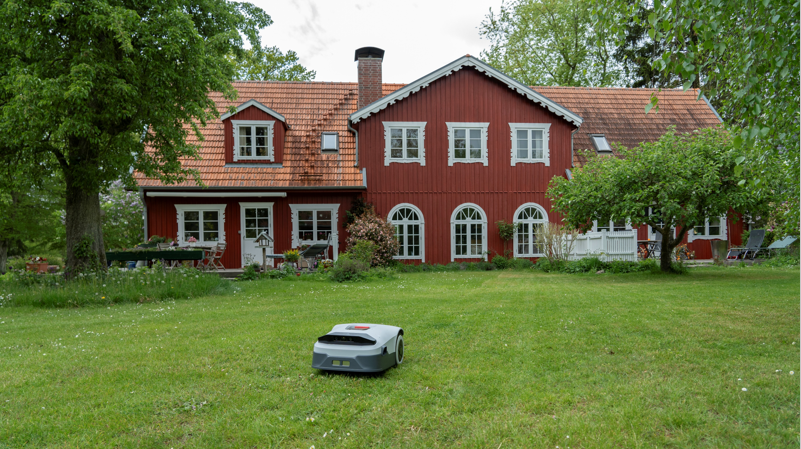
Durante años, los robots cortacéspedes utilizaron cables perimetrales para delimitar las zonas de corte. Si bien este sistema funciona correctamente, la instalación del cable puede llevar tiempo, y cambiar la zona de corte a menudo implica moverlo o reinstalarlo.
Cortacéspedes robóticos inalámbricos ofrecen un enfoque diferente. En lugar de utilizar un límite físico, utilizan tecnologías como RTK, GPS, LiDAR, cámaras, o una combinación de sensores para delimitar el césped y crear límites virtuales.

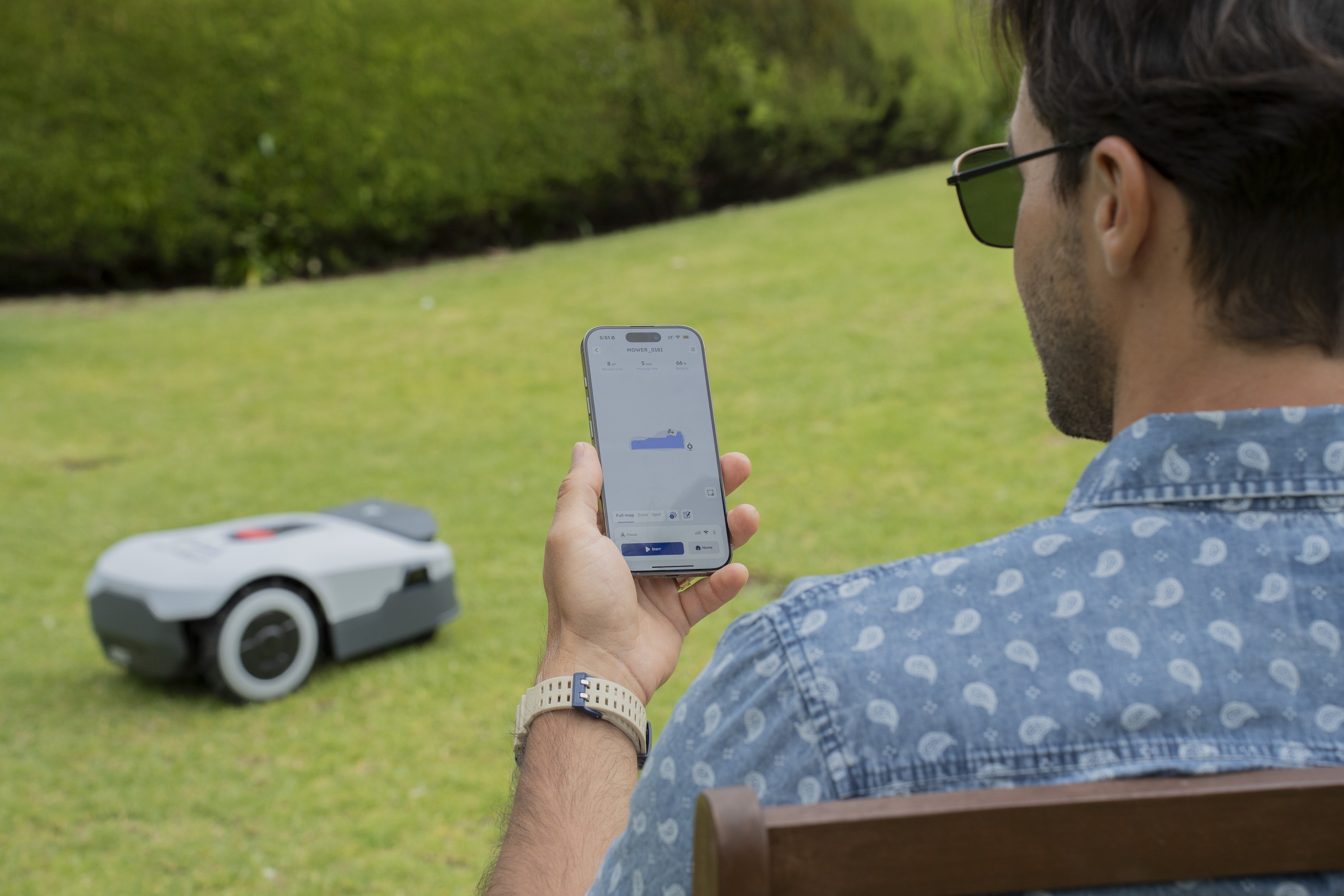
Este cambio hace que el corte robótico sea más fácil de configurar y más flexible de gestionar. Puedes crear o ajustar las zonas de corte digitalmente sin necesidad de remover el césped ni cambiar la posición de los cables delimitadores.
Pero optar por la tecnología inalámbrica no significa automáticamente que todas las cortadoras de césped funcionen mejor. La tecnología de navegación, el diseño del césped, la visibilidad por satélite, la detección de obstáculos y el software influyen en el rendimiento de una cortadora inalámbrica.
Table of Contents
¿Qué es un robot cortacésped sin cable perimetral?
Un robot cortacésped sin cable perimetral es un robot cortacésped que no requiere un cable físico instalado alrededor del borde de su césped. En su lugar, utiliza tecnología de navegación y cartografía digital para determinar dónde debe cortar el césped.
Los robots cortacésped tradicionales suelen depender de un cable perimetral enterrado o fijado alrededor del césped. Este cable crea un límite físico que indica al robot dónde termina la zona de corte. Los modelos inalámbricos sustituyen este sistema por límites virtuales creados mediante sistemas de mapeo y posicionamiento.
¿Cómo funciona?
El proceso básico es:
- Mapea el césped – El cortacésped escanea o recorre el jardín para crear un mapa digital.
- Establecer límites virtuales – Los usuarios definen las zonas de corte y las zonas restringidas a través del cortacésped o su aplicación.
- Navega automáticamente – La segadora utiliza tecnologías como RTK, LiDAR, visión artificial o una combinación de ellas para determinar su posición.
- Corta el césped dentro del área delimitada. – El cortacésped sigue las rutas planificadas evitando obstáculos y zonas restringidas.
- Regresar y recargar – Cuando la batería está baja, regresa a la estación de carga y puede reanudar el corte del césped posteriormente.
Alambre perimetral vs.Sin cables
| Característica | Cortadora de alambre perimetral | Cortacésped inalámbrico |
| Configuración de límites | Cable físico | Límite virtual |
| Instalación | Requiere instalación de cableado | Generalmente, la configuración es más rápida. |
| Fronteras cambiantes | Mover/reinstalar el cable | Ajustar digitalmente |
| Gestión multizona | Puede requerir cableado adicional | Generalmente más fácil de manejar |
| Navegación | Límite basado en cables + sensores | Sistemas RTK, LiDAR, de visión o híbridos |
La principal ventaja de usar un sistema inalámbrico es la flexibilidad. Puedes crear y modificar zonas de corte sin alterar físicamente los límites del césped.
Sin embargo, que sea inalámbrico no significa que carezca de tecnología. El cortacésped aún necesita un sistema fiable para conocer su ubicación y su entorno. Por eso, el sistema de navegación es uno de los factores más importantes a tener en cuenta al elegir un robot cortacésped inalámbrico.
¿Cómo saben los robots cortacésped inalámbricos dónde cortar el césped?
La pregunta más importante sobre un robot cortacésped sin cable perimetral es sencilla: si no hay un límite físico, ¿cómo sabe el cortacésped dónde cortar?
La solución reside en la cartografía digital combinada con tecnologías de posicionamiento y detección ambiental. Según el modelo, un cortacésped inalámbrico puede utilizar RTK, visión artificial, LiDAR o varias tecnologías combinadas para determinar su ubicación y su entorno.
1. Crea un mapa digital
Antes de cortar el césped, la segadora crea un mapa del mismo. Según el modelo, esto puede implicar un mapeo automático, un mapeo guiado o una combinación de sensores y datos de posicionamiento.
El mapa define las áreas donde debe operar la cortadora de césped y también puede identificar áreas restringidas como macizos de flores, piscinas o muebles de jardín.

2. Establecer límites virtuales
En lugar de instalar un cable perimetral físico, puede definir límites virtuales en la aplicación del cortacésped o durante el proceso de mapeo.
Si posteriormente modificas tu jardín, estos límites generalmente se pueden ajustar digitalmente en lugar de mover físicamente un cable.
3. Localizarse mientras se corta el césped
Durante su funcionamiento, el cortacésped determina continuamente su posición mediante su sistema de navegación.
- RTK Proporciona un posicionamiento de alta precisión.
- LiDAR Escanea el entorno circundante.
- Visión usos cámaras y AI para reconocer objetos y características del césped.
- Sistemas híbridos Combinar múltiples tecnologías para mejorar la fiabilidad de la navegación.

4. Detectar obstáculos y zonas restringidas
El posicionamiento por sí solo no es suficiente.La cortadora de césped también necesita comprender lo que hay a su alrededor.
Según el modelo, los sensores y las cámaras pueden detectar objetos como árboles, macetas, juguetes, muebles de jardín y otros obstáculos, lo que permite que el cortacésped ajuste su ruta en lugar de simplemente chocar contra ellos.
5. Planificar y ajustar su ruta de corte de césped.
Una vez que la cortadora de césped conoce su ubicación y los límites del área de corte, puede planificar una ruta a través del césped. Los modelos más avanzados también pueden gestionar varias zonas, regresar a la estación de carga y reanudar el corte donde lo dejaron.

La diferencia clave
Una segadora con cable perimetral utiliza principalmente un cable físico para definir el área de corte, mientras que una segadora sin cable se basa en mapas digitales, posicionamiento y sensores ambientales.
Esto hace que el corte de césped sin cables sea más flexible, pero también significa que la calidad del sistema de navegación del cortacésped juega un papel mucho más importante en su rendimiento general.
€749,00
€1.168,00
€1.468,00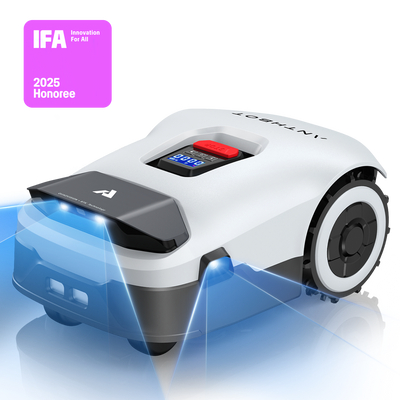
€999,00
Ventajas de los robots cortacésped sin cable perimetral
La mayor ventaja de un robot cortacésped inalámbrico no es simplemente la ausencia de un cable. Es la instalación más sencilla y mayor flexibilidad que vienen con el uso de límites virtuales.
Instalación sin cableado perimetral
Los modelos tradicionales requieren la instalación de un cable alrededor del césped. Los modelos inalámbricos eliminan este paso, lo que hace que la instalación sea mucho más rápida y menos perjudicial para el jardín.
Es más fácil cambiar las zonas de corte de césped.
¿Necesitas ampliar un macizo de flores o crear una nueva zona restringida? Con los límites virtuales, normalmente puedes realizar estos cambios a través del sistema de mapeo o la aplicación del cortacésped, en lugar de mover cables físicos.
Ideal para múltiples zonas de césped.
Los modelos inalámbricos facilitan la gestión de jardines delanteros, traseros, laterales u otras áreas de corte independientes. Según el modelo, se pueden crear diferentes zonas y programar horarios sin necesidad de instalar cables adicionales.
Menor mantenimiento del cable perimetral
Un cable físico puede dañarse por trabajos de jardinería, las inclemencias del tiempo, los animales o cortes accidentales. Sin un cable perimetral, no hay ningún cable enterrado que reparar o diagnosticar.
Instalación del limpiador
No hay cables visibles alrededor del césped, y no es necesario cavar zanjas ni asegurar los cables en los bordes del jardín. Esto puede ser especialmente útil para jardines ya establecidos donde no se desea alterar el diseño paisajístico existente.
Gestión del césped más flexible
Los límites virtuales facilitan la adaptación del área de corte a medida que cambia el jardín. Esto resulta especialmente útil para los propietarios que modifican con frecuencia el diseño del jardín o que tienen céspedes con diseños irregulares.
En resumen: los robots cortacésped inalámbricos ofrecen la mayor comodidad en cuanto a configuración, gestión de límites y flexibilidad a largo plazo. Sin embargo, su rendimiento sigue dependiendo en gran medida de la calidad de la tecnología de navegación y de su idoneidad para su jardín.
Tipos de robots cortacésped inalámbricos
Los robots cortacésped inalámbricos utilizan diferentes tecnologías para comprender su posición y su entorno. Las principales opciones son RTK, visión artificial, LiDAR y navegación híbrida. Cada una tiene sus propias ventajas, por lo que la mejor opción dependerá del diseño y el entorno de su jardín.
1. Cortacéspedes robóticos basados en RTK
La tecnología RTK utiliza datos de posicionamiento y corrección por satélite para proporcionar información de ubicación de alta precisión.Permite que la cortadora de césped cree rutas de corte precisas sin necesidad de un cable perimetral físico.
Ventajas
- Posicionamiento de alta precisión
- Siega precisa y sistemática
- Funciona bien en céspedes grandes y abiertos.
- Sin cable de delimitación física
Desventajas
- Los árboles y los edificios pueden interferir con las señales satelitales.
- Algunos modelos requieren una estación de referencia RTK.
- Menos adecuado para zonas con muchas obstrucciones.
Ideal para: Céspedes abiertos con buena visibilidad por satélite.

2. Cortacéspedes robóticos con visión artificial
Los modelos basados en visión artificial utilizan cámaras e inteligencia artificial para reconocer el césped, los obstáculos, los bordes del jardín y otros objetos. En lugar de depender principalmente del posicionamiento por satélite, el cortacésped utiliza lo que ve para comprender el entorno.
Ventajas
- Puede identificar obstáculos visibles
- Menos dependiente del posicionamiento por satélite
- Útil en torno a elementos paisajísticos
- Puede admitir una configuración inalámbrica relativamente sencilla.
Desventajas
- La iluminación y el clima pueden afectar el reconocimiento visual.
- Las sombras o los límites poco definidos pueden reducir la precisión.
- El rendimiento depende de las capacidades de la cámara y de la IA.
Ideal para: Jardines de tamaño pequeño a mediano con límites y obstáculos claramente visibles.

3. Cortacéspedes robóticos basados en LiDAR
La tecnología LiDAR utiliza el escaneo láser para medir el entorno circundante y ayudar a la cortadora de césped a comprender los objetos y espacios cercanos.
Ventajas
- No depende completamente de las señales satelitales.
- Eficaz para detectar obstáculos cercanos
- Útil en torno a árboles, edificios y vallas.
- Menos dependientes de la luz del día que los sistemas de visión.
Desventajas
- Puede aumentar el costo de la cortadora de césped.
- El rendimiento depende de la calidad del sensor y del mapeo.
- La cartografía ambiental local no sustituye el posicionamiento global proporcionado por RTK.
Ideal para: Jardines complejos, pasajes estrechos y zonas con visibilidad satelital limitada.

4. Cortacéspedes robóticos con navegación híbrida
La navegación híbrida combina múltiples tecnologías para superar las limitaciones de depender de un único sistema de posicionamiento. Al utilizar diferentes sensores de forma conjunta, el cortacésped puede adaptarse a una gama más amplia de condiciones del jardín.
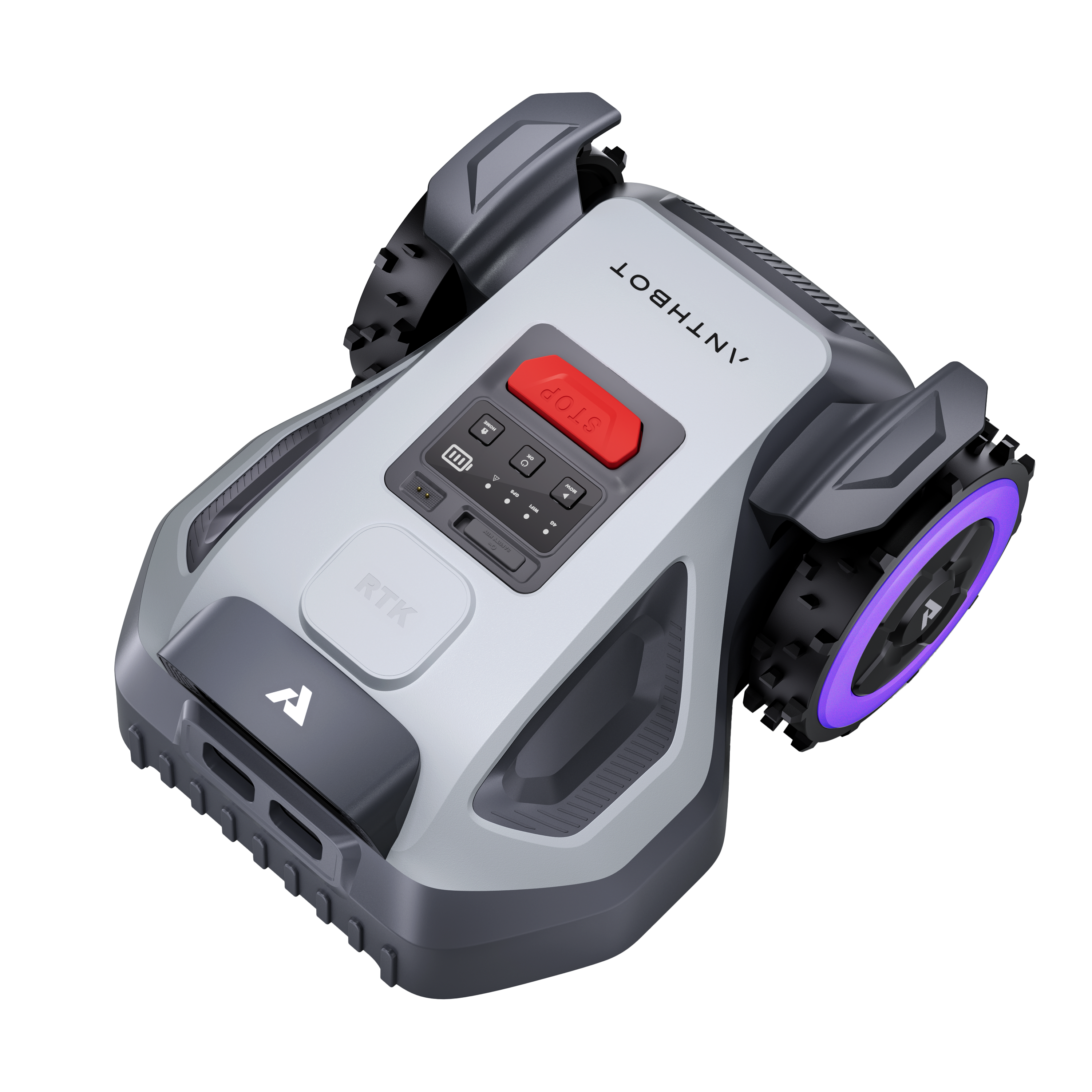
Por ejemplo, el ANTHBOT M Pro Serie usos Posicionamiento HoloSense Quad-Fusion, combinatorio LiDAR de 360°, RTK/NetRTK, y Visión.
La serie M Pro también ofrece Mapeo automático con un solo toque, Detección por IA de más de 1000 tipos de obstáculos, Programación inteligente multizona, corte de bordes EdgeWiz™ y Capacidad para pendientes de hasta 24° (45%).
Ventajas
- Combina las ventajas de múltiples tecnologías.
- Más adaptable a diferentes entornos de césped.
- Puede mantener la navegación cuando un método de posicionamiento es limitado.
- Muy adecuado para diseños complejos y múltiples zonas.
Desventajas
- Por lo general, cuesta más que los modelos de tecnología única.
- Cuantos más sensores y software haya, más sofisticado será el sistema.
- Puede resultar innecesario para céspedes sencillos y abiertos.
Lo mejor para: Propietarios de viviendas que desean un cortacésped inalámbrico versátil para diferentes diseños de césped y condiciones difíciles.
Sistemas inalámbricos frente a cableado perimetral: ¿Cuál es mejor?
Tanto los robots cortacésped inalámbricos como los que utilizan cables perimetrales pueden mantener el césped automáticamente, pero emplean métodos muy diferentes para delimitar la zona de corte. La mejor opción dependerá de tus preferencias de instalación, la distribución de tu jardín y tu presupuesto.
Sin cables vs.Cable perimetral
| Característica | Cortacésped robot inalámbrico | Cortacésped robótico con cable perimetral |
| Configuración de límites | Límites virtuales | Cable físico |
| Instalación | Por lo general, es más rápido y más fácil. | Requiere la instalación del cable. |
| Fronteras cambiantes | Ajustar digitalmente | Mueva o reinstale el cable |
| Múltiples zonas | Generalmente es más fácil de configurar | Puede requerir un cableado más complejo. |
| Mantenimiento de cables | No hay cable de delimitación que reparar | El cable puede romperse o dañarse. |
| Aspecto del césped | No se observa ningún cable delimitador. | Es posible que el cable sea visible durante la instalación. |
| Navegación | RTK, Visión, LiDAR o híbrido | Cable delimitador + sensores integrados |
| Costo inicial | A menudo más alto | Generalmente más asequible |
| Flexibilidad de configuración | Alto | Bájelo una vez instalado el cable. |
Cuando la opción inalámbrica es la mejor elección
Un cortacésped sin cables resulta especialmente atractivo si:
- No quiero instalar ni enterrar el cable perimetral.
- Tener varias zonas de césped
- Cambia con frecuencia la distribución de tu jardín.
- ¿Quieres crear límites virtuales a través de una aplicación?
- Prefiero una instalación más rápida y limpia.
También es una buena opción para los propietarios que desean una navegación más avanzada y una mejor detección de obstáculos.
Cuando el cableado perimetral todavía tiene sentido
Una segadora de alambre perimetral tradicional aún puede ser una opción práctica si:
- Tienes un césped sencillo y claramente definido.
- Tu presupuesto es limitado
- No te importa dedicar tiempo a la instalación
- Prefieres un sistema de límites probado y relativamente sencillo.
Entonces, ¿cuál es mejor?
Que no tenga cables no significa automáticamente que sea mejor. Su principal ventaja es la comodidad y la flexibilidad, mientras que los modelos con cable perimetral pueden ofrecer una solución más sencilla y económica para jardines convencionales.
Si está dispuesto a pagar más por una instalación más sencilla, límites virtuales y una gestión flexible del césped, un cortacésped inalámbrico puede valer la pena la inversión. Para un césped sencillo donde los límites rara vez cambian, un modelo con cable perimetral aún puede ofrecer una excelente relación calidad-precio.
Cortacéspedes robóticos inalámbricos recomendados
Si desea un robot cortacésped sin cable perimetral, su elección debe depender de la complejidad de su césped, la cobertura que necesita y cuánto está dispuesto a gastar. Entre Los modelos inalámbricos de ANTHBOT, el Serie M Pro destaca por su navegación avanzada, mientras que el M5 ofrece una más Una opción económica.
Ideal para el corte de césped sin cables avanzado: Serie ANTHBOT M Pro
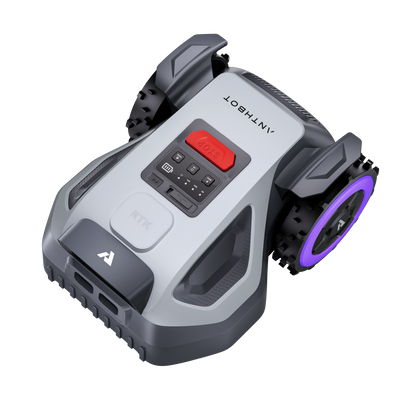
La serie ANTHBOT M Pro, que incluye el M5 Pro y M9 Pro, Está diseñado para propietarios de viviendas que desean un cortacésped inalámbrico capaz de adaptarse a una amplia gama de condiciones de jardín.
En lugar de depender de una única tecnología de navegación, la serie M Pro utiliza el sistema de posicionamiento HoloSense Quad-Fusion, que combina LiDAR de 360°, RTK/NetRTK y visión artificial. Este enfoque multisensor permite que el cortacésped mantenga una posición precisa a la vez que comprende su entorno.

Características principales
- Sin cableado perimetral ni instalación RTK
- Posicionamiento HoloSense Quad-Fusion
- LiDAR 360° + RTK/NetRTK + Visión
- Mapeo automático con un solo toque
- Detección por IA de más de 1000 tipos de obstáculos
- Programación multizona inteligente
- Corte de bordes EdgeWiz™
- Soporta pendientes de hasta 24° (45%)
- Diseñado para diferentes diseños de césped y situaciones de corte.
M5 Pro vs. M9 Pro
La principal diferencia entre los dos modelos radica en su capacidad de corte:
| Modelo | Cobertura | Lo mejor para |
| ANTHBOT M5 Pro | Arriba a 500 m² (0,12 acres) | Jardines pequeños a medianos |
| ANTHBOT M9 Pro | Arriba a 1.000 m² (0,25 acres) | Jardines residenciales de tamaño mediano a grande |
Dado que la tecnología de navegación y las funciones principales son en gran medida compartidas, elija en función del tamaño de su césped en lugar de comprar el modelo más grande simplemente por su mayor capacidad.
¿Por qué elegir la serie M Pro?
La mayor ventaja reside en su capacidad para combinar diferentes tecnologías de navegación en lugar de depender de un solo sistema. RTK proporciona el posicionamiento, LiDAR mapea el entorno circundante y Vision ayuda a reconocer objetos y características del terreno.
Esto convierte a la serie M Pro en una excelente opción para los propietarios que desean un cortacésped inalámbrico que pueda adaptarse a diferentes escenarios de jardín, incluidos céspedes con obstáculos, múltiples zonas y diseños más complejos.
El robot cortacésped inalámbrico con la mejor relación calidad-precio: ANTHBOT M5
Si tienes un césped más pequeño y relativamente sencillo, el ANTHBOT M5 Es una opción más asequible que se centra en ofrecer las ventajas esenciales del corte de césped robótico inalámbrico.
Con cobertura de hasta 500 m² (0,12 acres), El M5 es ideal para jardines residenciales típicos. Ofrece mapeo automático, navegación inteligente y control mediante aplicación, sin necesidad de un cable perimetral tradicional.
¿Por qué elegir el M5?
- Cobertura de hasta 500 m²
- Funcionamiento inalámbrico
- Mapeo automático con un solo toque
- Control mediante aplicación inteligente
- Diseño compacto
- Excelente relación precio-rendimiento
El modelo M5 es la opción más lógica si su prioridad es obtener un corte de césped inalámbrico y fiable sin pagar por funciones que su césped no necesita necesariamente.
¿Cuál deberías elegir?
Elige la serie M Pro. Si tiene un jardín más complejo y desea una navegación multisensor avanzada que pueda adaptarse a diferentes condiciones de corte.
Elige el M5 Si tienes un césped de hasta 500 m² y tu principal prioridad es la relación calidad-precio y un corte sencillo sin cables.
En resumen, la serie M Pro es la opción más avanzada, mientras que la M5 se centra en ofrecer la experiencia inalámbrica esencial a un precio más accesible.
Cómo elegir el robot cortacésped inalámbrico adecuado
El mejor robot cortacésped inalámbrico no es necesariamente el que cuenta con la tecnología más avanzada. Debe adaptarse al tamaño, la distribución, el entorno y el presupuesto de tu jardín.
1. Empiece por el tamaño de su césped.
Elija una cortadora de césped con la capacidad suficiente para toda la superficie que va a cortar.
- Hasta 500 m²: Un modelo compacto como el ANTHBOT M5 o M5 Pro puede ser suficiente.
- Hasta 1.000 m²: Consideremos un modelo de mayor capacidad como el ANTHBOT M9 Pro.
Es mejor tener cierta capacidad de reserva que elegir una cortadora de césped que esté constantemente trabajando a su máxima capacidad.
2. Considere el diseño de su césped.
Mira lo complicado que es tu jardín.
Césped sencillo y abierto:
La navegación basada en RTK o en visión artificial puede ser suficiente.
Árboles, macizos de flores, pasajes estrechos o múltiples zonas:
Una cortadora de césped con sistema LiDAR o navegación híbrida puede proporcionar una mayor conciencia ambiental y flexibilidad.
3. Comprobar la visibilidad por satélite
Si estás considerando adquirir un cortacésped con tecnología RTK, observa el entorno de tu jardín.
Los árboles grandes, los edificios altos, las vallas y otras estructuras pueden afectar la visibilidad de los satélites. Si su césped presenta muchas posibles obstrucciones de la señal, una cortadora de césped que combine RTK con LiDAR y visión artificial podría ser la mejor opción.
4.Piensa en los obstáculos
Haz una lista de los objetos con los que se encontrará la cortadora de césped, como por ejemplo:
- Árboles
- macizos de flores
- Muebles de jardín
- Juguetes para niños
- Caminos
- Decoraciones de jardín
Si su césped tiene muchos obstáculos, dé prioridad a la detección de obstáculos y al mapeo del entorno en lugar de centrarse únicamente en la precisión del posicionamiento.
5. Considere múltiples zonas
Si tiene césped separado en la parte delantera, trasera o laterales, compruebe si el cortacésped admite la gestión multizona.
Un buen sistema inalámbrico debería permitirte crear diferentes zonas y horarios de corte sin necesidad de cables físicos adicionales para delimitar el área.
6. Adapta las características a tu presupuesto.
La navegación avanzada no siempre es necesaria. Para una navegación sencilla 300–500 m² En el caso del césped, pagar mucho más por sensores de primera calidad puede no aportar mucho valor adicional.
Por otro lado, si su jardín es complejo, invertir en una mejor navegación puede reducir el trabajo de preparación y mejorar el rendimiento del corte diario.
Veredicto final
Un robot cortacésped sin cable perimetral facilita enormemente el cuidado del césped al sustituir los límites físicos por mapas digitales y navegación inteligente. Ya no es necesario instalar, enterrar ni reparar un cable perimetral, y cambiar las zonas de corte es mucho más sencillo.
Sin embargo, que sea inalámbrico no significa automáticamente que sea mejor. La elección correcta depende de sus necesidades. Tamaño del césped, diseño, obstáculos, visibilidad satelital y presupuesto.
Preguntas frecuentes: Cortacésped robótico sin cable perimetral
1. ¿Cómo funciona un robot cortacésped sin cable perimetral?
Los robots cortacésped inalámbricos utilizan tecnologías como: Navegación RTK, GPS, LiDAR, visión artificial o híbrida Para mapear el césped y crear límites virtuales. Esto permite que la cortadora de césped determine dónde debe y no debe cortar sin necesidad de un cable perimetral físico.
2. ¿Los robots cortacésped inalámbricos necesitan Wi-Fi?
No necesariamente. Los requisitos de Wi-Fi varían según el modelo. Algunos cortacéspedes utilizan Wi-Fi para el control mediante aplicaciones, actualizaciones de software o funciones de mapas, mientras que su navegación real puede depender de RTK, LiDAR, Vision u otras tecnologías.
3. ¿Son precisos los robots cortacésped inalámbricos?
Pueden ser muy precisos, pero su rendimiento depende de la tecnología de navegación y del entorno del césped. El sistema RTK proporciona un posicionamiento preciso, mientras que el LiDAR y la visión artificial mejoran la percepción del entorno. Los sistemas híbridos combinan varias tecnologías para una mayor flexibilidad.
4. ¿Puede un robot cortacésped inalámbrico funcionar debajo de los árboles?
Depende del sistema de navegación. Los árboles densos pueden interferir con el posicionamiento por satélite, como el RTK. Los modelos que combinan RTK con LiDAR y visión artificial pueden ser más adecuados para jardines con árboles, ya que no dependen exclusivamente de las señales satelitales.
5. ¿Qué ocurre si un robot cortacésped RTK pierde la señal?
La respuesta del cortacésped depende del modelo. Algunos sistemas pueden recurrir temporalmente a otros sensores o tecnologías de navegación, mientras que otros pueden detenerse o ajustar su funcionamiento hasta que se restablezca la señal. Si su césped tiene muchas zonas con poca visibilidad satelital, considere un sistema de navegación multisensor.
6. ¿Son mejores los robots cortacésped inalámbricos que los modelos con cable perimetral?
No necesariamente.Los modelos inalámbricos suelen ser más fáciles de instalar y más flexibles de gestionar, mientras que los modelos con cable perimetral pueden ser más económicos y funcionan bien para jardines sencillos. La mejor opción dependerá de su jardín y su presupuesto.
7. ¿Puede un robot cortacésped inalámbrico cubrir varias zonas del césped?
Muchos modelos inalámbricos modernos admiten la gestión multizona, lo que permite crear áreas y horarios de corte independientes. Sin embargo, las funciones varían según el modelo, así que compruebe las especificaciones del cortacésped antes de comprarlo.
8. ¿Necesitan los robots cortacéspedes inalámbricos un límite?
Sí, pero el límite suele ser virtual, no físico. La cortadora de césped utiliza un mapa digital para definir dónde puede operar y dónde está restringido el corte.
9. ¿Son más caros los robots cortacésped inalámbricos?
En general, sí. Los modelos inalámbricos suelen utilizar sistemas de posicionamiento, sensores y software más avanzados, lo que puede incrementar el precio inicial. Sin embargo, permiten ahorrar tiempo y esfuerzo durante la instalación y en futuros cambios de límites.
10. ¿Cuál es el mejor robot cortacésped sin cable perimetral?
El mejor modelo depende de su césped. Para céspedes sencillos y económicos, un modelo como el ANTHBOT M5 puede ser una opción práctica. Para jardines más complejos, la Serie ANTHBOT M Pro Combina LiDAR de 360°, RTK/NetRTK y visión artificial para una experiencia de corte de césped inalámbrica más versátil.



Deja un comentario
Este sitio está protegido por hCaptcha y se aplican la Política de privacidad de hCaptcha y los Términos del servicio.