







Foråret er officielt kommet over hele Europa, og med det vender et velkendt weekendritual tilbage: havepleje. Efterhånden som dagene bliver længere, og temperaturerne stiger, begynder lyden af plæneklippere at give genlyd i nabolag fra Cotswolds til de bayerske alper. Men plæneplejebranchen har udviklet sig dramatisk. Du skal ikke længere blot vælge mellem et benzinslugende bæst og en elektrisk plæneklipper med ledning. Valget er blevet bredere: du skal nu vælge mellem manuel arbejdskraft og smart automatisering. Denne guide vil objektivt sammenligne traditionelle elektriske vs. benzindrevne plæneklippere - specifikt standardmodellerne med skub - for at hjælpe dig med at forstå landskabet. Vi vil veje fordele og ulemper ved hver enkelt op mod de specifikke behov i europæiske haver, før vi afslører den ultimative moderne løsning, der gør debatten næsten forældet.
Table of Contents
Benzinplæneklippere: Rå kraft vs. krævende vedligeholdelse
I årtier har benzinplæneklipperen været standardvalget for alle med en have af en anstændig størrelse. Dens omdømme er bygget på et fundament af rå, utæmmet kraft. Men for den gennemsnitlige europæiske husejer kommer denne kraft ofte til en pris, der ikke længere er værd at betale.
Fordelene:
- Uovertruffen kraft: Hvis du har styr på en tilgroet mark eller ekstremt ujævnt terræn, der ikke er blevet rørt i flere måneder, har en benzindrevet plæneklipper momentet til at tygge igennem tykt ukrudt og højt græs uden at svede hårdt.
- Ingen opladning nødvendig: Så længe du har en dunk brændstof i skuret, kan du slå græs i det uendelige. Dette gør dem teoretisk egnede til store landbrugsarealer, selvom det falder uden for rammerne af den gennemsnitlige forstadsgrund.
Ulemperne (EU's realitetstjek):
- Støjforurening: Dette er uden tvivl det største smertepunkt for europæiske samfund. Benzindrevne plæneklippere larmer øredøvende. I lande som Tyskland og Holland forbyder strenge "hviletider" (Sonntagsruhe eller Zondagsrust) ofte brugen af så larmende maskiner om søndagen og på helligdage. At køre en plæneklipper om lørdagen kan stadig give dig vrede fra naboer, der bare vil nyde deres frokost under åben himmel.
- Miljøpåvirkning: Med EU's grønne aftale, der fremmer CO2-neutralitet, føles benzindrevne plæneklippere som et levn fra fortiden. De udleder betydelige mængder CO2 og partikler, hvilket bidrager til lokal luftforurening.
- Høj vedligeholdelse: Disse maskiner er arbejdskrævende. De kræver sæsonbestemte olieskift, udskiftning af tændrør, rengøring af luftfilter og indkøb af frisk brændstof (som nedbrydes om vinteren). Opbevaring af benzin i et skur udgør også en sikkerhedsrisiko.
Elektriske plæneklippere: Miljøvenlige, men stadig manuelle
I takt med at miljøbevidstheden er vokset, og batteriteknologien er blevet bedre, er elektriske plæneklippere blevet mere og mere populære. De løser mange af de problemer, der er forbundet med benzin, men de introducerer også et par af deres egne.
Fordelene:
- Nul emissioner: Elektriske plæneklippere er førende inden for miljøvenlig plænepleje. De producerer ingen direkte udstødningsgasser, hvilket gør dem bedre for planeten og for dine lunger, når du går bag dem.
- Stille drift: Selvom de ikke er lydløse, er de betydeligt mere støjsvage end benzinmotorer. Dette hjælper dig med at overholde lokale regler for havestøj og opretholde et fredeligt forhold til dine naboer.
- Lav vedligeholdelse: Der er ingen motorer at justere, ingen olie at skifte, og ingen tændrør at snavse til. Det handler blot om at holde knivene skarpe og batteriet opladet.
Ulemperne (den manuelle virkelighed):
- Ulemper med ledninger og batterier: Modeller med ledning er en snublefare og begrænser din rækkevidde baseret på længden af din forlængerledning. Det er en frustrerende opgave at håndtere et kabel omkring blomsterbede og træer. Batterimodeller derimod introducerer "rækkeviddeangst". Hvis dit batteri dør halvvejs gennem græsplænen, skal du vente på, at det genoplades, før du afslutter arbejdet.
- Den største ulempe: Uanset strømkilden kræver en elektrisk plæneklipper stadig du at udføre arbejdet. Det er dig, der sveder i solen og skubber maskinen frem og tilbage i en time eller mere hver weekend. Det eliminerer benzin, men det eliminerer ikke arbejdskraft.
Nøglefaktorer for europæiske haver

For at vælge mellem en benzin- eller en traditionel elektrisk plæneklipper, skal du se på din specifikke situation. Europæiske haver har unikke karakteristika, der i høj grad tipper vægtskålen.
- Havestørrelse & Kompleksitet: Størstedelen af europæiske haver er kompakte, ofte under 500 m². En tung og besværlig benzindrevet plæneklipper er ofte overkill. Den bruger brændstof til et 20-minutters arbejde og er sværere at manøvrere rundt i snævre hjørner, smalle passager og den indviklede landskabspleje, der er typisk for europæiske hjem.
- Fællesskabsregler: Som nævnt er støj en vigtig faktor. Før du køber en benzindrevet plæneklipper, bør du tjekke din lokale kommune eller kommune. Mange boligområder har strenge driftsfrister, og en støjende maskine kan muligvis kun bruges et par timer om ugen.
- Langsigtede omkostninger: Selvom elektriske plæneklippere har en højere startpris for gode batterier, er de langsigtede besparelser ubestridelige. At droppe benzin sparer dig for svingende brændstofpriser og de løbende omkostninger til reservedele som luft- og oliefiltre.
Den ultimative opgradering: Hvorfor robotplæneklippere er fremtiden
Efter at have læst ovenstående, kan du finde dig selv i et dilemma. Du elsker den støjsvage og miljøvenlige karakter af en elektrisk plæneklipper, men du hader det fysiske arbejde. Du sætter pris på kraften i benzin, men du afskyr vedligeholdelsen og støjen. Så hvad nu hvis du kunne få det bedste fra begge verdener, og mere til?
Hvad nu hvis du kunne eliminere det fysiske arbejde helt? Det er herfra samtalen flytter sig elektrisk vs. benzinplæneklipper til en helt ny kategori: robotplæneklipperen. Dette er ikke bare en trinvis opgradering; det er et komplet paradigmeskift i, hvordan du passer din have.
Introduktion af ANTHBOT M5 LiDAR: Den næste generation

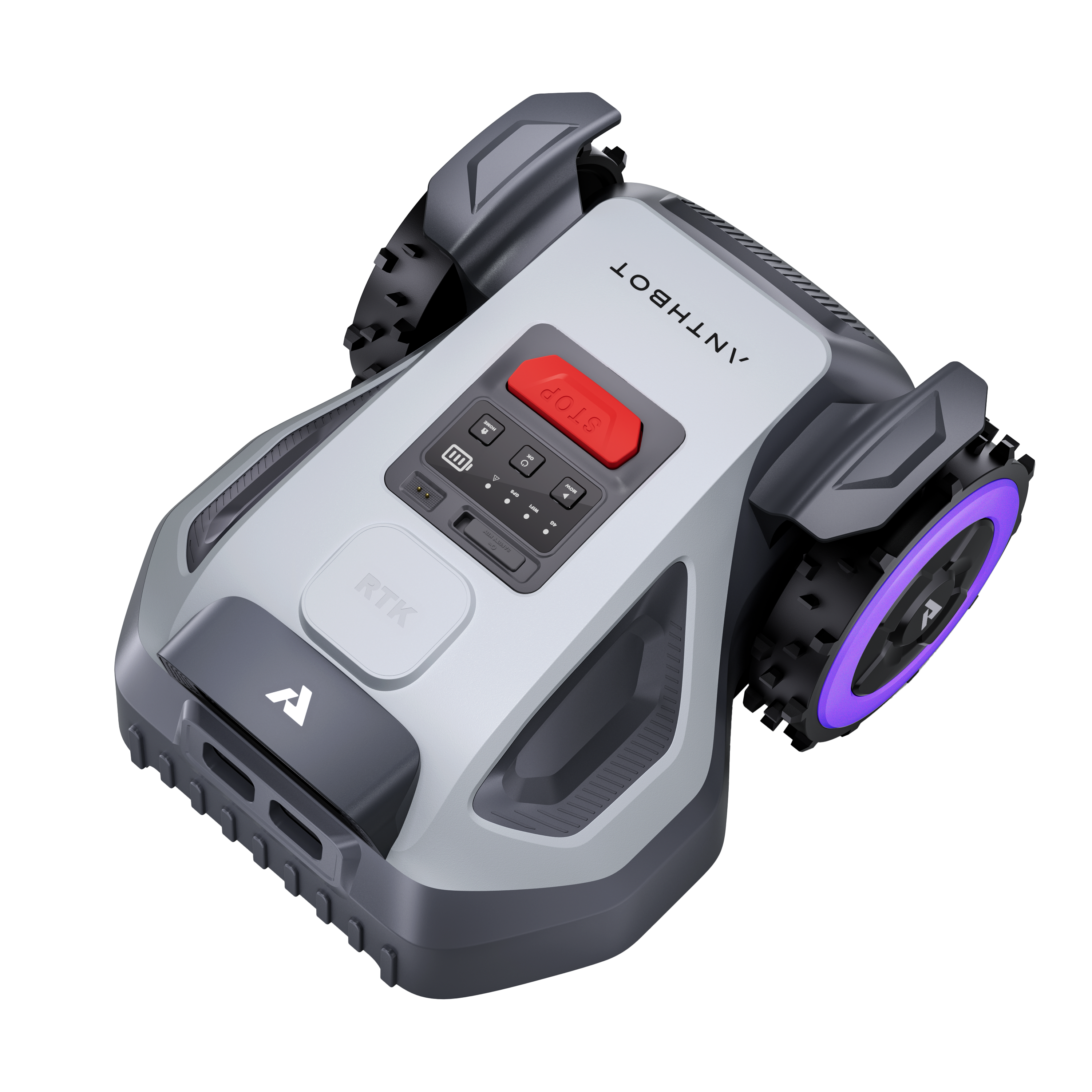
Forestil dig en plæneklipper, der kombinerer de lydløse fordele ved elektrisk kraft med friheden ved ikke at skulle løfte en finger. ANTHBOT M5 LiDAR robotplæneklipper repræsenterer toppen af denne nye æra. Den tager konceptet med robotplæneklipperen og perfektionerer det til det moderne europæiske hjem.
- Dråbe & Slåningsteknologi: I modsætning til ældre robotplæneklippere, der kræver, at du graver guidekabler ned omkring hele haven eller installerer komplekse, udsynsafhængige RTK-antenner, er M5 LiDAR befriende enkel. Den kan kortlægge haver op til 700㎡ på bare tre minutter med et anbefalet klippeområde på 500㎡ for optimal ydeevne. Du placerer den blot på græsplænen, trykker på start, og den lærer terrænets forløb med det samme.
- Fejlfri navigation: Europæiske haver er fulde af udfordringer: smalle passager, overhængende buske og tæt trædække.M5'ens kombination af 360° LiDAR + Dual Vision-kameraer sikrer, at den navigerer med stor præcision og aldrig farer vild under kalechen, sådan som GPS-afhængige robotter ofte gør.
- Hviskende stille drift: Med en lydstyrke på ≤ 58 dB er ANTHBOT M5 mere stille end en normal samtale. Du kan planlægge den til at klippe græs en søndag morgen, mens du nyder en stille espresso og læser avisen, helt uforstyrret af støj.
- Vildtlivssikker: En af de største bekymringer ved robotplæneklippere har altid været havens dyrelivs sikkerhed. ANTHBOT har løst dette. Deres AI-kamera kan registrere over 1.000 forskellige objekter, herunder pindsvin, der ofte søger ly i langt græs, samt kæledyr og børns legetøj. Den vil aktivt undgå dem og sikre, at din have er både uberørt og et sikkert habitat.
Konklusion & Næste trin
Så hvor efterlader dette den klassiske debat?
- Benzindrevne plæneklippere er bedst forbeholdt afsidesliggende, barske arealer, hvor støj og emissioner ikke betyder noget.
- Manuelle elektriske plæneklippere er et godt valg for de miljøbevidste, der er villige til at svede for deres græsplæne og håndtere besværet med ledninger eller batteristyring.
Men for langt de fleste europæiske husejere, der værdsætter deres weekender, ønsker en ubesværet have og ønsker at holde sig på den rigtige side af deres naboer og lokale støjregler, er valget klart.
Stop med at spilde dine weekender på at skubbe maskiner eller bekymre dig om brændstof. Fremtiden for plænepleje er her, og det er autonomt. Klik for at se ANTHBOOT robotplæneklippere og lad smart teknologi vedligeholde din perfekte have.
Ofte stillede spørgsmål
Q1: Er batteridrevne elektriske plæneklippere lige så kraftfulde som benzindrevne plæneklippere?
Mens batteridrevne modeller i den høje ende har lukket hullet betydeligt for almindeligt græs, har benzin stadig en fordel til meget tyk, våd eller tilgroet vegetation. Til den ugentlige vedligeholdelse af en standard europæisk græsplæne på 500 kvadratmeter er en batteridrevet plæneklipper af god kvalitet dog mere end tilstrækkelig.
Q2: Kan robotplæneklippere klare skråninger?
Ja, de fleste moderne robotplæneklippere, inklusive ANTHBOT M5, er designet til at håndtere skråninger. Det er vigtigt at kontrollere specifikationerne; M5 er konstrueret til at navigere i det varierede terræn, der findes i mange europæiske haver, uden at sidde fast.
Q3: Skal jeg lade min robotplæneklipper stå ude i regnvejr?
Slet ikke. ANTHBOT M5 har en IPX6 vandtæthedsklassificering, hvilket betyder, at den nemt kan modstå kraftig regn (og endda kan vaskes med en vandslange). Endnu vigtigere er det, at den har en indbygget regnsensor. Når den registrerer regn, sætter den automatisk sin opgave på pause og vender tilbage til sin ladestation, hvilket sikrer, at den altid er klar til sin næste planlagte græsslåning, når vejret klarer op.




1 kommentar
Joaquín
Un análisis excelente y muy necesario. El debate entre gasolina y eléctrico casi siempre se centra en la potencia, pero el verdadero punto de inflexión es el retorno de la inversión a medio plazo. Para los que estén dudando por el desembolso inicial de dar el salto a lo eléctrico o a la automatización, en robotcesped.com tienen una calculadora gratuita que cruza los gastos de gasolina, luz, mantenimiento e incluso el coste de un jardinero tradicional frente a un robot con solo introducir la superficie del jardín. Al combinar vuestra guía con esos números, queda clarísimo que el motor de explosión ya no tiene sentido económico en el jardín.
Efterlad en kommentar
Denne side er beskyttet af hCaptcha, og hCaptchas Politik om beskyttelse af persondata og Servicevilkår er gældende.