












Maintaining a sloped garden presents a unique set of challenges. It is a task that requires more than just a standard lawnmower; it demands a specific strategy and the right equipment. For many homeowners, the frustration of a machine that struggles, stalls, or slides is a weekly occurrence. More importantly, mowing on an incline introduces genuine safety risks, from slips and falls to the terrifying possibility of a heavy ride-on machine tipping over.
This guide is designed to help you navigate the complexities of mowing a steep hill. We will provide a clear framework for evaluating your terrain and introduce you to the mower types best suited for the task. Our goal is to ensure you can maintain your garden effectively and, above all, safely.
Table of Contents
Why Mowing Slopes Requires a Specific Mower

Mowing on flat ground is a straightforward task for most machines, but introducing a slope changes the physics entirely. The two primary forces you are fighting against are gravity and traction. A standard mower, designed for level lawns, often has a higher centre of gravity. On an incline, this can shift the weight balance, making the machine unstable and prone to tipping, especially when turning.
Furthermore, maintaining grip is a major challenge. On a hill, the weight of the mower shifts onto the downhill wheels, reducing the traction of the uphill wheels. This can cause the mower to slide or lose steering control, a situation that is both dangerous and damaging to the turf. A purpose-built hill mower addresses these issues with a lower centre of gravity for stability and enhanced tyre systems designed to grip the slope, keeping you and the machine safely in control.
How to Determine the Steepness of Your Garden
Before you can choose the right mower, you need to understand the specific challenge of your garden. In Europe, slope steepness is typically measured in degrees (°) or percentages (%). Knowing your garden's gradient is the first step toward safe and effective mowing.
You can measure this using a simple smartphone app with a clinometer, or a spirit level and a long straight edge. Place a long plank of wood on the slope, place your level on it, and lift the downhill end until it is level. The vertical distance from the bottom of the plank to the ground, divided by the plank's length, gives you the percentage. This figure helps you compare against manufacturer slope ratings, which are critical for safety.
According to industry standards, a slope of up to 10° (18%) is generally manageable for most standard mowers. Slopes between 15° (27%) and 20° (36%) are considered steep, and many standard ride-on mowers are not designed for use beyond 15° (27%). Beyond this point, specialised equipment becomes a necessity, not a luxury.
The Best Mower Types for Hilly Terrain
Selecting the right mower for your hill is the most critical decision you will make. Each category of mower offers different strengths and limitations. Below is a breakdown of the main types, from the safest and most modern solutions to more traditional options.
Robot Lawn Mowers: The Hands-Free Safety Solution

For many homeowners, the absolute safest option for a sloped garden is to remove the human operator from the equation entirely. This is where an advanced robot lawn mower excels. These machines feature intelligent navigation systems that prevent them from sliding or getting stuck. They are designed to handle complex, terraced gardens with ease, operating quietly and efficiently in accordance with strict European noise regulations—meaning you no longer have to worry about how early you can mow your lawn.
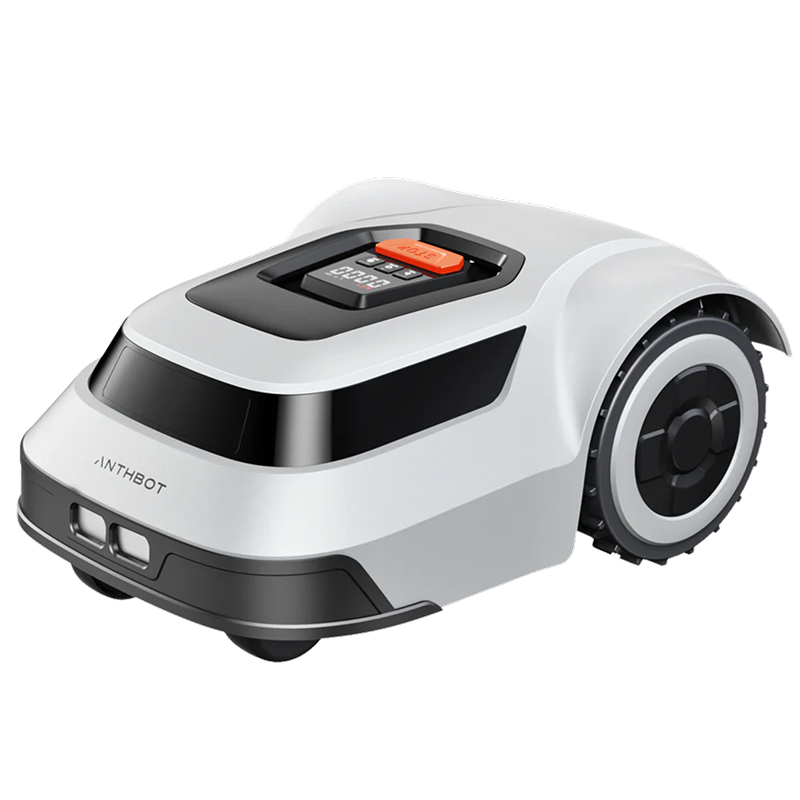
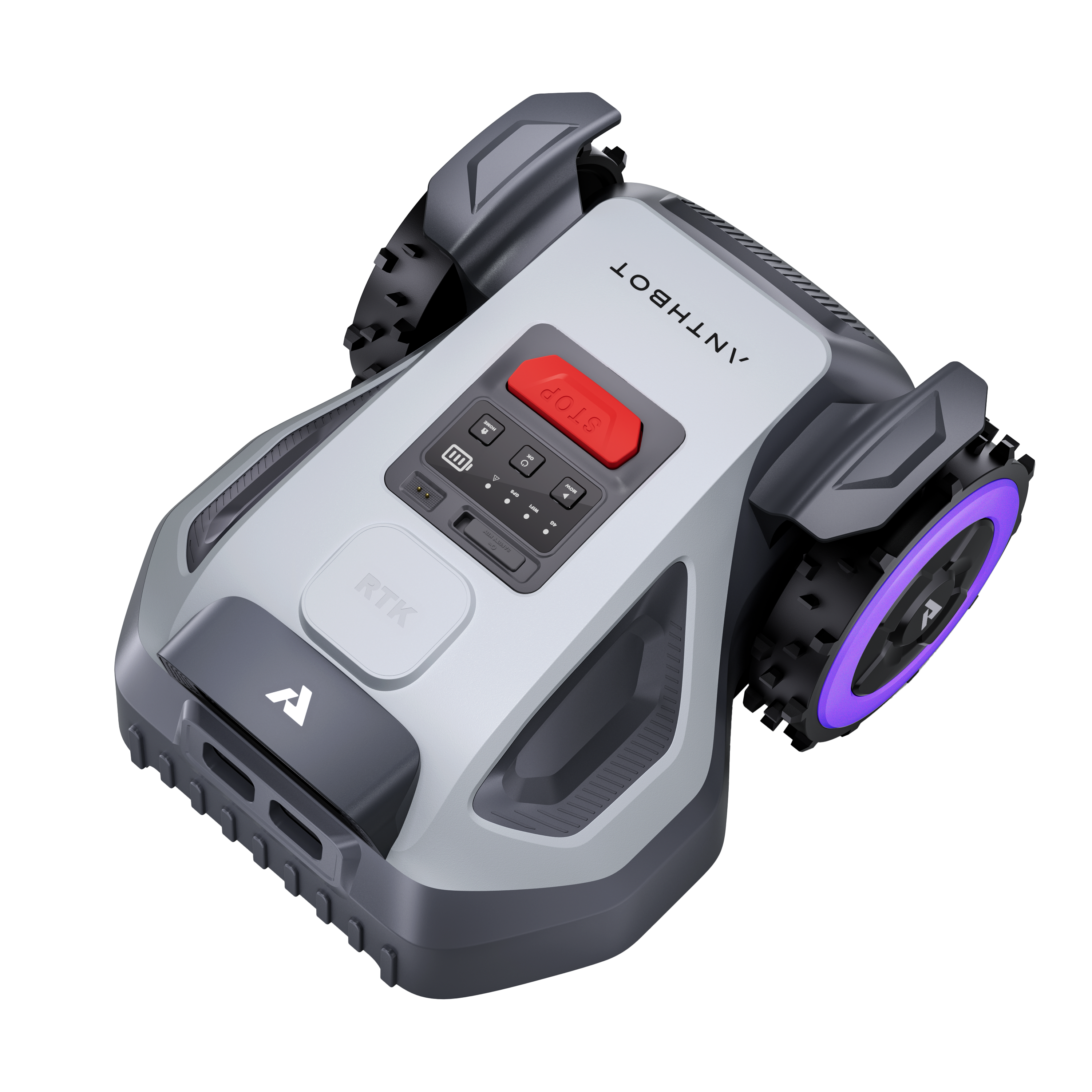
Advanced robotic mowers are built to autonomously crawl up and down difficult terrain without the need for perimeter wires. Devices like the ANTHBOT series, for example, use intelligent mapping (via RTK and Vision or LiDAR) and aggressive treads to easily conquer inclines as steep as 24° (45%) and cross uneven 40mm barriers.
Furthermore, modern engineering has solved the issue of grass collection on hills; models like the ANTHBOT N8 can actually collect and auto-dump clippings using a 23L bag while traversing these steep gradients—a task that would unbalance older machines. If your sloped property is more compact, finding the best lawn mower for small gardens is crucial; models like the ANTHBOT M5 or M5 LiDAR provide the same impressive 24° climbing capability in an ultra-agile frame perfect for tight spaces. They handle the dangerous work while you stay safely off the slope.
Walk-Behind Mowers: The Safest Manual Choice for Steep Inclines
If you prefer a more hands-on approach, a walk-behind mower is the safest manual choice for steep inclines. The key advantage here is that your body weight is separate from the machine, keeping the overall centre of gravity low and stable. For hills, a model with rear-wheel drive is essential, as it provides superior traction by pushing the mower into the slope. Self-propelled variants—particularly battery-powered models, which are worth considering if you are weighing electric vs petrol lawn mowers—reduce the physical strain of pushing the mower uphill, allowing you to focus on control.
Stand-On Mowers: Professional Balance and Control
Stand-on mowers offer a unique solution for hills, often favoured by professionals. By standing on a platform, the operator can actively shift their body weight to counterbalance the machine as it traverses a slope. This dynamic interaction allows for excellent control and stability on uneven terrain. However, they do require a degree of operator skill and confidence.
Ride-On Tractors: Best for Gentle, Rolling Slopes
The traditional ride-on lawn tractor is a common sight in many gardens, but its capabilities on hills are limited. These machines are often top-heavy, making them suitable only for gentle, rolling slopes. The general consensus among manufacturers and safety experts is that you should adhere to a strict 15° (27%) safety limit. Attempting to use a standard ride-on tractor on a steeper incline significantly increases the risk of a rollover.
Zero-Turn Mowers: Fast, But Use Caution on Hills
Zero-turn mowers are prized for their speed and manoeuvrability on flat ground, but they demand a high degree of caution on hills. Their design, with caster wheels at the front that are free-swivelling, can lead to a dangerous loss of traction on slopes. On a side hill, the downhill caster wheel can lose its grip, causing the mower to slide sideways. If you require a zero-turn for a hilly property, look for heavy-duty tracked options for maximum grip.
Dedicated Slope Mowers: For Extreme and Bumpy Terrain
For the most demanding situations—large estates, roadside embankments, or dykes with slopes exceeding 30° (58%) or even 50° (119%)—dedicated slope mowers are the only viable solution. Professional remote-controlled (RC) mowers use rugged crawler tracks instead of wheels to provide immense traction and stability on the steepest and bumpiest terrain. They can be operated from a safe distance, completely eliminating the risk of operator injury from a rollover.
4 Crucial Features to Look For in a Hill Mower
Once you have settled on a mower type, use this scannable checklist to ensure the model you choose is truly up to the task:
- Pressure-Lubricated Engines: On a steep slope, the oil in a standard petrol engine can slosh away from the oil pump, leading to catastrophic engine failure. Pressure-lubricated engines circulate oil effectively regardless of the angle.
- Traction and Tyres: Standard turf tyres offer minimal grip on a hill. Look for mowers with deep, aggressive lug tyres or tracks that can dig into the soil and distribute weight evenly to prevent slippage.
- Low Centre of Gravity: A mower with a low centre of gravity and a wide wheelbase is inherently more resistant to tipping.
- Roll-Over Protection System (ROPS): For any ride-on mower used on a slope, a ROPS is a non-negotiable safety feature. If your mower is equipped with a ROPS, it is critical that you wear the seatbelt at all times.
How to Safely Mow a Steep Hill
Having the right machine is only half the battle; how you use it is equally important.
Mowing Direction: Up and Down vs. Side-to-Side
The golden rule of hill mowing depends entirely on your equipment:
- For ride-on mowers: You must mow directly up and down the hill to maintain longitudinal stability. Mowing across a slope significantly increases the risk of a side rollover.
- For walk-behind mowers: You should mow across the slope (side-to-side). This provides better footing and prevents you from slipping downhill under the mower's deck.
Avoid Wet Grass at All Costs
Even the most advanced hill mower with the most aggressive tyres can lose traction on wet grass. Moisture turns a grassy slope into a slippery surface, dramatically increasing the risk of sliding out of control. Always wait for the grass to dry completely and choose the best time to cut your grass before attempting to mow a slope.
Conclusion
Mowing a sloped garden does not have to be a dangerous chore. By understanding your terrain, selecting the right mower for the specific gradient, and adhering to safe mowing practices, you can achieve a beautifully manicured lawn without compromising your safety. Whether you opt for the hands-off convenience of an advanced robot mower or the controlled power of a specialised machine, understanding how much a robot lawn mower costs versus traditional machines ensures your investment provides long-term beauty and safety for your home.
Frequently Asked Questions (FAQ)
Is a ride-on mower or a zero-turn better for hills?
Neither is inherently better, as both have strict limits on inclines. A standard ride-on tractor is stable for gentle slopes up to 15° (27%) when driven straight up and down, while a zero-turn risks sideways sliding due to its front caster wheels. For steeper gradients, a purpose-built slope mower or an advanced robotic mower is always the safest choice.
How steep of a slope can you safely mow?
A safe slope depends entirely on the equipment you are using. Most standard ride-on mowers should never be used on slopes exceeding 15° (27%). However, advanced robotic mowers are engineered to safely handle inclines up to 24° (45%), and professional tracked mowers can go even steeper.
What is the best tool for cutting grass on an extreme slope?
For extreme edges and banks where wheels cannot safely go, a strimmer (grass trimmer) is the best tool. For the main area of a slope exceeding 30° (58%), a professional remote-controlled tracked mower is the safest and most effective solution to keep the operator entirely out of harm's way.


Leave a comment
This site is protected by hCaptcha and the hCaptcha Privacy Policy and Terms of Service apply.