











We all love the look of a tidy lawn. It makes a small garden look twice the size. But actually getting that finish? It is often harder than it looks. You aren't just mowing a square patch of grass; you are dodging garden furniture, squeezing down narrow side paths, and trying not to clip the flower beds.
Then there is the storage problem. Trying to shove a bulky machine back into a shed that is already full of bikes and tools is a headache.
This guide cuts through the noise. We are not just looking for the smallest machine; we are looking for agility and precision. For the European homeowner with a garden under 500m², the "best" mower is the one that gets the job done without taking over your shed—or your weekend.
Table of Contents
The Specific Challenges of Mowing a Small Garden

Small gardens present a unique set of obstacles that standard lawn care advice often overlooks. It’s not simply a scaled-down version of a large lawn; it’s a precision task.
- Navigating Tight Spaces: Your garden likely features intricate layouts—narrow side passages, tight corners between sheds and fences, and lawn areas encircled by planting beds. A mower with a wide cutting deck or poor manoeuvrability will struggle, leaving uncut patches or requiring tedious manual trimming.
- Storage Limitations: The reality for many urban and suburban homeowners is a compact shed or a shared garage. Bulky handles, long cables, and large frames consume precious space that could be used for bicycles, tools, or autumn waste.
- The "Chore" Factor: Spending a precious weekend afternoon pushing a noisy mower across a 200m² lawn feels disproportionate. The sweat, the noise, and the time commitment can make you question the value of maintaining a small green space meant for enjoyment.
Comparing the 3 Main Types of Mowers for Small Lawns
So, what are your actual options? Let's look at the three main categories you will find in shops today and be honest about how they handle compact spaces.
Electric (Corded) Mowers
Often considered an entry-point for small gardens due to their lower initial cost.
- Pros: Provide consistent power without the need for battery charging or fuel. They are typically lightweight and straightforward to use.
- Cons: The cable is a nightmare. It is a constant tripping hazard. You are limited by the length of your extension lead, and you spend half your time flicking the cord over your shoulder to avoid cutting it. In a garden with trees or furniture, the cable gets snagged on everything.
Traditional Cordless Push Mowers
Frequently marketed as the best cordless lawn mower for small gardens, this category eliminates the cable constraint.
- Pros: Excellent mobility and freedom from a power outlet. They are a solid step up from corded models for convenience.
- Cons: You still have to do the work. Also, don't underestimate the weight; lifting them for edge trimming is heavy work. Crucially, despite being "cordless," the long handles and wide bodies still eat up a huge amount of floor space in your garage.
Compact Robot Lawn Mowers
This category represents the modern evolution of hands-free garden maintenance.
- Pros: Robot lawn mowers offer true automated care. Once scheduled, it works independently. Ultra-quiet operation makes it ideal for residential areas. Its greatest spatial advantage is a near-zero storage footprint—it simply returns to its charging station.
- Verdict: For those who value convenience and time, this is the logical progression from a standard electric lawn mower for a small garden.
Why a Compact Robot Mower is the Best Choice for Small Lawns
If you want your weekends back, a dedicated robot lawn mower for small lawns stands apart. Here is why this category wins in compact spaces:
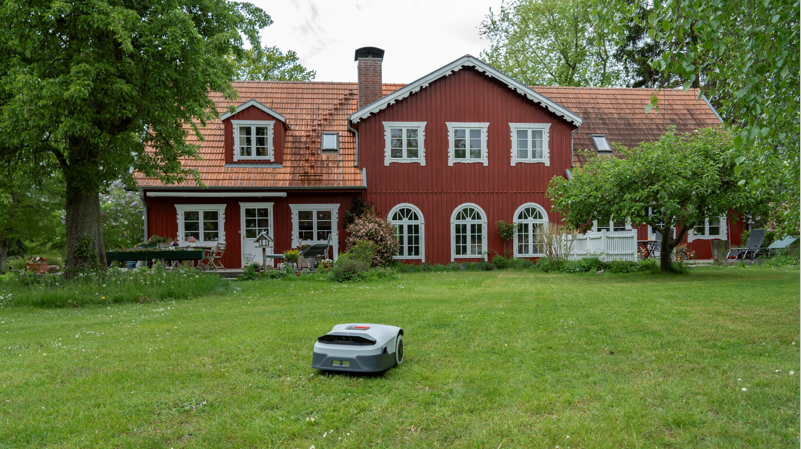
- It Fits Where Others Don't: Big push mowers are clumsy. Compact robots are designed to be slender. They can glide down narrow footpaths and weave tightly around obstacles. You get a uniform cut in corners that a wide deck simply cannot reach.
- The Storage Problem: Solved: There are no handles to fold down. No heavy lifting. The mower lives on the lawn at its charging station, meaning you get your shed space back.
- Better Grass Health: It’s about the mulch. These robots clip the grass a tiny amount, every day. Those clippings feed the soil naturally, creating a denser, carpet-like lawn that resists moss.
If you are still on the fence about ditching the manual work, you might want to explore the full pros and cons of automating your garden before deciding.
Spotlight: A Dedicated Solution for Compact Lawns
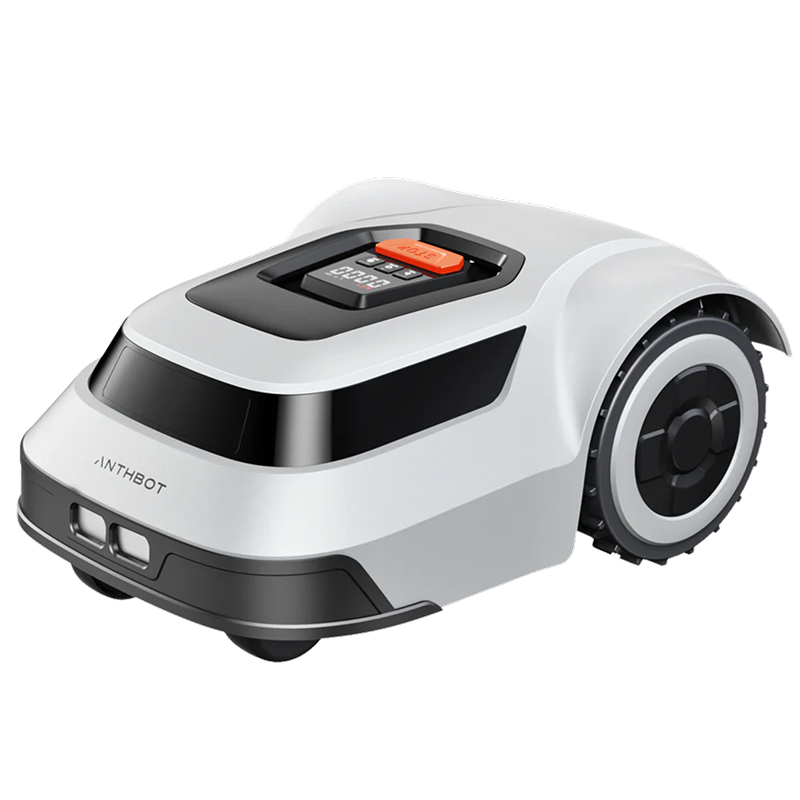
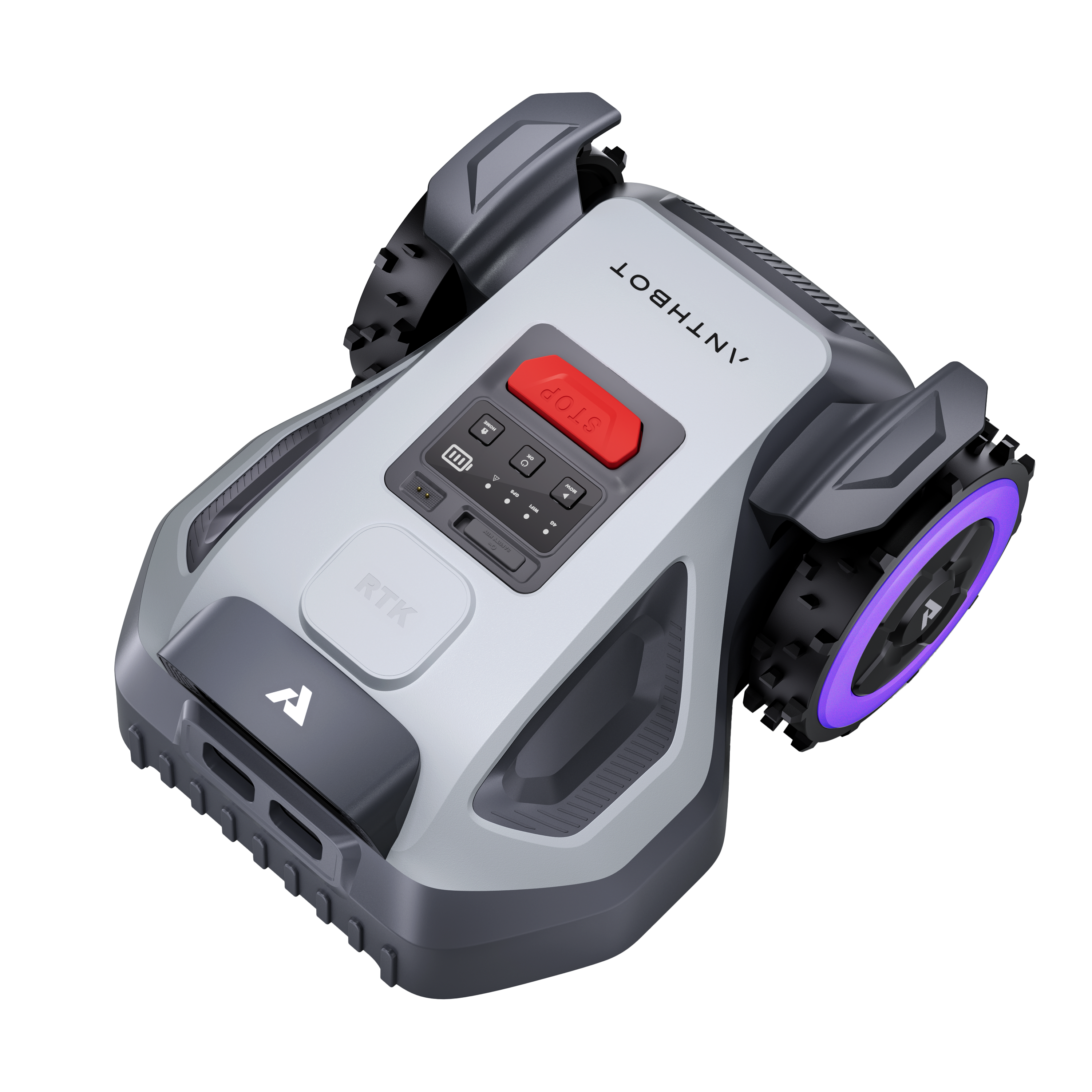
Here is the catch: not all robots work in small gardens. Many are just big mowers, shrunk down. That doesn't work. You need a machine built specifically for the chaos of a small layout. Let’s look at how the ANTHBOT M5 robot lawn mower approaches this challenge.
Engineered for Agility, Not Just Size
It is not about brute force; it is about agility. You need an ultra-compact body and a drive system that reacts instantly. This allows the M5 RTK to handle tight U-turns and navigate the confined corners of a typical European garden. Imagine trying to park a large estate car in a spot meant for a Mini. It’s the same with mowers. The M5 is built for the tight spot.
Smart Navigation in Complex Layouts
Old robots used to bounce off walls randomly like a pinball. That wastes battery and misses patches. The M5 uses a mix of vision sensors and precise positioning (Full-Band RTK) to actually "see" the garden. It maps a sensible route. This ensures it covers the area around your flower pots and garden chairs without going over the same spot ten times.
Efficiency and Precision Cutting
A small garden still deserves a professional finish. A multi-blade cutting disc (around 20cm wide) gives you that clean, scissor-like cut. This width is the sweet spot—agile enough for narrow paths but wide enough to be efficient. Plus, with App-Adjusted Cutting Height, you can change the settings from your phone without flipping a dirty machine over.
User Experience: The Perimeter Wire-Free Advantage
The old way of installing robots involved digging trenches for a perimeter wire. In a small garden, that’s a mess. The modern way is wire-free. Using Full-Band RTK satellite positioning together with Dual Vision cameras, the M5 learns its boundaries in minutes. No cables to peg down, no digging. It’s just simpler.
How to Choose the Right Mower Specs
Use this framework to evaluate any mower for your compact outdoor space.
- Cutting Width: For gardens under 500m², stick to a width of around 20cm. It balances speed with the ability to squeeze through gaps. Anything over 35cm is likely too clumsy for your needs.
- Navigation Technology: Avoid random bounce mowers. Look for systematic navigation that ensures the mower knows where it has been. It is much faster and leaves a better finish.
- Connectivity: A good app isn't a gimmick. Being able to schedule mowing while you are at work—or check the battery status from the sofa—is what makes the machine truly useful.
Final Thoughts
Choosing the best lawn mower for your small garden is about more than just cutting grass; it's about choosing how you spend your time. Upgrading from manual "maintenance" to automated "care" transforms your relationship with your garden. You shift from being a labourer to a curator.
For those seeking a modern solution engineered specifically for agility, space-saving, and intelligence, a dedicated model like the ANTHBOT M series represents a thoughtful approach to small lawn care. It’s designed to solve the very puzzles that make small garden maintenance a chore.
FAQ: Mowing Small Gardens
Is a robot lawn mower worth it for a small garden under 500m²?
Absolutely. In fact, the value is often higher for small gardens. It eliminates a repetitive chore, allowing you to actually enjoy your outdoor space rather than working in it.
How do I maintain a cordless or robot mower?
Maintenance is low. Keep the blades sharp (swap them once a year), wipe down the sensors occasionally, and keep the charging contacts clean. Bring the battery inside during freezing winter months.
What is the quietest lawn mower for residential areas?
Compact robot lawn mowers are consistently the quietest. They hum at the volume of a quiet conversation, meaning you can run them early in the morning without annoying the neighbours.



Leave a comment
This site is protected by hCaptcha and the hCaptcha Privacy Policy and Terms of Service apply.