










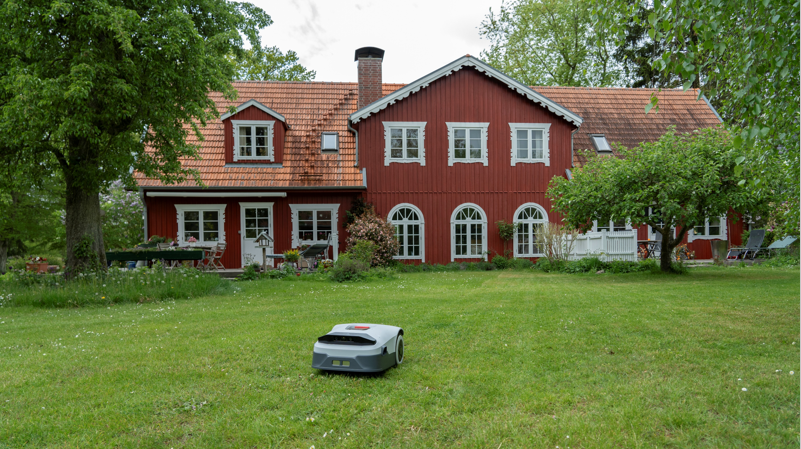
For years, robotic lawn mowers relied on perimeter wires to define where they could and couldn't mow. While this system works reliably, installing the wire can take time, and changing the mowing area often means moving or reinstalling it.
Wire-free robot lawn mowers offer a different approach. Instead of using a physical boundary, they use technologies such as RTK, GPS, LiDAR, cameras, or a combination of sensors to map the lawn and create virtual boundaries.

This shift makes robotic mowing easier to set up and more flexible to manage. You can create or adjust mowing areas digitally without digging up your lawn or repositioning boundary wires.
But going wire-free doesn't automatically mean every mower will perform better. Navigation technology, lawn layout, satellite visibility, obstacle detection, and software all affect how well a wire-free mower works.
Table of Contents
What Is a Robot Lawn Mower Without Perimeter Wire?
A robot lawn mower without perimeter wire is a robotic mower that doesn't require a physical wire installed around the edge of your lawn. Instead, it uses navigation technology and digital mapping to determine where it should mow.
Traditional robot mowers typically rely on a perimeter wire buried or secured around the lawn. The wire creates a physical boundary that tells the mower where the mowing area ends. Wire-free models replace this setup with virtual boundaries created through mapping and positioning systems.
How Does It Work?
The basic process is:
- Map the lawn – The mower scans or travels around the garden to create a digital map.
- Set virtual boundaries – Users define mowing areas and restricted zones through the mower or its app.
- Navigate automatically – The mower uses technologies such as RTK, LiDAR, Vision, or a combination of them to determine its position.
- Mow within the mapped area – The mower follows planned routes while avoiding obstacles and restricted areas.
-
Return and recharge – When the battery is low, it returns to the charging station and can resume mowing afterward.
Perimeter Wire vs. Wire-Free
|
Feature |
Perimeter Wire Mower |
Wire-Free Mower |
|
Boundary setup |
Physical wire |
Virtual boundary |
|
Installation |
Requires wire installation |
Usually faster setup |
|
Changing boundaries |
Move/reinstall wire |
Adjust digitally |
|
Multi-zone management |
Can require additional wiring |
Generally easier to manage |
|
Navigation |
Wire-based boundary + sensors |
RTK, LiDAR, Vision, or hybrid systems |
The main advantage of going wire-free is flexibility. You can create and modify mowing areas without physically changing the lawn's boundary infrastructure.
However, wire-free doesn't mean "technology-free." The mower still needs a reliable way to understand its location and surroundings. That's why the navigation system is one of the most important factors to consider when choosing a wire-free robot lawn mower.
How Do Wire-Free Robot Lawn Mowers Know Where to Mow?
The biggest question about a robot lawn mower without a perimeter wire is simple: if there is no physical boundary, how does the mower know where to mow?
The answer is digital mapping combined with positioning and environmental sensing technologies. Depending on the model, a wire-free mower may use RTK, Vision, LiDAR, or several technologies together to understand its location and surroundings.
1. Create a Digital Map
Before mowing, the mower creates a map of the lawn. Depending on the model, this can involve automatic mapping, guided mapping, or a combination of sensors and positioning data.
The map defines the areas where the mower should operate and can also identify restricted areas such as flower beds, pools, or garden furniture.

2. Set Virtual Boundaries
Instead of installing a physical perimeter wire, you can define virtual boundaries in the mower's app or during the mapping process.
If you change your garden later, these boundaries can usually be adjusted digitally rather than physically moving a wire.
3. Locate Itself While Mowing
During operation, the mower continuously determines its position using its navigation system.
- RTK provides highly accurate positioning.
- LiDAR scans the surrounding environment.
- Vision uses cameras and AI to recognize objects and lawn features.
- Hybrid systems combine multiple technologies to improve navigation reliability.

4. Detect Obstacles and Restricted Areas
Positioning alone isn't enough. The mower also needs to understand what's around it.
Depending on the model, sensors and cameras can detect objects such as trees, flower pots, toys, garden furniture, and other obstacles, allowing the mower to adjust its route instead of simply driving into them.
5. Plan and Adjust Its Mowing Route
Once the mower knows its location and the boundaries of the mowing area, it can plan a route across the lawn. More advanced models can also manage multiple zones, return to the charging station, and resume mowing where they left off.

The Key Difference
A perimeter-wire mower primarily uses a physical wire to define the mowing area, while a wire-free mower relies on digital maps, positioning, and environmental sensing.
This makes wire-free mowing more flexible, but it also means the quality of the mower's navigation system plays a much bigger role in its overall performance.
€749,00
€1.168,00
€1.468,00
€999,00
Benefits of Robot Lawn Mowers Without Perimeter Wire
The biggest advantage of a wire-free robot lawn mower is not simply the absence of a cable. It's the simpler installation and greater flexibility that come with using virtual boundaries.
No Perimeter Wire Installation
Traditional models require you to install a physical wire around the lawn. Wire-free models eliminate this step, which can make setup significantly faster and less disruptive to your garden.
Easier to Change Mowing Areas
Need to expand a flower bed or create a new restricted area? With virtual boundaries, you can usually make these changes through the mower's mapping system or app instead of moving physical wire.
Better for Multiple Lawn Zones
Wire-free models can make it easier to manage front yards, backyards, side lawns, or other separate mowing areas. Depending on the model, you can create different zones and schedules without installing additional boundary wires.
Less Boundary-Wire Maintenance
A physical wire can become damaged by gardening work, weather, animals, or accidental cuts. Without a perimeter wire, there's no buried cable to troubleshoot or repair.
Cleaner Installation
There are no visible boundary wires around the lawn, and you don't need to dig trenches or secure cables around garden edges. This can be particularly useful for established gardens where you don't want to disturb existing landscaping.
More Flexible Lawn Management
Virtual boundaries make it easier to adapt the mowing area as your garden changes. This is particularly useful for homeowners who frequently modify landscaping or have irregular lawn layouts.
Bottom line: Wire-free robot mowers offer the greatest convenience in setup, boundary management, and long-term flexibility. However, their performance still depends heavily on the quality of the navigation technology and how well it suits your garden.
Types of Wire-Free Robot Lawn Mowers
Wire-free robot lawn mowers use different technologies to understand their position and surroundings. The main options are RTK, Vision, LiDAR, and Hybrid Navigation. Each has different strengths, so the best choice depends on your lawn layout and environment.
1. RTK-Based Robot Lawn Mowers
RTK uses satellite positioning and correction data to provide highly accurate location information. It allows the mower to create precise mowing routes without a physical perimeter wire.
Pros
- Highly accurate positioning
- Precise and systematic mowing
- Works well on larger, open lawns
- No physical boundary wire
Cons
- Trees and buildings can interfere with satellite signals
- Some models require an RTK reference station
- Less suitable for heavily obstructed areas
Best for: Open lawns with good satellite visibility.

2. Vision-Based Robot Lawn Mowers
Vision-based models use cameras and AI to recognize grass, obstacles, lawn edges, and other objects. Instead of relying primarily on satellite positioning, the mower uses what it sees to understand the environment.
Pros
- Can identify visible obstacles
- Less dependent on satellite positioning
- Useful around landscaping features
- Can support a relatively simple wire-free setup
Cons
- Lighting and weather can affect visual recognition
- Shadows or unclear boundaries may reduce accuracy
- Performance depends on camera and AI capabilities
Best for: Small to medium gardens with clearly visible boundaries and obstacles.

3. LiDAR-Based Robot Lawn Mowers
LiDAR uses laser scanning to measure the surrounding environment and help the mower understand nearby objects and spaces.
Pros
- Doesn't rely entirely on satellite signals
- Effective at detecting nearby obstacles
- Useful around trees, buildings, and fences
- Less dependent on daylight than vision systems
Cons
- Can increase the cost of the mower
- Performance depends on sensor and mapping quality
- Local environmental mapping doesn't replace the global positioning provided by RTK
Best for: Complex gardens, narrow passages, and areas with limited satellite visibility.

4. Hybrid Navigation Robot Lawn Mowers
Hybrid navigation combines multiple technologies to overcome the limitations of relying on a single positioning system. By using different sensors together, the mower can adapt to a wider range of garden conditions.
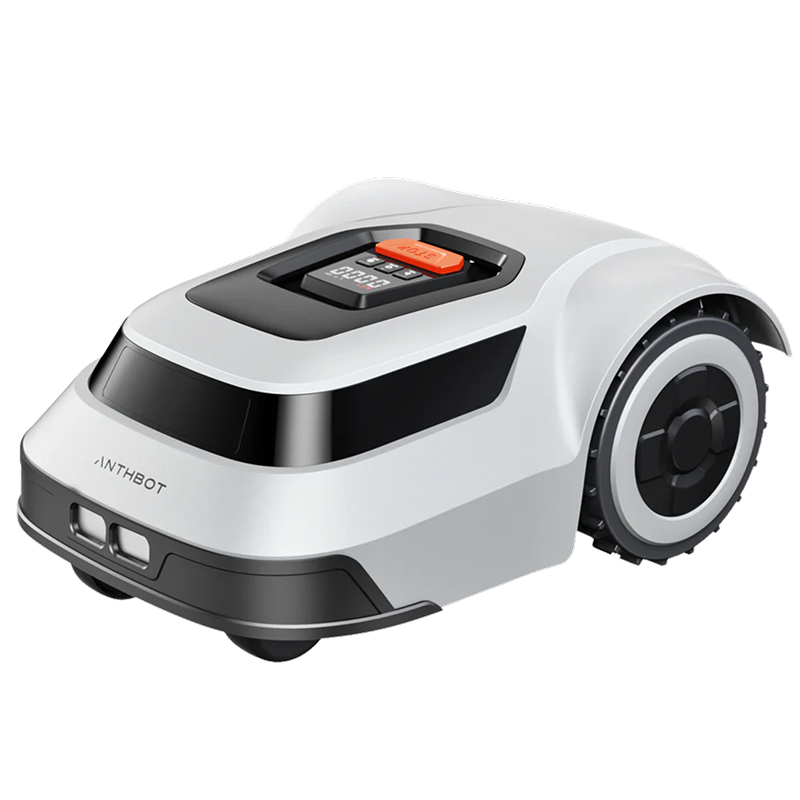
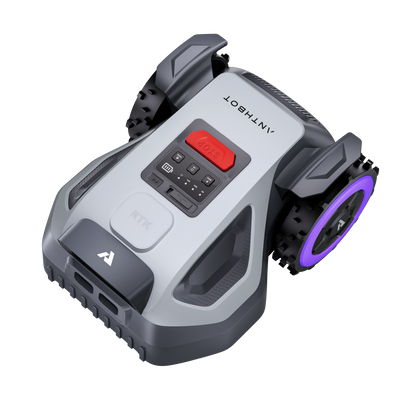
For example, the ANTHBOT M Pro Series uses HoloSense Quad-Fusion Positioning, combining 360° LiDAR, RTK/NetRTK, and Vision.
The M Pro Series also offers One-Tap Auto-Mapping, AI detection of 1,000+ types of obstacles, Smart Multizone Scheduling, EdgeWiz™ Edge Mowing, and slope capability of up to 24° (45%).
Pros
- Combines the strengths of multiple technologies
- More adaptable to different lawn environments
- Can maintain navigation when one positioning method is limited
- Well suited to complex layouts and multiple zones
Cons
- Typically costs more than single-technology models
- More sensors and software make the system more sophisticated
- May be unnecessary for simple, open lawns
Best for: Homeowners who want a versatile wire-free mower for different lawn layouts and challenging conditions.
Wire-Free vs. Perimeter Wire: Which Is Better?
Both wire-free and perimeter-wire robot lawn mowers can maintain a lawn automatically, but they take very different approaches to defining the mowing area. The better option depends on your installation preferences, lawn layout, and budget.
Wire-Free vs. Perimeter Wire
|
Feature |
Wire-Free Robot Mower |
Perimeter Wire Robot Mower |
|
Boundary setup |
Virtual boundaries |
Physical wire |
|
Installation |
Usually faster and easier |
Requires installing the wire |
|
Changing boundaries |
Adjust digitally |
Move or reinstall the wire |
|
Multiple zones |
Generally easier to configure |
Can require more complex wiring |
|
Wire maintenance |
No boundary wire to repair |
Wire can break or become damaged |
|
Lawn appearance |
No visible boundary cable |
Wire may be visible during installation |
|
Navigation |
RTK, Vision, LiDAR, or hybrid |
Boundary wire + onboard sensors |
|
Initial cost |
Often higher |
Generally more affordable |
|
Setup flexibility |
High |
Lower once the wire is installed |
When Wire-Free Is the Better Choice
A wire-free mower is particularly attractive if you:
- Don't want to install or bury perimeter wire
- Have multiple lawn areas
- Frequently change your garden layout
- Want to create virtual boundaries through an app
- Prefer a faster and cleaner installation
It's also a good option for homeowners who want more advanced navigation and obstacle detection.
When Perimeter Wire Still Makes Sense
A traditional perimeter-wire mower can still be a practical choice if:
- You have a simple, clearly defined lawn
- Your budget is limited
- You don't mind spending time on installation
- You prefer a proven, relatively straightforward boundary system
So, Which Is Better?
Wire-free doesn't automatically mean better. Its main advantage is convenience and flexibility, while perimeter-wire models can offer a simpler and more affordable solution for straightforward lawns.
If you're willing to pay more for easier installation, virtual boundaries, and flexible lawn management, a wire-free mower can be worth the investment. For a simple lawn where the boundary rarely changes, a perimeter-wire model may still provide excellent value.
Recommended Wire-Free Robot Lawn Mowers
If you want a robot lawn mower without a perimeter wire, your choice should come down to how complex your lawn is, how much coverage you need, and how much you're willing to spend. Among ANTHBOT's wire-free models, the M Pro Series stands out for advanced navigation, while the M5 offers a more budget-friendly option.
Best for Advanced Wire-Free Mowing: ANTHBOT M Pro Series
The ANTHBOT M Pro Series, including the M5 Pro and M9 Pro, is designed for homeowners who want a wire-free mower that can handle a wide range of garden conditions.
Instead of relying on a single navigation technology, the M Pro Series uses HoloSense Quad-Fusion Positioning, combining 360° LiDAR, RTK/NetRTK, and Vision. This multi-sensor approach helps the mower maintain accurate positioning while also understanding its surrounding environment.

Key Features
- No perimeter wire and no RTK installation
- HoloSense Quad-Fusion Positioning
- 360° LiDAR + RTK/NetRTK + Vision
- One-Tap Auto-Mapping
- AI detection of 1,000+ types of obstacles
- Smart Multizone Scheduling
- EdgeWiz™ Edge Mowing
- Handles slopes up to 24° (45%)
- Designed for different lawn layouts and mowing scenarios
M5 Pro vs. M9 Pro
The primary difference between the two models is their mowing capacity:
|
Model |
Coverage |
Best For |
|
ANTHBOT M5 Pro |
Up to 500 m² (0.12 acre) |
Small to medium gardens |
|
ANTHBOT M9 Pro |
Up to 1,000 m² (0.25 acre) |
Medium to larger residential gardens |
Since the navigation technology and core feature set are largely shared, choose based primarily on your lawn size rather than buying the larger model simply for additional capacity.
Why Choose the M Pro Series?
The biggest advantage is its ability to combine different navigation technologies rather than depending on one system. RTK provides positioning, LiDAR maps the surrounding environment, and Vision helps recognize objects and lawn features.
This makes the M Pro Series a strong option for homeowners who want a wire-free mower that can adapt to different garden scenarios, including lawns with obstacles, multiple zones, and more complicated layouts.
Best Value Wire-Free Robot Mower: ANTHBOT M5
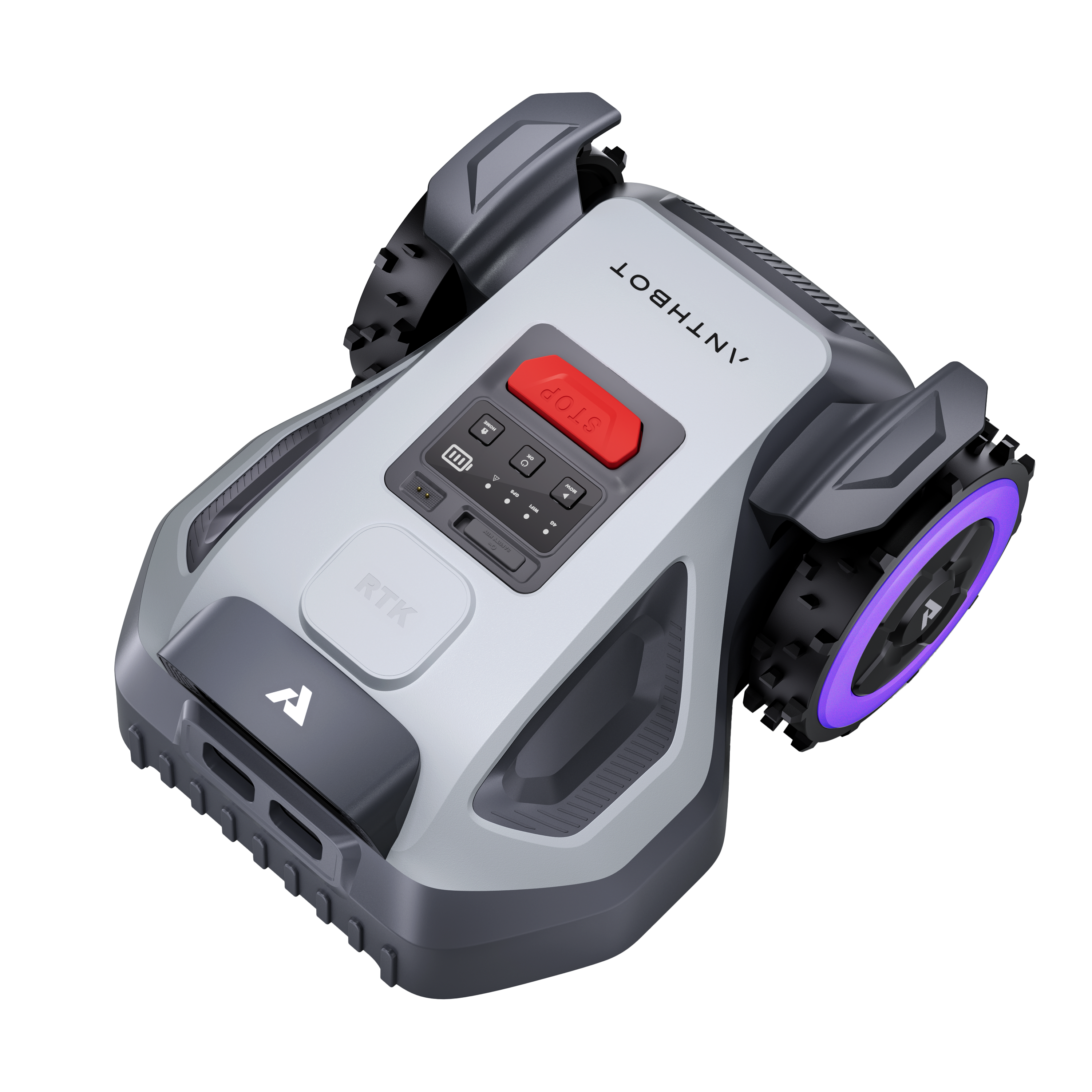
If you have a smaller and relatively straightforward lawn, the ANTHBOT M5 is a more affordable option that focuses on delivering the essential benefits of wire-free robotic mowing.
With coverage of up to 500 m² (0.12 acre), the M5 is well suited to typical residential gardens. It offers automatic mapping, smart navigation, and app control without requiring a traditional perimeter wire.
Why Choose the M5?
- Up to 500 m² coverage
- Wire-free operation
- One-Tap Auto-Mapping
- Smart app control
- Compact design
- Strong price-to-performance ratio
The M5 makes the most sense if your priority is getting reliable wire-free mowing without paying for features your lawn doesn't necessarily need.
Which One Should You Choose?
Choose the M Pro Series if you have a more complex garden and want advanced multi-sensor navigation that can adapt to different mowing conditions.
Choose the M5 if you have a lawn up to 500 m² and your main priority is value for money and simple wire-free mowing.
In short, the M Pro Series is the more advanced choice, while the M5 focuses on delivering the core wire-free experience at a more accessible price.
How to Choose the Right Wire-Free Robot Lawn Mower
The best wire-free robot lawn mower isn't necessarily the one with the most advanced technology. It should match your lawn size, layout, environment, and budget.
1. Start With Your Lawn Size
Choose a mower with enough capacity for your entire mowing area.
- Up to 500 m²: A compact model such as the ANTHBOT M5 or M5 Pro may be sufficient.
- Up to 1,000 m²: Consider a higher-capacity model such as the ANTHBOT M9 Pro.
It's better to have some capacity in reserve rather than choosing a mower that is constantly working at its maximum range.
2. Consider Your Lawn Layout
Look at how complicated your garden is.
Simple, open lawn:
RTK or Vision-based navigation may be sufficient.
Trees, flower beds, narrow passages, or multiple zones:
A mower with LiDAR or hybrid navigation can provide greater environmental awareness and flexibility.
3. Check Satellite Visibility
If you're considering an RTK-based mower, look at your garden's surroundings.
Large trees, tall buildings, fences, and other structures can affect satellite visibility. If your lawn contains many potential signal obstructions, a mower that combines RTK with LiDAR and Vision may be a better fit.
4. Think About Obstacles
Make a list of the objects the mower will encounter, such as:
- Trees
- Flower beds
- Garden furniture
- Children's toys
- Paths
- Garden decorations
If your lawn has many obstacles, prioritize obstacle detection and environmental mapping rather than looking only at positioning accuracy.
5. Consider Multiple Zones
If you have separate front, back, or side lawns, check whether the mower supports multizone management.
A good wire-free system should allow you to create different mowing areas and schedules without requiring additional physical boundary wires.
6. Match Features to Your Budget
Advanced navigation isn't always necessary. For a simple 300–500 m² lawn, paying significantly more for premium sensors may not provide much additional value.
On the other hand, if your garden is complex, investing in better navigation can reduce setup work and improve everyday mowing performance.
Final Verdict
A robot lawn mower without perimeter wire can make lawn care significantly easier by replacing physical boundaries with digital mapping and smart navigation. You no longer need to install, bury, or repair a perimeter wire, and changing mowing areas is generally much simpler.
However, wire-free doesn't automatically mean better. The right choice depends on your lawn's size, layout, obstacles, satellite visibility, and budget.
FAQ: Robot Lawn Mower Without Perimeter Wire
1. How does a robot lawn mower work without a perimeter wire?
Wire-free robot lawn mowers use technologies such as RTK, GPS, LiDAR, Vision, or hybrid navigation to map the lawn and create virtual boundaries. This allows the mower to determine where it should and shouldn't mow without a physical perimeter wire.
2. Do wire-free robot lawn mowers need Wi-Fi?
Not necessarily. Wi-Fi requirements vary by model. Some mowers use Wi-Fi for app control, software updates, or mapping features, while their actual navigation may rely on RTK, LiDAR, Vision, or other technologies.
3. Are wire-free robot lawn mowers accurate?
They can be highly accurate, but performance depends on the navigation technology and lawn environment. RTK can provide precise positioning, while LiDAR and Vision can improve environmental awareness. Hybrid systems combine multiple technologies for greater flexibility.
4. Can a wire-free robot mower work under trees?
It depends on the navigation system. Dense trees can interfere with satellite-based positioning such as RTK. Models that combine RTK with LiDAR and Vision may be better suited to gardens with trees because they don't rely entirely on satellite signals.
5. What happens if an RTK robot mower loses its signal?
The mower's response depends on the model. Some systems can temporarily rely on other sensors or navigation technologies, while others may stop or adjust their operation until the signal is restored. If your lawn has many areas with poor satellite visibility, consider a multi-sensor navigation system.
6. Are wire-free robot mowers better than perimeter-wire models?
Not necessarily. Wire-free models are generally easier to install and more flexible to manage, while perimeter-wire models can be more affordable and work well for simple lawns. The better option depends on your garden and budget.
7. Can a wire-free robot mower handle multiple lawn zones?
Many modern wire-free models support multizone management, allowing you to create separate mowing areas and schedules. However, capabilities vary between models, so check the specific mower before buying.
8. Do wire-free robot mowers need a boundary?
Yes, but the boundary is usually virtual rather than physical. The mower uses a digital map to define where it can operate and where mowing is restricted.
9. Are wire-free robot mowers more expensive?
Generally, yes. Wire-free models often use more advanced positioning, sensors, and software, which can increase the initial price. However, they can save time and effort during installation and future boundary changes.
10. What is the best robot lawn mower without a perimeter wire?
The best model depends on your lawn. For simple lawns and value, a model such as the ANTHBOT M5 can be a practical choice. For more complex gardens, the ANTHBOT M Pro Series combines 360° LiDAR, RTK/NetRTK, and Vision for a more versatile wire-free mowing experience.




Leave a comment
This site is protected by hCaptcha and the hCaptcha Privacy Policy and Terms of Service apply.