


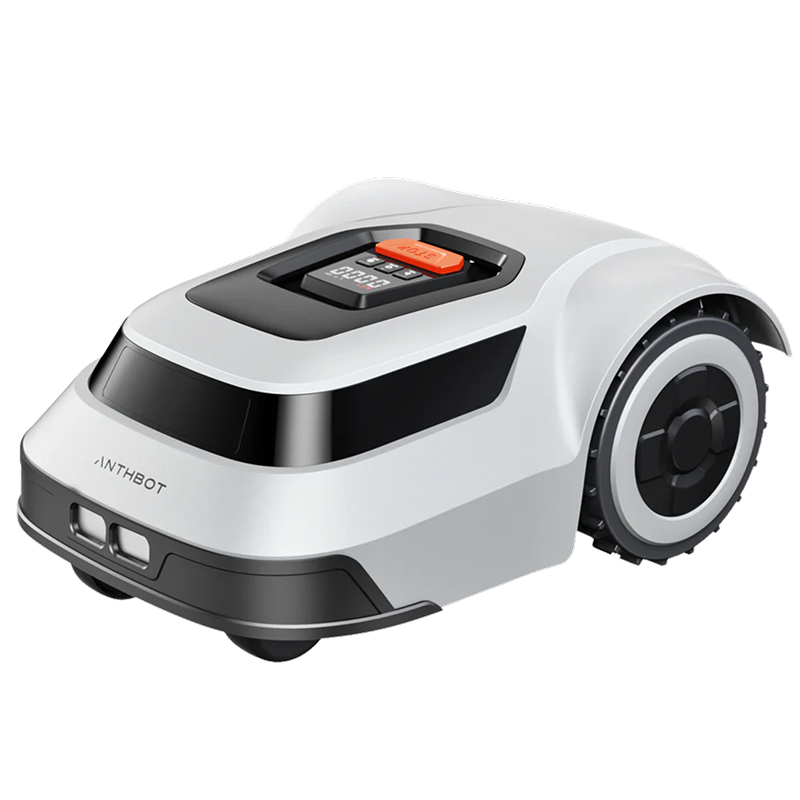








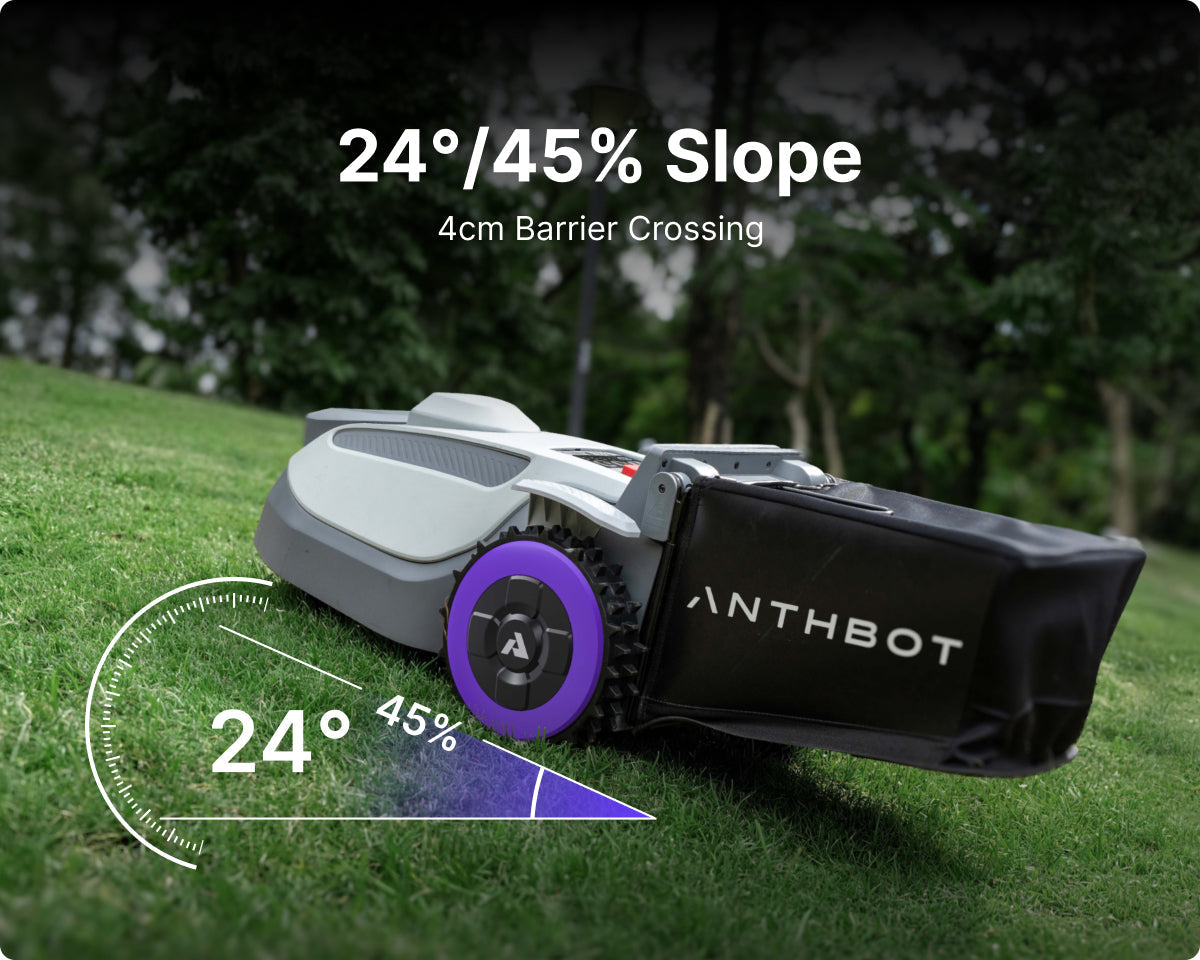
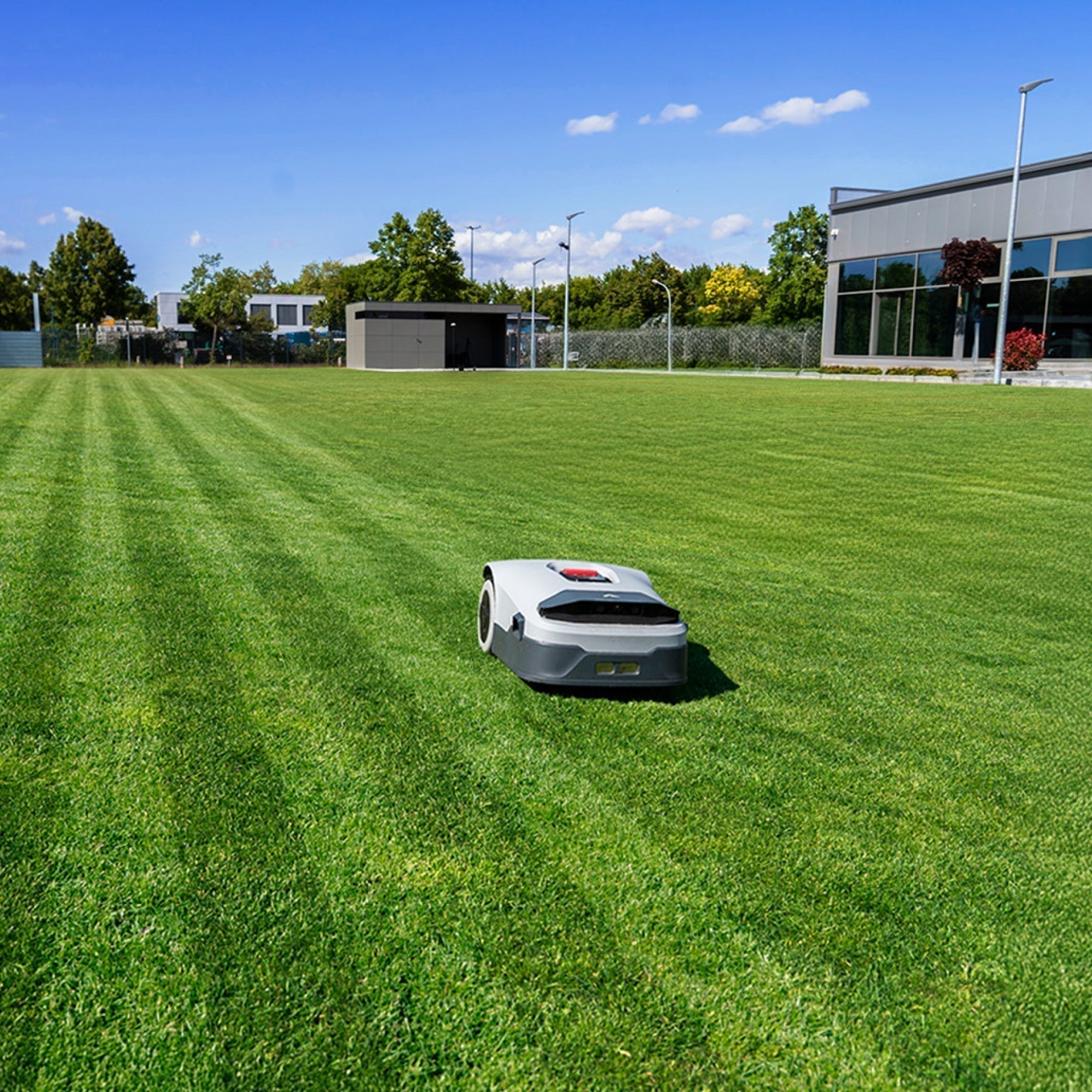
Nie wszystkie roboty koszące dobrze radzą sobie na pagórkach i nierównym terenie. Strome zbocza, mokra trawa, nierówności i nierówny teren mogą zmniejszyć przyczepność i utrudnić nawigację, powodując, że niektóre kosiarki ślizgają się, blokują lub pozostawiają nierówne efekty koszenia. Dlatego wybór robota koszącego przeznaczonego do pagórkowatych trawników jest tak ważny, zwłaszcza jeśli zależy Ci na niezawodnej pracy i stale czystym ogrodzie.
Table of Contents
Co sprawia, że robot koszący jest dobry na wzniesieniach?
Możliwość wspinania się po stokach
Jedną z najważniejszych cech robota koszącego na pagórkowatych trawnikach jest zdolność pokonywania wzniesień. Wydajna kosiarka płynnie radzi sobie ze stromymi zboczami, nie poślizgując się i nie tracąc równowagi. Wiele zaawansowanych modeli radzi sobie z nachyleniem 45% lub większym, podczas gdy wersje o wysokiej wydajności radzą sobie z nachyleniem do 60–80%, co czyni je lepiej przystosowanymi do nierównego i trudnego terenu.
Układ napędowy i trakcyjny kół
Układy trakcji i napędu kół odgrywają kluczową rolę w osiągach na nierównym terenie. Większe koła, głębszy bieżnik oraz napęd na cztery koła lub układ dwusilnikowy poprawiają przyczepność na mokrej trawie, luźnym podłożu i nierównych nawierzchniach. Lepsza przyczepność pomaga kosiarce poruszać się bardziej stabilnie i zmniejsza ryzyko utknięcia, szczególnie na zboczach, w błotnistych obszarach lub na zmiennych wysokościach.
Stabilność na nierównym podłożu
Dobra kosiarka automatyczna do nierównego terenu powinna zachować stabilność na nierównościach, zagłębieniach i nierównych powierzchniach. Nisko położony środek ciężkości, równomierny rozkład masy i elastyczne układy zawieszenia poprawiają stabilność i zapewniają bardziej równomierne koszenie. Zapewnia to bardziej niezawodną pracę na skomplikowanych trawnikach, mniejszą liczbę zatrzymywania się i problemów z nawigacją, a jednocześnie zmniejsza zużycie w dłuższej perspektywie.

RTK vs LiDAR vs Przewód graniczny dla trawników na pochyłościach
Dlaczego tradycyjny drut graniczny ma problemy na wzgórzach
Tradycyjne systemy przewodów granicznych mogą być mniej niezawodne na trawnikach o pochyłym terenie, ponieważ ich instalacja jest trudniejsza na nierównym terenie. Przewody mogą się również przesuwać z czasem pod wpływem deszczu, luźnej gleby lub ruchu kół na wzniesieniach, co wpływa na dokładność nawigacji i wydajność koszenia. Pochyłości i wąskie ścieżki mogą dodatkowo komplikować układ, szczególnie w większych lub nieregularnych ogrodach.
Dlaczego nawigacja RTK dobrze sprawdza się na otwartych stokach
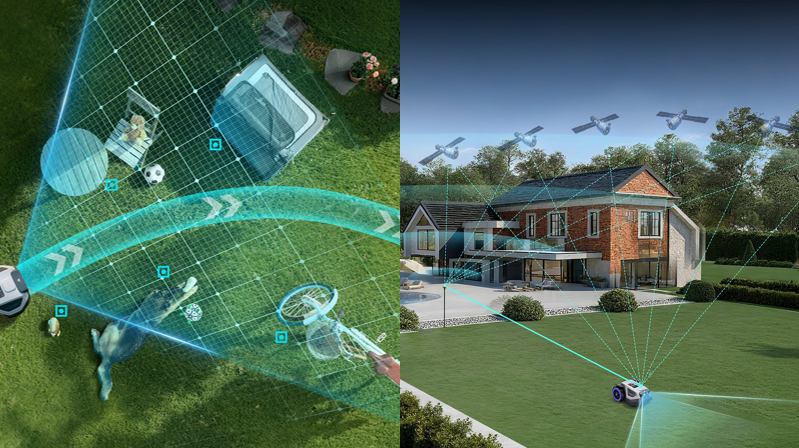
Nawigacja RTK sprawdza się doskonale na otwartych trawnikach o nachyleniu 1:1, zapewniając precyzyjne pozycjonowanie bez przewodów granicznych. Na szerokich, pozbawionych przeszkód obszarach, system pozwala na tworzenie efektywnych ścieżek koszenia z równomiernym pokryciem, redukując liczbę pominiętych miejsc i poprawiając ogólną wydajność. To sprawia, że RTK to doskonały wybór dla dużych, otwartych trawników o łagodnym lub umiarkowanym nachyleniu.
Dlaczego nawigacja LiDAR działa lepiej w trudnym terenie
Nawigacja LiDAR działa lepiej w trudnym terenie, ponieważ skanuje i mapuje otoczenie w czasie rzeczywistym. Jest mniej podatna na problemy z sygnałem GPS i działa niezawodnie na obszarach zadrzewionych, wąskich ścieżkach i nierównym terenie. Dzięki temu kosiarka porusza się płynniej, precyzyjniej omija przeszkody i utrzymuje stabilną pracę na trudnych trawnikach.

Kluczowe cechy, na które należy zwrócić uwagę przy wyborze robota koszącego do wzgórz
Silniki o wysokim momencie obrotowym
Silniki o wysokim momencie obrotowym pomagają kosiarkom automatycznym utrzymać dużą moc podczas pokonywania wzniesień i nierównego terenu. Poprawiają kontrolę na stromych zboczach i zmniejszają ryzyko spowolnienia lub utknięcia, zapewniając stabilniejszą pracę na pagórkowatych trawnikach.
Szerokie koła terenowe
Szerokie koła terenowe poprawiają przyczepność na mokrej trawie, luźnej glebie i nierównych nawierzchniach. Głębszy bieżnik zapewnia lepszą przyczepność kosiarki podczas pokonywania wzniesień i zawracania, dzięki czemu idealnie nadają się do trawników o zróżnicowanych wysokościach.
Inteligentne unikanie przeszkód
Inteligentne omijanie przeszkód pomaga kosiarkom wykrywać i omijać drzewa, kamienie i inne obiekty ogrodowe. Dzięki sztucznej inteligencji i czujnikom kosiarka może zmniejszyć liczbę kolizji i płynniej poruszać się po wąskich lub skomplikowanych obszarach.
Czujniki deszczu i obsługa mokrej trawy
Czujniki deszczu wykrywają wilgoć i w razie potrzeby odsyłają kosiarkę do stacji ładującej. Ponieważ mokra trawa zmniejsza przyczepność na zboczach, chroni to zarówno kosiarkę, jak i trawnik, a także poprawia bezpieczeństwo na śliskich nawierzchniach.
Mapowanie wielostrefowe
Mapowanie wielostrefowe umożliwia efektywne zarządzanie różnymi obszarami trawnika, szczególnie w ogrodach nachylonych lub podzielonych. Użytkownicy mogą ustawiać strefy koszenia za pomocą aplikacji, aby poprawić zasięg i ograniczyć konieczność powtarzania ścieżek koszenia.
Pojemność akumulatora do trawników na pochyłościach
Trawniki na pochyłym terenie wymagają więcej energii, ponieważ pokonywanie wzniesień pochłania więcej energii niż koszenie płaskiego terenu. Na stromym terenie zużycie baterii może wzrosnąć o 20–30% w porównaniu z trawnikami płaskimi. Modele takie jak ANTHBOT N8 i M9 wykorzystują większe akumulatory, co zapewnia dłuższy czas pracy i lepszą wydajność na wymagającym terenie. Seria N8 z akumulatorem 9,2 Ah nadaje się do średnich i dużych trawników na pochyłym terenie, natomiast modele M5 i M5 LiDAR lepiej sprawdzają się w przypadku małych trawników.

Typowe problemy, z jakimi borykają się roboty koszące na wzgórzach
Dlaczego kosiarki robotyczne ślizgają się na mokrej trawie
Mokra trawa zmniejsza przyczepność kół, szczególnie na zboczach. Po deszczu lub podlewaniu niektóre roboty koszące mogą mieć trudności z przyczepnością do podłoża podczas pokonywania wzniesień, co prowadzi do buksowania lub poślizgu kół, co obniża wydajność koszenia na nierównym terenie.
Dlaczego niektóre kosiarki blokują się na krawędziach
Kosiarki automatyczne mogą utknąć w pobliżu krawędzi, krawężników lub przy nagłych zmianach wysokości, ponieważ nierówne krawędzie utrudniają nawigację. Ograniczona konstrukcja kół lub słabsze wykrywanie przeszkód mogą również utrudniać pokonywanie nierównych przejść, szczególnie na nierównych trawnikach.

Problemy z sygnałem GPS w pobliżu drzew lub murów
Kosiarki z systemem GPS lub RTK mogą doświadczać zakłóceń sygnału w pobliżu drzew, murów lub gęstej roślinności. Może to zmniejszyć dokładność pozycjonowania i powodować pomijanie obszarów lub powtarzanie ścieżek, dlatego niektóre zaawansowane modele wykorzystują wiele systemów nawigacyjnych dla lepszej stabilności.

Nierówne cięcie na nierównym terenie
Na nierównym lub wyboistym podłożu zespół tnący może się przechylać, co prowadzi do nierównomiernej wysokości koszenia. Trawa może być ścięta zbyt krótko w niektórych miejscach, a zbyt długo w innych, szczególnie na słabo wyrównanych trawnikach bez konstrukcji dostosowującej się do terenu.
Rozładowanie akumulatora na stromych zboczach
Strome zbocza zwiększają obciążenie silnika i zużycie energii. Częste wspinanie się, opór kół i nierówny teren mogą szybciej rozładowywać akumulator, co przekłada się na krótszy czas koszenia i częstsze ładowanie na większych, pagórkowatych trawnikach.
Porównanie najlepszych robotów koszących do pogórza w segmencie budżetowym i średniej klasy
Jeśli szukasz niedrogiego robota koszącego do pracy na wzniesieniach i nierównym terenie, kluczowe znaczenie ma zrównoważenie ceny, zdolności pokonywania wzniesień i nawigacji. W porównaniu z modelami premium w cenie powyżej 2000 dolarów, ANTHBOT oferuje bardziej ekonomiczną opcję z niezawodną pracą na wzniesieniach i inteligentnymi funkcjami. Model M5 nadaje się do podstawowej pielęgnacji trawnika, natomiast LiDAR M5, N8, I M9 radzą sobie z bardziej złożonym terenem. ANTHBOT oferuje również sezonowe zniżki rzędu 10–20%, dzięki czemu seria N jest jeszcze korzystniejsza cenowo.
| Model | Zakres cen | Najlepsze dla | Technologia nawigacyjna | Wydajność na wzgórzu | Kluczowa zaleta |
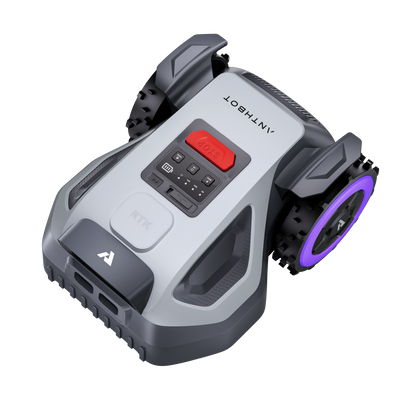
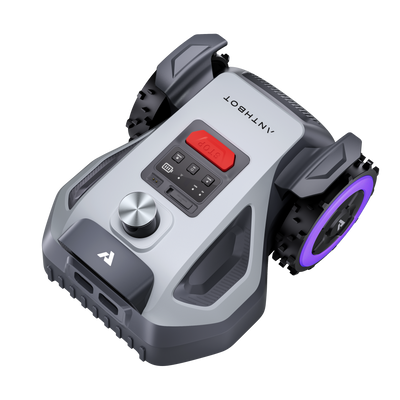
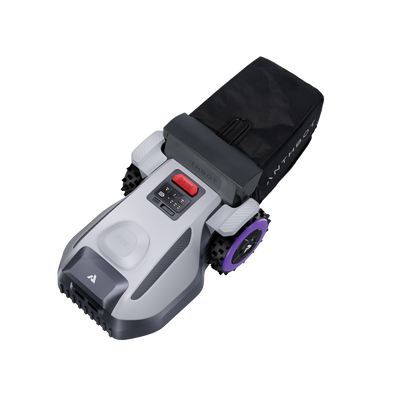
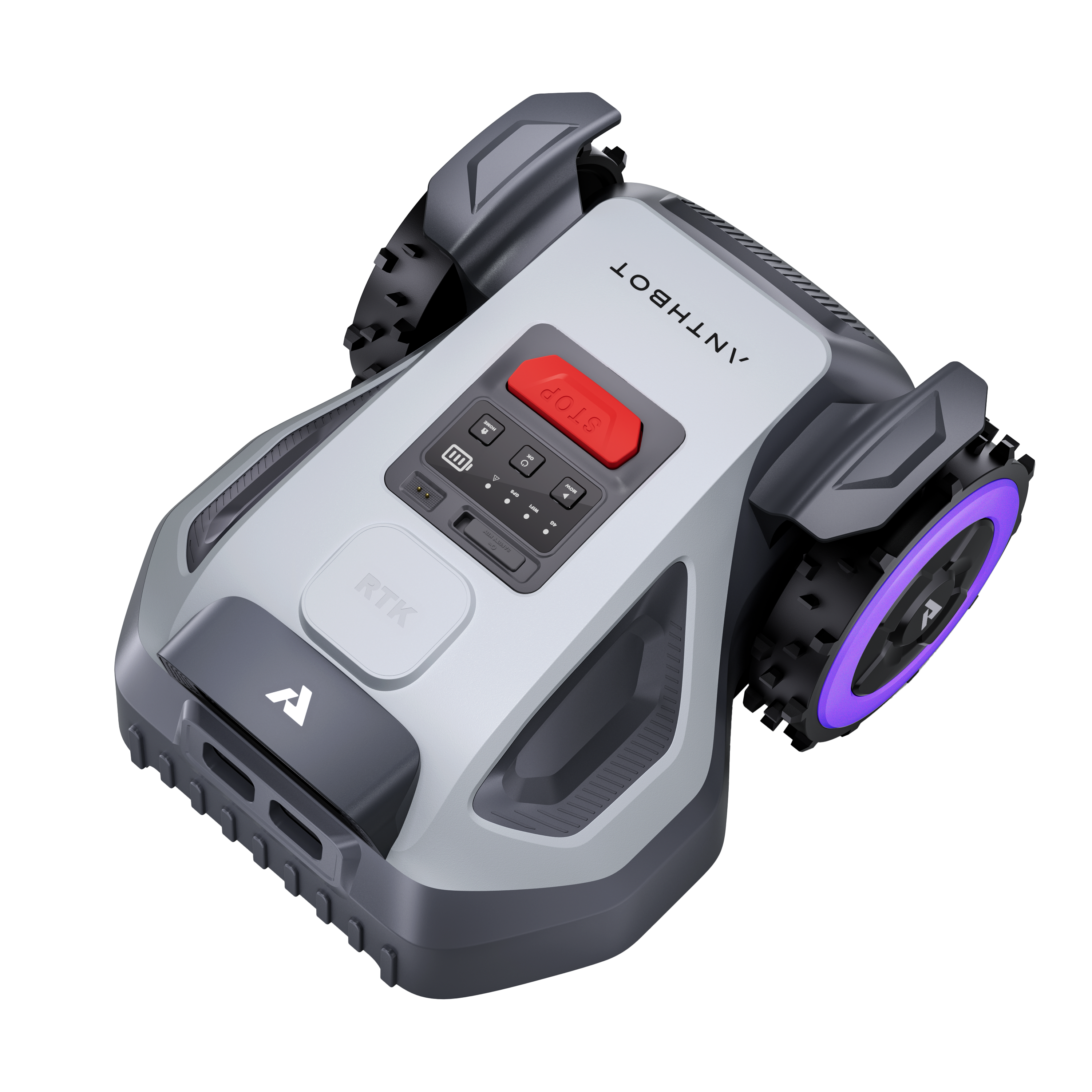
| ANTHBOT M5 | Wokół €629/679 dolarów | 500㎡ (1/8 akra) | Pełnopasmowy RTK + podwójna wizja | 24°/45% | Najbardziej ekonomiczna opcja do podstawowego automatycznego koszenia |
| ANTHBOT LiDAR M5 | Wokół €869/949 dolarów | 500㎡(1/8 akrów) | LiDAR 360° + podwójna wizja | 24°/45% | Inteligentniejsze mapowanie i lepsze omijanie przeszkód |
| ANTHBOT N8 | Wokół €1099/1199 dolarów | 1500㎡ (3/8 akrów) | Pełnopasmowy RTK + podwójna wizja | 24°/45% | Doskonała równowaga między ceną, wydajnością i inteligentną nawigacją |
| ANTHBOT M9 | Wokół €719/769 dolarów | 1000㎡(1/4 akrów) | Pełnopasmowy RTK + podwójna wizja | 24°/45% | Dłuższy czas działania i lepsza adaptacja do terenu |
Jak wybrać odpowiedni model do swojego ogrodu
Weź pod uwagę rozmiar i nachylenie trawnika
Wielkość trawnika i nachylenie terenu to dwa najważniejsze czynniki przy wyborze robota koszącego. Mniejsze trawniki o łagodnych zboczach zazwyczaj dobrze sprawdzają się w przypadku modeli ekonomicznych, takich jak ANTHBOT M5, natomiast większe ogrody o bardziej stromych zboczach mogą skorzystać z większej zdolności pokonywania wzniesień i dłuższego czasu pracy modeli N8 lub M9.
Wybierz odpowiednią technologię nawigacyjną
Różne systemy nawigacji sprawdzają się w różnych warunkach ogrodowych. Nawigacja RTK sprawdza się dobrze na otwartych trawnikach z mniejszą liczbą przeszkód, dzięki czemu modele takie jak N8 stanowią dobry wybór na dużych pochyłościach. W przypadku bardziej złożonych ogrodów z drzewami, wąskimi ścieżkami lub nierównym terenem, LiDAR M5 zapewnia dokładniejsze mapowanie i płynniejszą nawigację.
Dopasuj kosiarkę do warunków terenowych
Jeśli Twój trawnik ma mokrą trawę, nierówny teren lub jest koszony w kilku strefach, ważne jest, aby wybrać kosiarkę z dobrą przyczepnością, inteligentnym systemem omijania przeszkód i stabilnym prowadzeniem w terenie. Modele takie jak M9 są przeznaczone do bardziej wymagającego terenu i zapewniają płynniejszą pracę oraz bardziej równomierne rezultaty koszenia na nierównych trawnikach.

Podsumowanie: Czy roboty koszące są warte swojej ceny?
Nowoczesne roboty koszące stały się bardziej wydajne na wzniesieniach i nierównym terenie dzięki ulepszeniom w zakresie trakcji, nawigacji i omijania przeszkód. Wybór odpowiedniego modelu w oparciu o wielkość trawnika i warunki terenowe jest kluczowy dla uzyskania stabilnego i wydajnego koszenia na zboczach.
Modele ekonomiczne poradzą sobie z mniejszymi, pagórkowatymi trawnikami, natomiast opcje ze średniej półki cenowej, z lepszą nawigacją i lepszą adaptacją do terenu, lepiej sprawdzą się w przypadku ogrodów o złożonym kształcie. Dla właścicieli domów, którzy chcą ograniczyć wysiłek związany z ręcznym koszeniem i utrzymać spójny wygląd trawnika, kosiarki automatyczne mogą być praktycznym rozwiązaniem na pochyłych posesjach.
Często zadawane pytania
Czy roboty koszące poradzą sobie ze stromymi wzniesieniami?
Tak, wiele nowoczesnych robotów koszących radzi sobie z pagórkami i nierównym terenem. Dzięki mocniejszym silnikom, lepszej przyczepności i inteligentnej nawigacji, kosiarki te mogą kosić pochyłości bardziej niezawodnie, choć wydajność nadal zależy od kąta nachylenia i konstrukcji modelu.
Jakie jest maksymalne nachylenie, na jakie może pokonać kosiarka automatyczna?
Większość standardowych modeli radzi sobie ze wzniesieniami o nachyleniu 45%, natomiast zaawansowane kosiarki do pracy na wzniesieniach radzą sobie z nachyleniem 45–80% lub większym. Przed zakupem zawsze sprawdź nachylenie terenu podane przez producenta.
Jaki jest najlepszy i niedrogi robot koszący do koszenia wzgórz?
Najlepszy wybór zależy od wielkości trawnika i terenu. ANTHBOT M5 nadaje się do małych trawników i łagodnych zboczy, natomiast M5 LiDAR i N8 oferują lepszą nawigację i większą wydajność w przypadku bardziej złożonego terenu w rozsądnej cenie.
Który system RTK czy LiDAR jest lepszy w przypadku pagórkowatych trawników?
RTK działa najlepiej na otwartych, pozbawionych przeszkód trawnikach, zapewniając precyzyjne pozycjonowanie, natomiast LiDAR sprawdza się lepiej na obszarach o złożonym ukształtowaniu terenu, z drzewami, wąskimi ścieżkami lub słabym sygnałem GPS. Najlepszy wybór zależy od układu ogrodu.


Zostaw komentarz
Ta strona jest chroniona przez hCaptcha i obowiązują na niej Polityka prywatności i Warunki korzystania z usługi serwisu hCaptcha.