












Let’s face it: keeping a European garden looking pristine shouldn’t feel like a punishment. Yet, when spring arrives, many of us find ourselves staring at our overgrown lawns, dreading the weekend chore. If you are in the market for an upgrade, you have likely found yourself caught in the classic dilemma: should you choose a self-propelled or a push mower?
For decades, these two traditional options have dominated the garden shed market across the continent. But garden technology has evolved dramatically. Today, we are not just looking at the traditional push mower versus self-propelled debate; we are looking at a completely new era of automated lawn care.
In this guide, we will break down the pros and cons of both traditional mowers, compare them head-to-head, and reveal why a smart robotic alternative might be the ultimate solution you didn't know you needed.
Table of Contents
The Classic Push Mower: Honest, Eco-Friendly Hard Work

A traditional push mower (often a cylinder or basic rotary mower) relies entirely on your physical energy to move forward and spin the blades.
The Pros of Push Mower:
- Eco-Friendly & Quiet: With no engine, there are no emissions. They are virtually silent, meaning you can cut your grass on a Sunday morning without waking the neighbours.
- Low Maintenance & Cost: They are generally the most affordable option upfront and require almost zero maintenance beyond occasional blade sharpening.
The Cons of Push Mower:
- Labour-Intensive: You are the engine. Pushing a heavy deck through thick, damp grass is an exhausting workout.
- Time-Consuming: It is incredibly slow, making it impractical for anything larger than a postage-stamp-sized lawn.
The Self-Propelled Mower: Powering Through the Chores

A self-propelled mower takes the strain off your arms. A drive system (powered by petrol or a battery) propels the mower forward; you simply walk behind and guide it.
The Pros of Self-Propelled Mower:
- Less Physical Strain: It does the heavy lifting for you, saving your back and joints.
- Consistent Cutting: Because the speed is regulated by the machine, you often get a more uniform cut.
The Consof Self-Propelled Mower:
- Heavy and Clunky: They are significantly heavier. If you have a garden with tight corners, navigating a bulky self-propelled unit can be incredibly frustrating.
- Maintenance and Running Costs: Petrol models require oil changes, spark plugs, and fuel. Even battery-powered models have a higher initial price tag and potential battery replacement costs down the line.
Self-Propelled vs. Push Mower: The Ultimate Showdown
When comparing a self-propelled versus a push mower, the decision usually boils down to your specific garden's needs. Here is a quick breakdown to help you catch the key differences at a glance, alongside the modern robotic alternative:
|
Feature |
Traditional Push Mower |
Self-Propelled Mower |
Smart Robot Mower |
|
Physical Effort |
Very High |
Low (Walking required) |
Zero (Fully automated) |
|
Best For (Lawn Size) |
Very Small (Under 150㎡) |
Medium to Large |
Small to Medium (e.g., 500㎡) |
|
Terrain / Slopes |
Flat ground only |
Good for slopes |
Excellent (up to 45% inclines) |
|
Noise Level |
Silent |
Loud (Petrol) / Moderate (Electric) |
Whisper-quiet (<58dB) |
|
Maintenance |
Minimal |
High (Oil, fuel, belts) |
Low (Software updates, cleaning) |
Beyond the quick facts above, here are three key factors you should consider:
Physical Effort and Weekend Time
If you treat lawn care as a weekend workout, a push mower will certainly get your heart rate up. However, if your goal is to get the job done quickly so you can actually enjoy a cold drink on your patio, a self-propelled model wins hands down.
Lawn Size and Maneuverability
If you are currently researching the best lawn mower for a small garden, a heavy self-propelled mower might be overkill. Push mowers are easier to pivot and weave around garden gnomes or flower beds. However, pushing a manual mower across a larger lawn will quickly become a dreaded task.
Terrain and Slopes
This is where the distinction is sharpest. Pushing a manual mower uphill is not only exhausting but can be dangerous in damp conditions. If your garden is hilly and you are searching for the best mower for uneven ground, a self-propelled model with rear-wheel drive has traditionally been the default recommendation to power up those inclines.
The 3rd Alternative: Why Robot Mowers Are Changing the Game

For years, the choice was binary: sweat it out yourself or pay for an engine to help you walk. But what if you didn't have to walk the lawn at all?
Modern European homeowners are increasingly bypassing both traditional options and moving straight to smart robotic mowers. In the past, robot mowers required burying perimeter wires around your garden—a frustrating and time-consuming process. Today, the technology has taken a massive leap forward.
If you want the ultimate upgrade, modern wire-free robot mowers are rewriting the rules of lawn care:
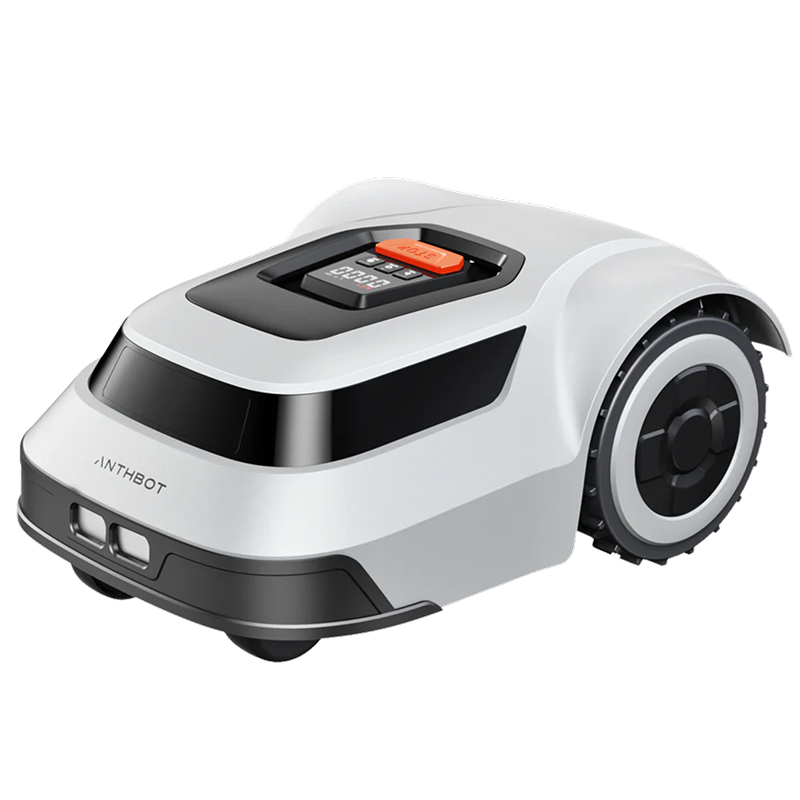
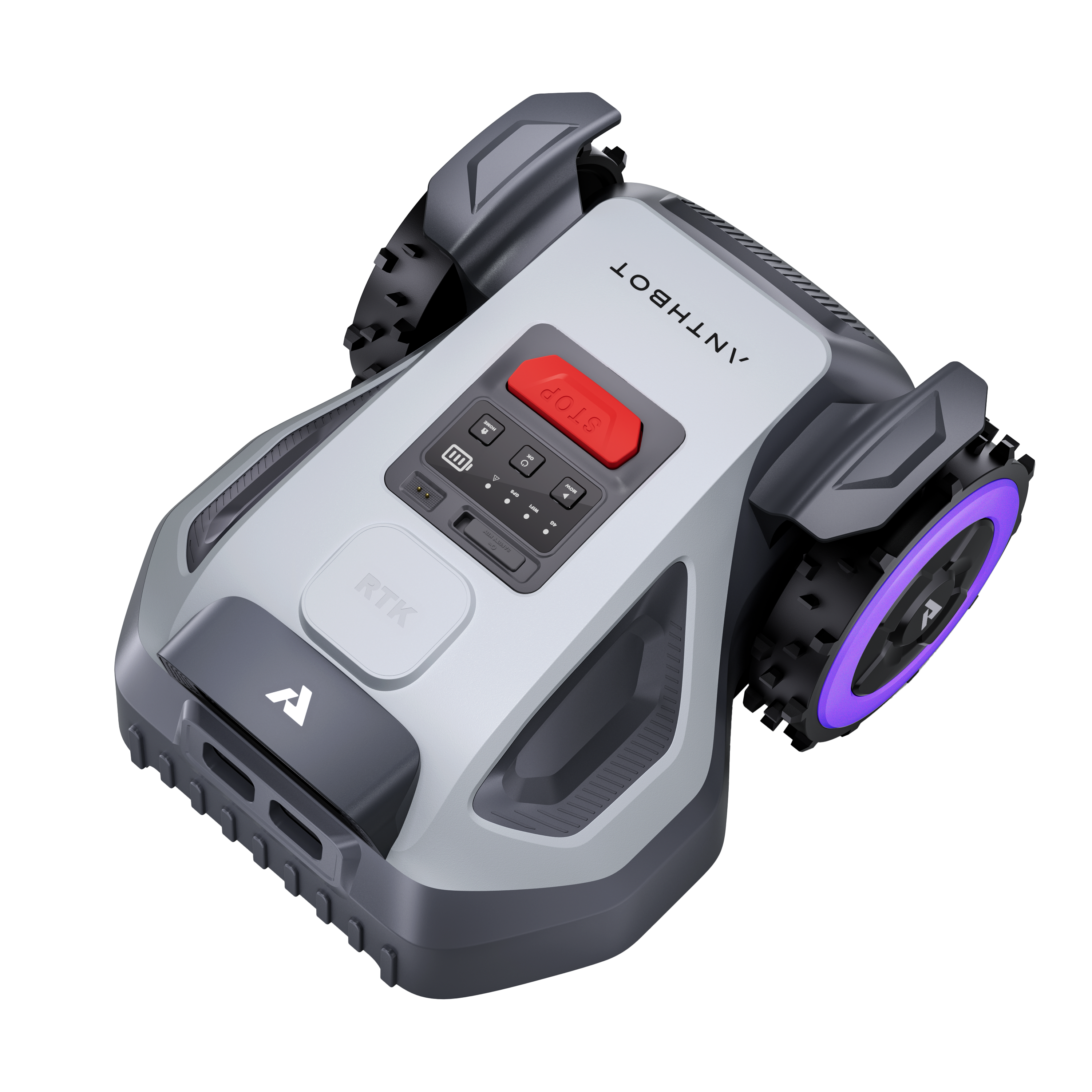
- No Wires, Drop & Mow: The latest flagship models on the market, such as the impressive ANTHBOT M5 LiDAR, have completely eliminated the need for physical boundary wires or unreliable GPS RTK stations. Using 360° LiDAR and Dual Vision technology, you simply drop the mower, and it automatically maps your garden in minutes.
- Mastering Complex European Gardens: Remember the manoeuvrability issue with self-propelled mowers? A smart robotic mower thrives in complex spaces. Devices like the Anthbot M5 are designed specifically for compact gardens (up to 500㎡). They easily navigate narrow footpaths, edge perfectly along fences, and can tackle slopes up to 45% (24°)—doing the tough job for you without getting stuck in the mud.
- Wildlife Protection and Whisper-Quiet: European neighbourhoods value peace and nature. Unlike roaring self-propelled mowers, modern LiDAR robots operate at an ultra-quiet level (under 58dB). More importantly, advanced AI vision can instantly detect over 1,000 objects—meaning it will safely steer clear of children's toys, pets, and even visiting hedgehogs.
Final Verdict: Which One Should You Buy?
If you have a tiny, flat patch of grass, a tight budget, and enjoy physical labour, a traditional push mower remains a reliable choice.
If you have a large, relatively open space and don't mind spending your weekend walking behind a machine, a self-propelled mower is a solid step up.
However, if you value your time, care about eco-friendly and quiet operation, and want a perfectly manicured lawn with zero effort, the debate between a self-propelled vs. a push mower is essentially over. Investing in a next-generation smart robotic mower—especially a wire-free, LiDAR-equipped model—is undoubtedly the smartest choice for the modern home.
Frequently Asked Questions (FAQs)
Is a self-propelled mower worth the extra money?
If you have a medium-to-large garden or sloping terrain, yes. The energy and time you save make the extra investment worthwhile. However, if you are willing to spend a bit more, jumping straight to a robot mower offers the absolute best long-term return on investment in terms of time saved.
Can I use a push mower on wet grass?
It is highly discouraged. Wet grass clumps together, making it incredibly difficult to push a manual mower and often resulting in an uneven, tearing cut that damages the grass blades.
Are push mowers harder to maintain than self-propelled ones?
No, push mowers are much easier to maintain. They don't have engines, spark plugs, or drive belts. Aside from keeping it clean and occasionally sharpening the blades, there is virtually no maintenance required.
Do modern robot mowers still need boundary wires?
Not anymore! While older models required you to dig trenches and bury perimeter wires, the latest generation (like the LiDAR-guided models mentioned above) maps your lawn automatically using advanced cameras and sensors. You can simply "Drop & Mow".


Leave a comment
This site is protected by hCaptcha and the hCaptcha Privacy Policy and Terms of Service apply.