



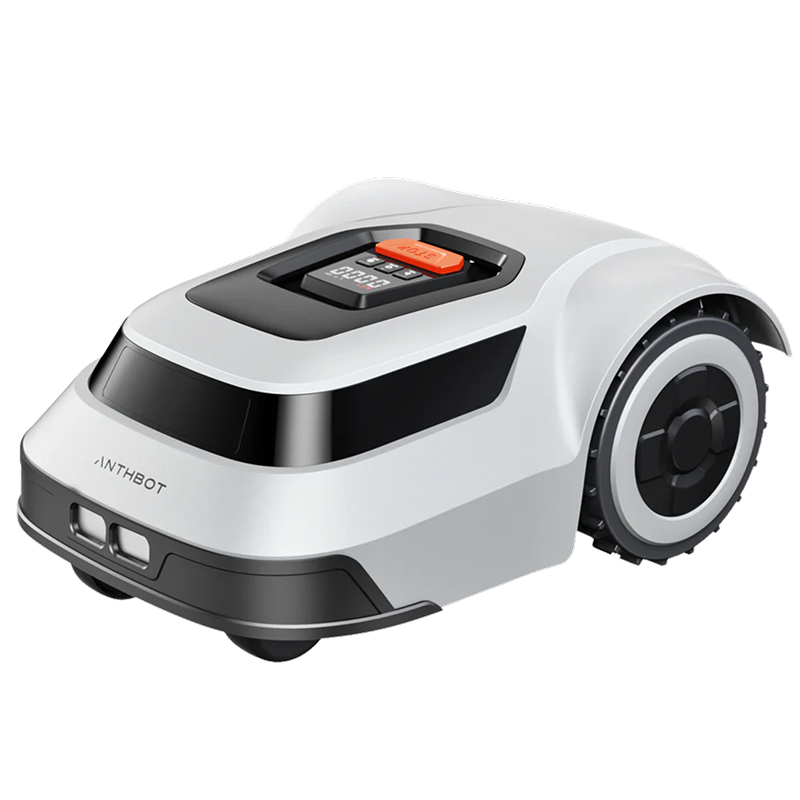
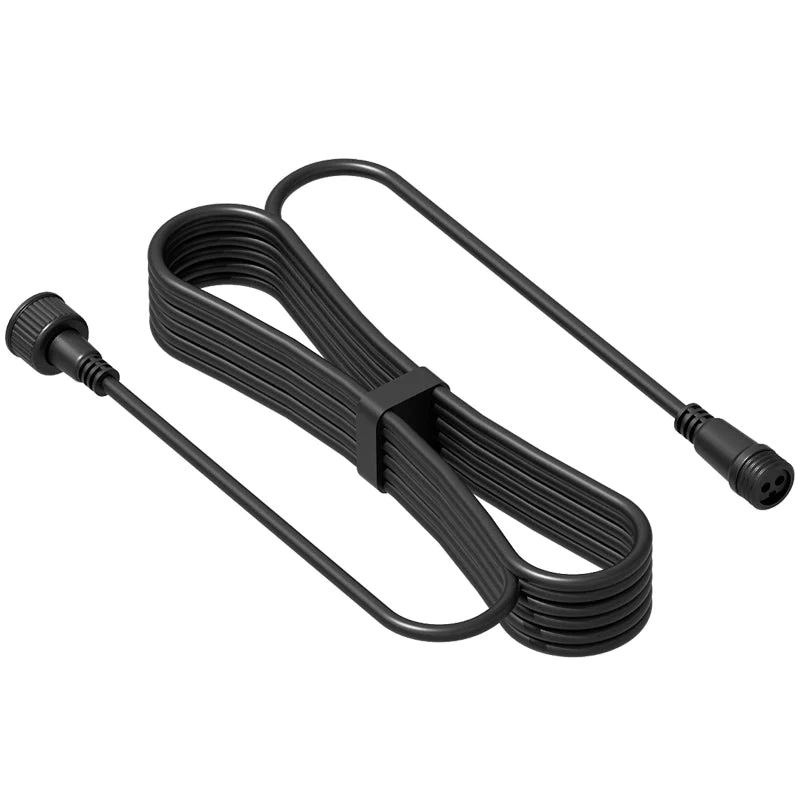
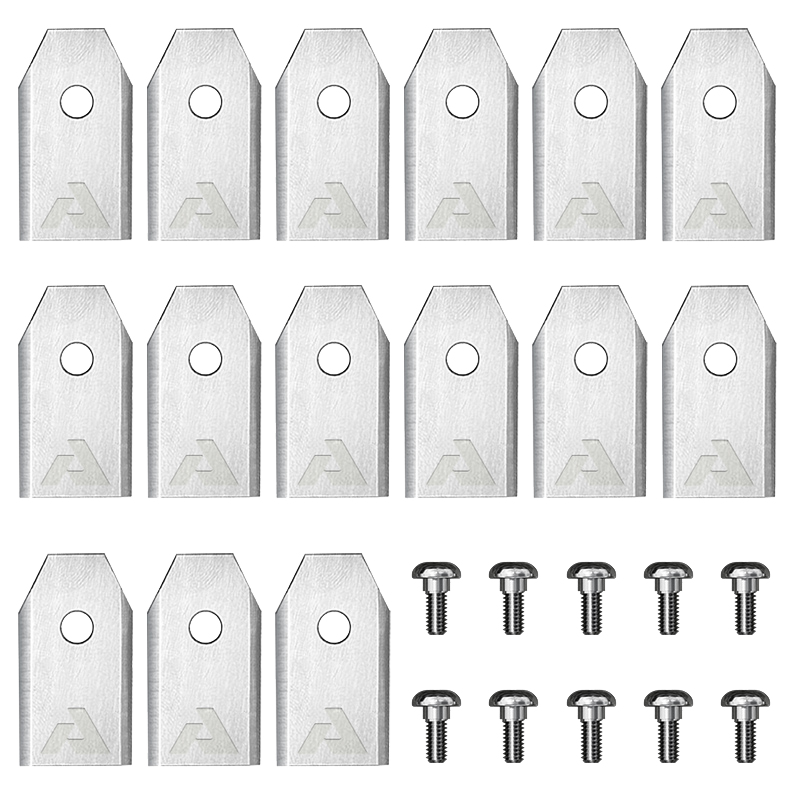

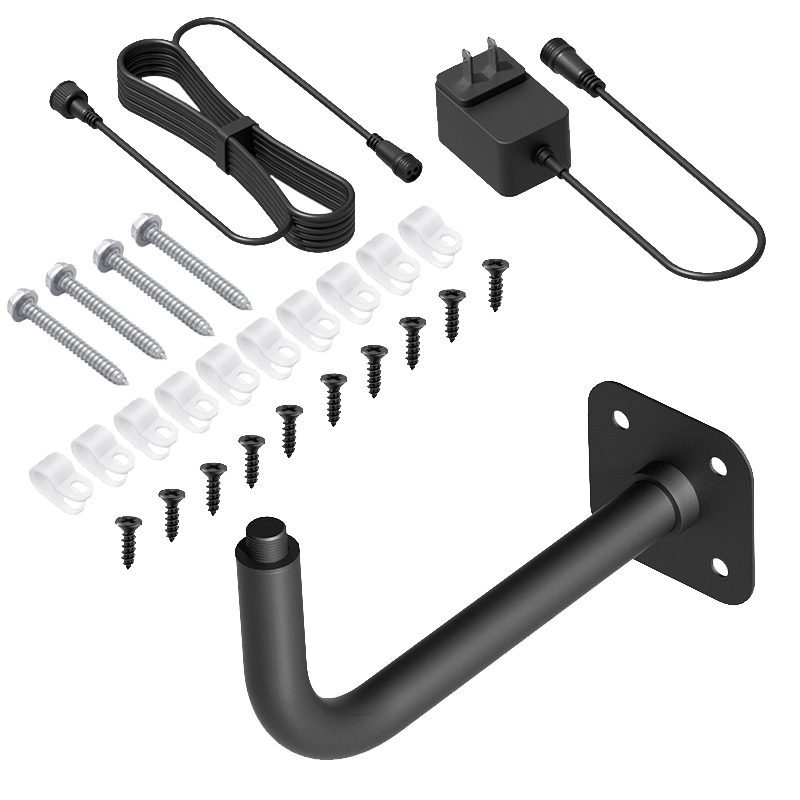







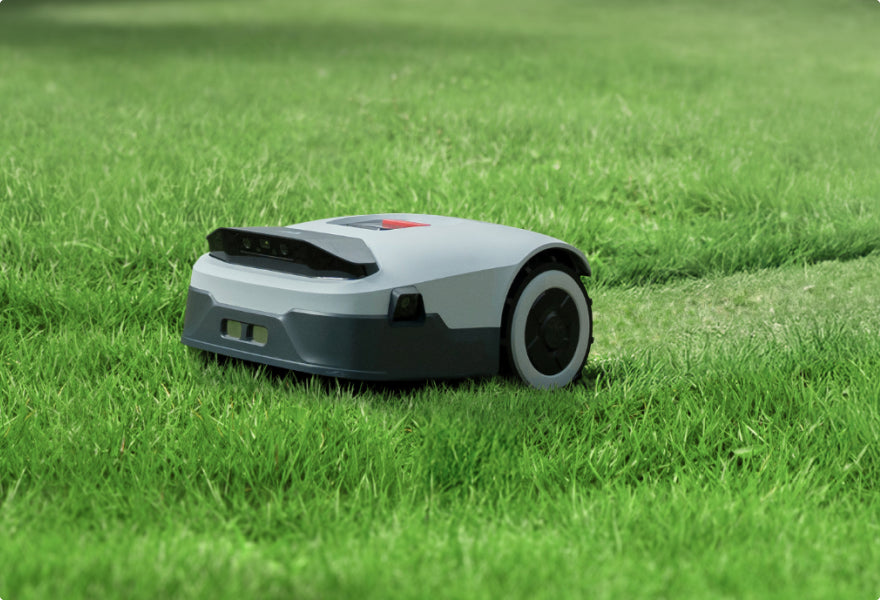
A robot lawn mower is designed to cut your grass with little or no manual effort. Instead of pushing the mower yourself, you set a mowing schedule and let the robot handle the work automatically.
The basic process is simple: the mower maps or identifies the mowing area, navigates across the lawn, cuts the grass, detects obstacles, and returns to its charging station when the battery is low. After charging, it can resume mowing according to its schedule.
How it knows where to go depends on the model. Some robot mowers use perimeter wire, while newer wire-free models can use technologies such as RTK, LiDAR, GPS, cameras, or a combination of several systems.

Table of Contents
What Is a Robot Lawn Mower?
A robot lawn mower is an autonomous machine that cuts grass without requiring you to push or steer it. Once it has been set up, it can follow a schedule, mow the lawn, return to its charging station, and continue working automatically.
Unlike a traditional lawn mower, a robot mower combines several systems to operate on its own:
- Navigation: Determines where the mower is and where it should go.
- Sensors: Detect obstacles and changes in the surrounding environment.
- Cutting system: Uses rotating blades to trim the grass.
- Drive system: Controls movement, turning, and slopes.
- Battery and charging: Powers the mower and allows it to return for automatic charging.
- Software and app: Controls schedules, mowing areas, settings, and other functions.
The main difference between robot mower models is how they navigate and define the lawn area. Traditional models may use a perimeter wire, while newer wire-free models can rely on technologies such as RTK, LiDAR, GPS, and AI Vision.
This technology allows a robot mower to handle routine lawn maintenance with much less manual work, while the right navigation system depends on the size, layout, and complexity of your lawn.
What Makes a Robot Lawn Mower Work?
A robot lawn mower relies on several systems working together. Each one has a specific job, from finding its position to cutting grass and returning to the charger.
1. Navigation System
The navigation system determines where the mower is and where it needs to go. Depending on the model, this can include perimeter wire, GPS, RTK, LiDAR, cameras, or a combination of technologies.
2. Sensors and Cameras
Sensors help the mower understand its surroundings. They can detect obstacles, lawn edges, slopes, and other changes in the environment, allowing the mower to slow down, stop, or change direction.
3. Cutting System
A rotating cutting disc with small blades trims the grass as the mower moves across the lawn. Most robot mowers use a mulching approach, cutting small amounts of grass frequently rather than removing large amounts at once.
4. Drive System
The drive motors control the mower's movement, steering, and ability to handle slopes. Wheel design and motor power also affect how well it performs on uneven or inclined lawns.
5. Battery and Charging System
The battery powers the mower during operation. When the battery gets low, the mower can navigate back to its charging station, recharge, and resume mowing later.
6. Software and App
Software connects all these systems and controls mowing schedules, maps, zones, navigation settings, and other functions. The app also allows users to monitor or adjust the mower remotely.
In simple terms, these systems work as one cycle: locate → navigate → detect → mow → recharge → resume. The combination of these technologies is what allows a robot lawn mower to work with minimal human intervention.

How Does a Robot Lawn Mower Know Where to Go?
Navigation is one of the most important parts of a robot lawn mower. The mower needs to know where it can mow, where it has already been, and where it should go next.
Different models use different navigation technologies, and this is one of the biggest differences between robot lawn mowers.
Perimeter Wire
Traditional robot mowers use a perimeter wire installed around the lawn. The wire creates a virtual boundary that tells the mower where it can operate.
Pros: Reliable and relatively simple navigation.
Cons: Installation takes time, and the wire may need to be adjusted if the garden layout changes.

GPS and RTK
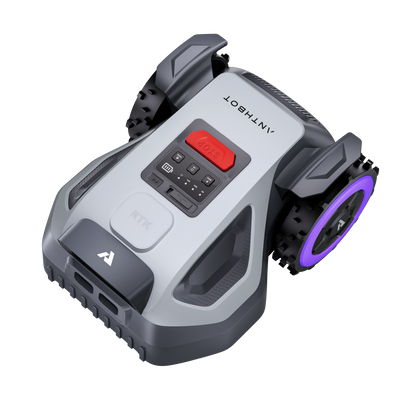
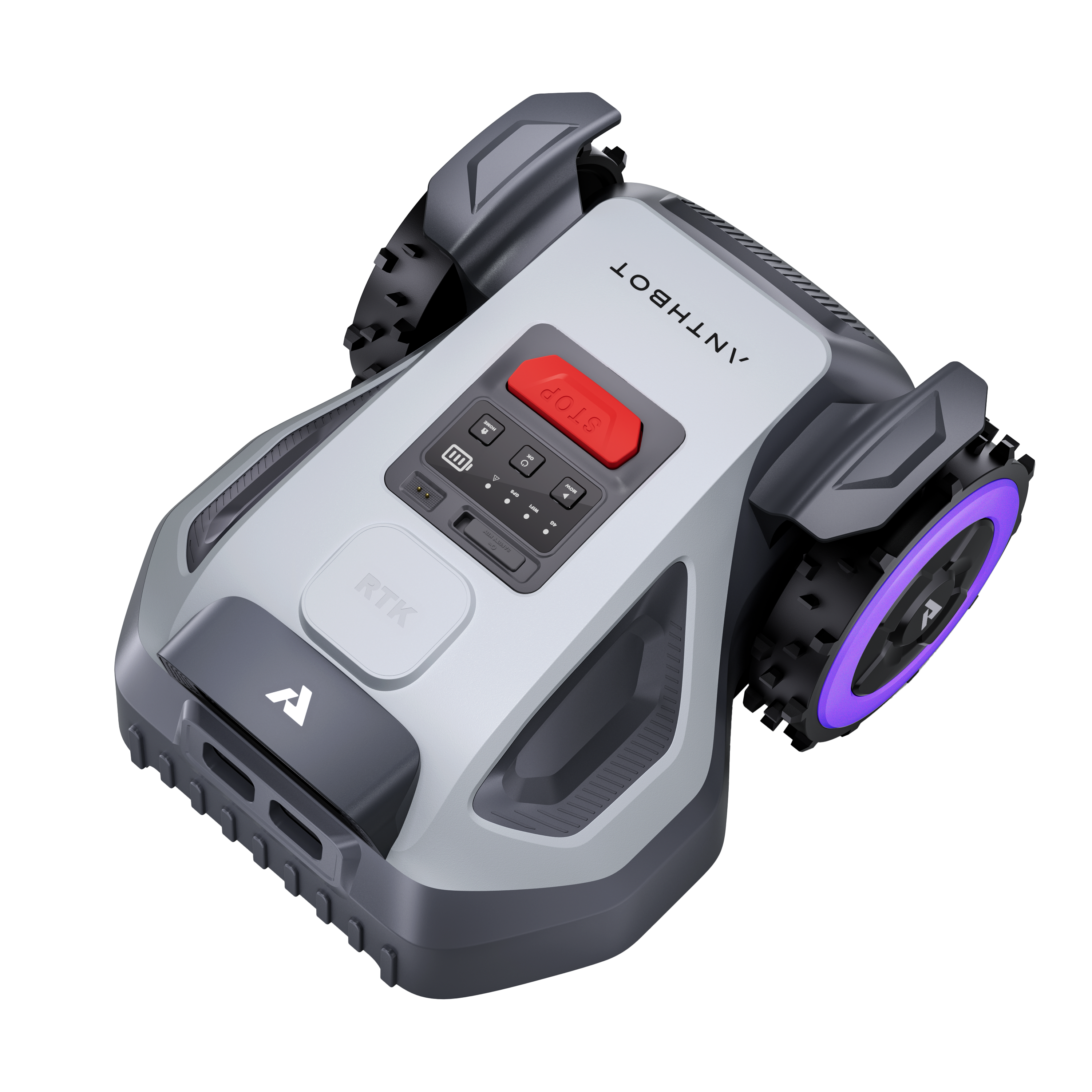
GPS-based systems use satellite positioning, while RTK (Real-Time Kinematic) technology can improve positioning accuracy significantly.
RTK is particularly useful for larger or more open lawns because the mower can create and follow a precise virtual boundary without traditional perimeter wire.
Pros: Wire-free operation and precise positioning.
Cons: Performance can be affected by poor satellite visibility, obstacles, or signal conditions.

LiDAR
LiDAR uses laser pulses to scan the surrounding environment. The mower can use these measurements to understand distances, identify structures, and build a map of the lawn.
Pros: Accurate environmental mapping and less dependence on traditional boundary wire.
Cons: Complex environments can still present challenges, and LiDAR alone does not necessarily solve every navigation problem.

AI Vision
AI Vision uses cameras to recognize objects and understand the environment around the mower. Depending on the system, it can help identify lawn edges, obstacles, and other objects.
Pros: Can recognize real-world objects and support more flexible navigation.
Cons: Performance can vary depending on lighting, weather, and the complexity of the environment.

Hybrid Navigation
Some newer robot mowers combine multiple technologies, such as RTK + LiDAR + Vision, rather than relying on a single positioning system.
This approach allows different technologies to complement each other. For example, RTK can provide precise positioning, LiDAR can understand the surrounding space, and Vision can help recognize objects.
Pros: More adaptable navigation in complex environments.
Cons: More advanced systems can increase the price of the mower.

So, Which Navigation System Is Best?
There is no single technology that is ideal for every lawn.
- Simple lawn: Perimeter wire can be sufficient.
- Large, open lawn: GPS/RTK can be a strong option.
- Complex garden: LiDAR or Vision can provide additional environmental information.
- Mixed or challenging environments: Hybrid navigation can offer greater flexibility.
Ultimately, the best system depends on lawn size, garden layout, obstacles, slopes, and signal conditions. The goal is not simply to choose the newest technology, but to choose a navigation system that works reliably in your specific yard.
How Do Robot Lawn Mowers Avoid Obstacles?
A robot lawn mower needs to do more than find its way around the lawn. It also needs to recognize objects in its path and decide whether to stop, slow down, or change direction.
Different models use different combinations of sensors and cameras for this task.
Sensors
Basic sensors can detect physical contact or changes in the mower's surroundings. If the mower encounters an unexpected object, it can stop or change direction.
These systems are useful for simple obstacles but provide limited information about what is actually in front of the mower.
Ultrasonic Sensors
Some robot mowers use ultrasonic sensors to detect objects before making contact. They measure the distance between the mower and nearby objects.
This can help the mower avoid larger obstacles such as garden furniture or walls.
LiDAR
LiDAR continuously scans the surrounding area using laser pulses. It can measure distances to objects and help the mower understand the shape of its surroundings.
This makes LiDAR useful for navigation as well as obstacle detection.
AI Vision
AI Vision uses cameras and software to recognize objects in the mower's path. Depending on the system, it may distinguish between common lawn obstacles such as toys, furniture, pets, trees, or other objects.
The advantage is that the mower can use visual information rather than simply detecting that "something" is in front of it.

Why Obstacle Detection Isn't Perfect
No obstacle detection system can guarantee that every object will always be identified correctly.
Performance can depend on factors such as:
- Object size and shape
- Lighting conditions
- Grass height
- Weather
- Object color and contrast
- Sensor placement
- The technology used by the mower
For this reason, users should still remove small toys, cables, tools, and other loose objects from the lawn before mowing.
What Happens When an Obstacle Is Detected?
The basic process is straightforward:
Detect → Evaluate → Slow Down/Stop → Change Direction → Continue Mowing
More advanced models can combine multiple sensors to make these decisions more reliably.
In short: obstacle avoidance helps a robot mower operate more independently, but it should be considered an additional safety and convenience feature—not a replacement for keeping the lawn clear of potentially dangerous objects.
What Happens When a Robot Mower Runs Out of Battery?
A robot lawn mower is designed to manage its own battery rather than requiring you to monitor it. When the battery gets low, the mower can automatically stop mowing and return to its charging station.
How Does It Find the Charging Station?
The mower uses its navigation system to determine its position and follow a route back to the charging station. Once it reaches the station, it connects to the charging contacts and begins charging automatically.
The exact return method depends on the model and its navigation technology.
What Happens After Charging?
Once the battery has reached the required level, the mower can leave the charging station and resume its mowing schedule automatically.
For example:
Mow → Low Battery → Return to Station → Charge → Resume Mowing
This cycle allows the mower to maintain the lawn over multiple sessions instead of trying to finish the entire lawn on a single charge.

Does It Need to Finish the Lawn Before Charging?
No. A robot mower does not necessarily need to complete the entire lawn in one session.
If the lawn is larger than the mower's battery capacity, it can divide the work into multiple mowing sessions. This is particularly useful for larger gardens where continuous mowing would take several hours.
What If the Charging Station Can't Be Reached?
The mower's ability to return to its station depends on its navigation system and the garden layout. Narrow passages, steep slopes, poor positioning signals, or obstacles can make the return journey more difficult.
For this reason, correct charging-station placement and a suitable navigation system are important parts of the initial setup.
Do Robot Lawn Mowers Collect Grass?
Most robot lawn mowers do not collect grass. Instead, they use a mulching approach, cutting small amounts of grass and leaving the fine clippings on the lawn.
How Does Mulching Work?
A robot mower usually cuts only a small amount of grass during each mowing session. The fine clippings fall back onto the lawn and gradually decompose.
Because the mower works frequently, there is usually no need to collect large amounts of grass after every mowing session.
Why Don't Most Robot Mowers Collect Grass?
Not using a collection bag makes the mower more autonomous. There is no grass container to empty, allowing the robot to continue its scheduled mowing with minimal intervention.
This is particularly useful for users who want a low-maintenance lawn care routine.
What If You Want to Collect Grass Clippings?
If you prefer to remove grass clippings from the lawn, a robot mower with a grass collection system is a better option.
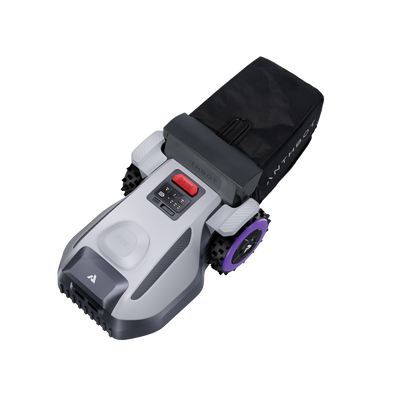
The ANTHBOT N8 is designed for users who want automatic grass collection. It features a self-emptying system with a 23L collection bag, allowing the mower to collect clippings and automatically empty them rather than leaving them on the lawn.

How Much Does a Robot Lawn Mower Cost?
Robot lawn mower prices vary mainly by mowing area, navigation technology, and features. For a practical reference, ANTHBOT models currently range from around $500 to $1,600 after discounts, depending on the model and current promotion.
Which ANTHBOT Model Fits Your Lawn?
|
Model |
Mowing Area |
Best For |
|
Up to 500㎡ |
Small lawns and simple garden layouts |
|
|
Up to 500㎡ |
Small to medium lawns that benefit from LiDAR navigation |
|
|
Up to 500㎡ |
Complex lawns and users who want advanced wire-free navigation |
|
|
Up to 1,000㎡ |
Larger or more complex gardens |
|
|
Up to 1,500㎡ |
Large lawns and users who want grass collection |
|
|
Up to 3,600㎡ |
Large gardens and multi-zone mowing |
The right model depends less on price than on your lawn size, layout, slopes, obstacles, and navigation requirements.
Prices can change with seasonal promotions and discounts, so check the current offers before buying.
How Long Do Robot Lawn Mowers Last?
A quality robot lawn mower can typically last around 5–10 years with proper maintenance. Actual lifespan depends on build quality, mowing frequency, weather exposure, and how well the mower is maintained.
What About the Battery?
The battery usually needs to be replaced before the mower itself. For many lithium-ion mower batteries, 300–500 full charge cycles is a common reference range. After this point, battery capacity can noticeably decline and the mower may need to recharge more frequently.
However, battery lifespan varies by battery chemistry, usage, charging conditions, and the specific mower. Some newer robot mowers use batteries designed for significantly more cycles, so the manufacturer's specification should always take priority.
Signs That the Battery Needs Replacing
Watch for these changes:
- The mower runs for a noticeably shorter time.
- It returns to the charging station more frequently.
- It can no longer complete its usual mowing schedule.
- Charging appears to take longer or the available runtime drops significantly.
Replacing the battery can often extend the useful life of the mower without replacing the entire machine.
How to Extend the Mower's Lifespan
A few basic maintenance habits can help a robot mower reach the 5–10 year range:
- Replace worn blades regularly.
- Keep the mower and sensors clean.
- Check the wheels and cutting system for debris.
- Keep charging contacts clean.
- Follow the manufacturer's recommendations for battery storage and extreme temperatures.
Are Robot Lawn Mowers Worth It? Pros and Cons
Robot lawn mowers can save a lot of time, but they are not ideal for every garden. Whether one is worth buying depends mainly on your lawn size, layout, budget, and how much manual work you want to avoid.
Pros of Robot Lawn Mowers
- Save time: Automatically mow according to a schedule.
- Less physical work: No pushing or manually steering the mower.
- Quiet operation: Generally much quieter than traditional petrol mowers.
- Regular mowing: Frequent cutting helps maintain a consistent grass height.
- Smart control: Many models offer app-based scheduling and zone management.
- Automatic charging: Returns to the charging station when the battery is low.
Cons of Robot Lawn Mowers
- Higher upfront cost: More advanced models can be significantly more expensive than traditional mowers.
- Initial setup: Some models require perimeter-wire installation or other setup.
- Navigation limitations: Performance can vary on complex lawns, narrow passages, or areas with poor positioning signals.
- Battery replacement: The battery will eventually need to be replaced.
- Regular maintenance: Blades, wheels, sensors, and other components still require basic care.
-
Not suitable for every lawn: Very fragmented gardens or areas with difficult terrain may require a more suitable model.

Is Your Lawn Suitable for a Robot Mower?
Not every lawn needs the same type of robot mower. Before buying one, look at the size, layout, terrain, and obstacles in your garden.
1. Lawn Size
Check the mower's recommended mowing area rather than choosing only by price. A small mower may work well for a compact lawn but struggle to maintain a much larger garden within its available mowing time.
2. Lawn Layout
Simple, open lawns are generally easier for robot mowers to navigate. If your garden has narrow passages, separate areas, or multiple zones, choose a model that supports the required layout.
3. Slopes and Uneven Ground
If your lawn has slopes, check the mower's maximum slope capability. Uneven surfaces, steep sections, and rough terrain can affect traction and mowing performance.
4. Obstacles
Trees, flower beds, garden furniture, children's toys, and other objects can make navigation more challenging. If your lawn has many obstacles, a mower with advanced LiDAR or AI Vision may be more suitable.
5. Boundary and Signal Conditions
If you prefer a wire-free mower, consider how the garden's surroundings affect its navigation technology. Buildings, trees, and other structures can influence satellite positioning and wireless signals on some models.
6. Multiple Lawn Areas
If you have a front yard, backyard, side lawn, or other separated areas, look for multi-zone management. Not every robot mower is designed to handle multiple zones equally well.
FAQ
How does a robot lawn mower know where to mow?
It uses a navigation system to determine its position and mowing area. Depending on the model, this may include perimeter wire, GPS, RTK, LiDAR, AI Vision, or a combination of technologies.
Do robot lawn mowers need Wi-Fi?
Not always. Wi-Fi is mainly used for app control, remote monitoring, software updates, and some smart features. The mower's core navigation system can work independently on many models.
Can a robot lawn mower work without a boundary wire?
Yes. Many newer models use RTK, LiDAR, Vision, GPS, or hybrid navigation to define and navigate the mowing area without installing a physical perimeter wire.
How does a robot lawn mower avoid obstacles?
Depending on the model, it can use physical sensors, ultrasonic sensors, LiDAR, cameras, or AI Vision to detect objects. It can then slow down, stop, or change direction.
What happens when the battery runs out?
The mower automatically returns to its charging station when the battery is low. After charging, it can resume its scheduled mowing cycle.
Do robot lawn mowers collect grass?
Most robot lawn mowers do not collect grass. They use mulching, cutting small amounts of grass and leaving the fine clippings on the lawn. Some models, such as the ANTHBOT N8, use a grass collection and self-emptying system instead.
Can robot lawn mowers mow in the rain?
This depends on the specific model. Many robot mowers are designed to handle wet conditions, but performance can vary in heavy rain or on very wet grass. Always check the manufacturer's weather and operating specifications.
How long does a robot lawn mower last?
A well-maintained robot mower can typically last around 5–10 years. The battery usually needs replacement earlier, with 300–500 full charging cycles being a common reference point for noticeable capacity loss, although actual battery life varies by model.
Are robot lawn mowers worth it?
They can be a good choice if you want to save time, reduce manual mowing, and maintain a consistent lawn height. The most important factor is choosing a mower that matches your lawn size, terrain, layout, and navigation requirements.




1 comment
Carsten Jensen
it seem to be impossible to get in contact with support and get it working.
Leave a comment
This site is protected by hCaptcha and the hCaptcha Privacy Policy and Terms of Service apply.