










Table of Contents
Why Consider a Robot Lawn Mower?
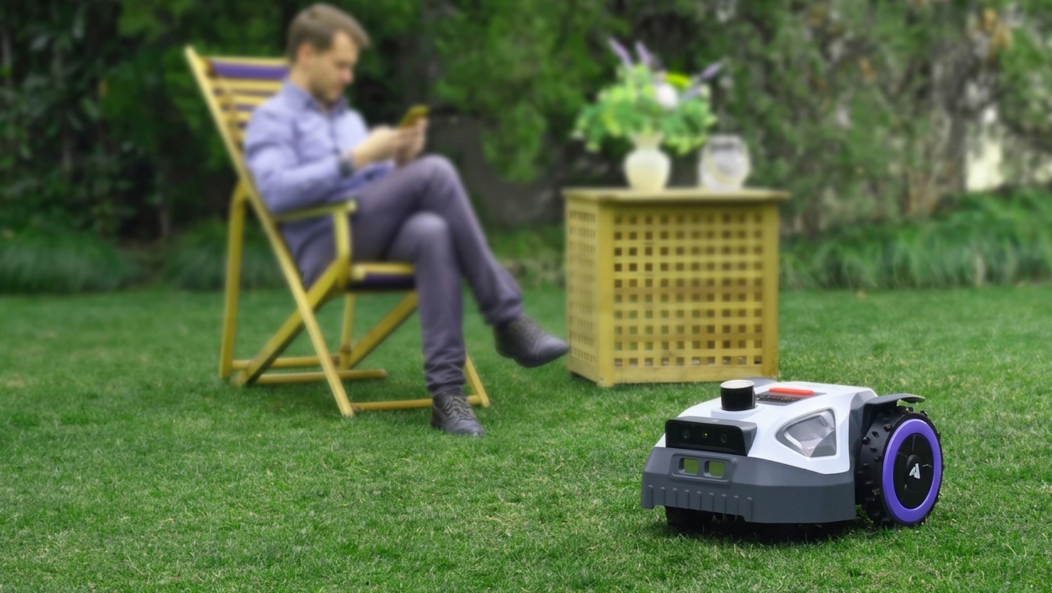
A traditional lawn mower requires you to spend time cutting the grass every week or two during the growing season. A robot lawn mower handles routine mowing automatically, helping keep your lawn at a more consistent height with less hands-on work.
For example, if you spend 45 minutes mowing twice a week over a 24-week growing season, that adds up to 36 hours of mowing. A robot mower can reduce much of that routine work, although you’ll still need to handle setup, maintenance, and occasional edge trimming.
It’s worth considering if you have a suitable lawn, a busy schedule, and want to reduce repetitive yard work. However, the benefits depend on your lawn’s layout, slope, and grass conditions, so it’s important to check these factors before buying.

Measure Your Lawn and Check Its Layout
Before choosing a robot lawn mower, measure the actual grass area, not the total size of your property. Exclude the house, driveway, patio, flower beds, and other areas that do not need mowing.
The lawn’s layout matters just as much as its size. A simple 500㎡ rectangular lawn may be easier to maintain than a 500㎡ garden divided into several sections by narrow paths, trees, or flower beds.
Check these three things before buying:
- Separate lawn areas: Determine whether the mower can reach each section or needs to be carried between them.
- Narrow passages: Check whether paths connecting different areas are wide enough for the mower to pass through.
- Obstacles and boundaries: Identify trees, garden furniture, flower beds, and edges that may require special mapping or additional setup.
A quick sketch of your garden, with approximate measurements and obstacles marked, can help you compare suitable models. It also reduces the risk of buying a mower that has sufficient rated coverage but struggles with your lawn’s layout.

Choose the Right Mowing Capacity
Once you know your lawn’s size, choose a robot mower with enough coverage capacity to handle it reliably. Manufacturers usually list a maximum mowing area, but real-world performance can vary depending on lawn complexity, slope, obstacles, and available mowing time.
As a starting point, compare models using these lawn sizes:
|
Actual Lawn Area |
Models to Consider |
|
300–500㎡ |
Models rated for 500㎡ or more |
|
500–1,000㎡ |
Models rated for 800–1,200㎡ or more |
|
1,000–1,500㎡ |
Models rated for 1,500㎡ or more |
|
Over 1,500㎡ |
Models designed for larger properties, potentially with longer daily operating schedules |
These ranges are practical starting points, not strict rules. For example, a 500㎡ lawn with a simple layout may be easier to mow than the same area divided into multiple sections with narrow passages.
Avoid choosing a model based only on its maximum advertised area. Check its recommended coverage, daily mowing capacity, battery runtime, and charging time. If your lawn has steep slopes or many obstacles, additional capacity can provide more flexibility and help the mower maintain a consistent cutting schedule.

Which Navigation System Is Right for You?
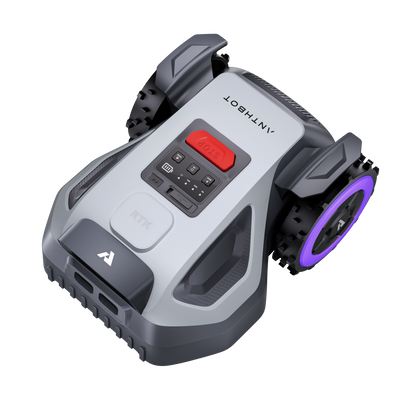
A robot lawn mower’s navigation system affects how it maps your lawn, follows mowing routes, and handles obstacles. The right choice depends on your garden layout, satellite visibility, and whether you want to install boundary wires.
|
Navigation Type |
Best Suited For |
What to Consider |
|
Boundary Wire |
Gardens with clearly defined mowing areas |
Requires perimeter wire installation. Changes to the lawn may require adjusting the wire. |
|
RTK-GNSS |
Open lawns with good satellite visibility |
Provides precise positioning, but trees and buildings can weaken satellite signals. Some models require a reference station or network connection. |
|
Vision-Based |
Gardens with visible lawn boundaries and recognizable surroundings |
Uses cameras to identify grass, boundaries, and obstacles. Performance can vary with lighting and visibility. |
|
LiDAR |
Gardens with complex surroundings or limited satellite visibility |
Uses laser measurements to map nearby objects and spaces. Performance depends on the specific system and environment. |
|
Hybrid Navigation |
Gardens with varied conditions or multiple navigation challenges |
Combines technologies such as RTK, cameras, and LiDAR to complement their strengths and reduce reliance on a single positioning method. |
Hybrid navigation can be useful when a lawn has both open areas and challenging sections near trees, buildings, or narrow passages. For example, RTK can provide precise positioning in open spaces, while vision or LiDAR can help the mower interpret its surroundings.
However, hybrid navigation does not guarantee uninterrupted performance. Different models combine sensors in different ways, so check which technologies are included and how the mower handles your garden’s specific conditions.
Before buying, consider satellite visibility, lighting, lawn boundaries, and obstacles. The best system is the one that works reliably in your garden—not necessarily the one with the most technologies.

Check the Slope and Terrain
Not every robot lawn mower can handle steep slopes, uneven ground, or slippery grass. Before buying, check the manufacturer's maximum slope rating and whether it applies to the main lawn, the edge of the lawn, or both.
Slope ratings are often shown as a percentage rather than degrees. For example, a 45% slope is approximately 24°, while a 100% slope equals 45°. These measurements are not interchangeable, so compare models using the same unit.
Also consider these terrain conditions:
- Slopes: Choose a model rated for your steepest section, with enough traction to avoid slipping.
- Uneven ground: Holes, roots, and bumps can affect movement and cutting consistency.
- Wet or slippery grass: Even a mower rated for steep slopes may struggle when traction is reduced.
- Lawn edges: Some models have lower slope limits near boundaries, where slipping could cause the mower to leave the mowing area.
If your garden has several steep sections, measure or estimate the steepest area before purchasing. A mower's maximum advertised slope is a useful starting point, but actual performance also depends on surface conditions, tire design, and how the slope is positioned relative to the mower's travel direction.

Installation, Boundaries, and Lawn Edges
Before buying a robot lawn mower, check how much installation your garden requires. Some models need a perimeter wire installed around the mowing area, while wire-free models may use RTK positioning, cameras, LiDAR, or a combination of technologies to map the lawn.
Your choice affects both setup and future flexibility.
- Boundary-wire models: Require wire installation around the lawn. This can take time, especially in gardens with multiple zones, but the boundary remains defined even where satellite reception is limited.
- Wire-free models: Often let you set boundaries through an app, reducing physical installation work. However, RTK-based models may need a reference station or network corrections, and performance can depend on signal conditions.
- Multi-zone gardens: Check whether the mower supports separate mowing zones, narrow connecting paths, and restricted areas. Some layouts may require additional setup.
- Lawn edges: Robot mowers may leave a strip of uncut grass near walls, fences, or flower beds. Check the cutting-edge design and whether occasional manual trimming will be necessary.
For example, a simple, open lawn may be straightforward to set up with a wire-free model. A garden with dense tree cover, several separated sections, or complex boundaries needs more careful compatibility checks.
Compare the complete installation requirements, not just whether a mower is advertised as wire-free. Check the need for extra equipment, setup time, app-based mapping, and ongoing edge trimming before making your decision.

Upfront Price and Long-Term Costs
The purchase price is only part of the cost of owning a robot lawn mower. Before choosing a model, consider installation, replacement parts, maintenance, and potential repairs over several years.
|
Cost |
What to Check |
|
Purchase price |
Compare models with similar lawn coverage and navigation features, rather than comparing prices alone. |
|
Installation |
Boundary-wire models may require extra time or professional installation. Wire-free models may still need a reference station or other equipment. |
|
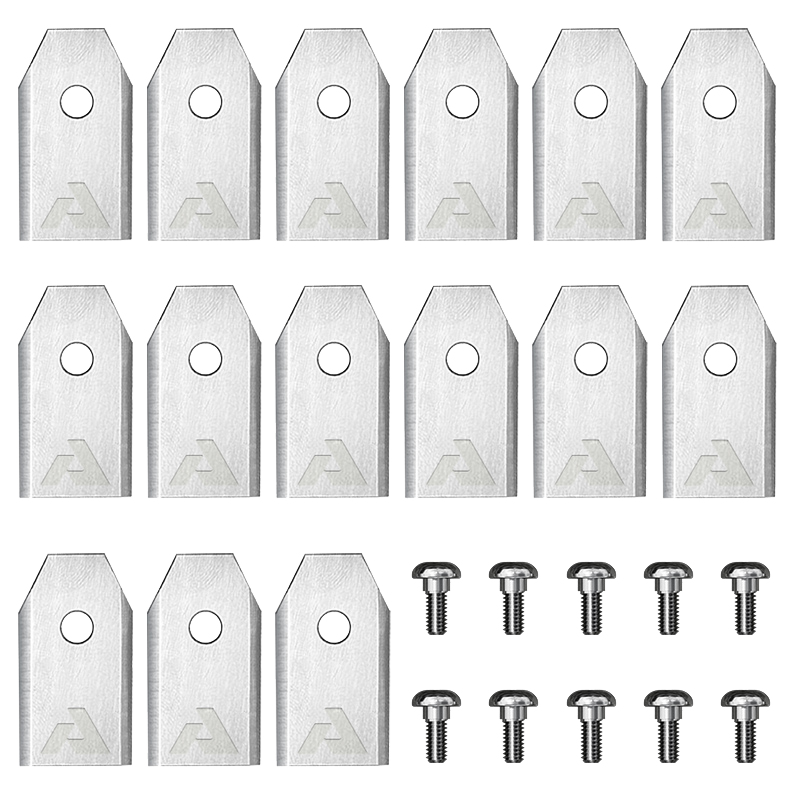
Replacement blades |
Check the price, recommended replacement interval, and availability of compatible blades. |
|
Battery replacement |
Find out whether the battery is replaceable, how much a replacement costs, and what the warranty covers. |
|
Maintenance and repairs |
Consider cleaning supplies, servicing, damaged parts, and the availability of local support. |
For example, if a mower costs $1,200 upfront and you spend another $100 per year on blades and routine maintenance, the total reaches $1,700 after five years, excluding electricity, battery replacement, and major repairs.
A simple way to compare models is to estimate their five-year ownership cost:
Five-year cost = Purchase price + Installation + Consumables + Maintenance and repairs + Battery replacement
Not every expense will occur every year, so use actual manufacturer prices and recommended replacement intervals where available.
A cheaper mower may be the better choice if your lawn is small and simple. For a larger or more complex garden, paying more for suitable navigation, coverage, or easier installation may save time and additional costs later.
What Maintenance Will You Still Need?
A robot lawn mower reduces the time spent mowing, but it does not eliminate lawn care or machine maintenance. Regular checks help maintain cutting performance, prevent blockages, and identify wear before it causes problems.
Here are the main tasks to expect:
- Clean the underside: Remove accumulated grass and dirt according to the manufacturer's instructions. Wet clippings can build up more quickly.
- Check the blades: Inspect for wear or damage and replace them at the recommended interval. Dull blades can leave grass looking ragged.
- Inspect the wheels and sensors: Remove stuck grass, mud, and debris that could affect movement or navigation.
- Maintain the charging station: Keep the charging contacts clean and ensure the station remains stable and accessible.
- Prepare for winter: In colder climates, follow the manufacturer's guidance on storage, battery charging, and protecting the charging station.
Maintenance frequency depends on mowing hours, grass growth, weather, and the model. A mower used frequently in wet conditions may need cleaning and inspection more often than one operating on a dry, short lawn.
Before buying, check the recommended maintenance schedule and the cost of replacement blades and batteries. A model that is easy to clean and has readily available spare parts can be more convenient over the long term.

Can a Robot Lawn Mower Handle Overgrown Grass?
Robot lawn mowers are designed primarily for regular maintenance, not for cutting tall, dense grass that has been left to grow for weeks. Most models work best when they remove small amounts of grass frequently rather than tackling a heavily overgrown lawn in one session.
If the grass has become too tall, follow these steps before using your robot mower:
- Cut the grass manually first: Use a conventional mower or trimmer to bring the grass down to a suitable height.
- Check the recommended cutting height: Many robot mowers offer adjustable cutting heights, often around 20–60 mm, but the range varies by model.
- Start with a manageable schedule: Set frequent mowing sessions during active growth so the mower can maintain the lawn gradually.
- Avoid mowing excessively wet grass: Wet clippings can stick beneath the deck and reduce cutting quality.
For example, if your lawn has grown to 150 mm while your robot mower's maximum cutting height is 60 mm, you should not expect it to cut the entire lawn neatly in one pass. Reduce the height gradually with a conventional mower before switching to automated maintenance.
The key is to use a robot mower for ongoing upkeep, not as a replacement for clearing severely overgrown grass. If your lawn regularly grows very tall between mowing sessions, consider how much manual preparation you are willing to do before buying.

When Is the Best Time to Buy a Robot Lawn Mower?
The best time to buy a robot lawn mower depends on whether you want to save money or have the mower ready before the growing season. In the US, several seasonal sales events are worth watching.
|
Time |
Holiday or Sale Event |
Why Consider Buying |
|
February–March |
Presidents Day (February) and spring sales (March) |
Look for discounts on older models before the main mowing season. |
|
Late May |
Memorial Day |
A good opportunity to compare lawn care equipment deals before summer. |
|
Mid-June |
Father's Day |
Some retailers offer promotions on outdoor equipment and garden tools. |
|
July 4 |
Independence Day sales |
Compare summer promotions across brand stores and major retailers. |
|
Mid-July |
Amazon Prime Day |
A major online shopping event worth checking for robot mower discounts. Dates vary each year. |
|
Late August–early September |
Labor Day |
A useful time to look for late-season promotions and discounts on selected models. |
|
September–October |
End-of-season clearance |
Retailers may reduce prices on remaining inventory, although model availability can be limited. |
|
Late November |
Black Friday and Cyber Monday |
Compare prices on current and previous-generation models before the holiday shopping season. |
|
December 26–January |
Post-holiday and New Year sales |
Check remaining stock and clearance deals, especially if you can wait until spring to use the mower. |
These are shopping windows to monitor, not guaranteed discount periods. Seasonal lawn mower buying guides commonly highlight Memorial Day, Prime Day, Labor Day, and fall clearance as useful times to compare prices.
Which time should you choose?
- Want to start mowing soon? Shop in February–April so you have time to install and test the mower before grass growth accelerates.
- Want a balance between price and selection? Compare Memorial Day, Father's Day, July 4, and Prime Day offers.
- Prioritize the lowest possible price? Watch September–October clearance and Black Friday, especially for previous-generation models.
Before purchasing, record the mower's regular selling price and compare the final price across authorized retailers. A genuine discount on a model that fits your lawn is more valuable than a large advertised discount on the wrong machine.


Fág trácht
This site is protected by hCaptcha and the hCaptcha Privacy Policy and Terms of Service apply.