











Table of Contents
Why Fallen Leaves Become a Fall Lawn Care Challenge
As autumn arrives, fallen leaves can quickly cover your lawn, especially if you have trees nearby. A thin layer may be manageable, but as leaves accumulate, they can block sunlight, trap moisture, and make lawn maintenance more difficult.
Raking leaves every few days can be time-consuming, while leaving too many on the grass may affect its health. The good news is that you don’t always need to collect every leaf. By choosing the right method—mulching light leaf cover or collecting heavier accumulations—you can keep your lawn healthy while reducing cleanup work.

How Fallen Leaves Affect Your Lawn
Fallen leaves are not necessarily harmful, but a thick layer can prevent your grass from getting enough sunlight, trap moisture, and restrict airflow. Over time, these conditions may cause yellow patches, thin grass, and increase the risk of lawn diseases.
The key factor is how much leaf cover accumulates. A light layer can be mulched into small pieces and left to decompose, while heavy piles should be removed before they smother the grass.
The University of Connecticut Extension recommends keeping mulched leaf coverage to around 20% of the lawn surface at a time. If leaves still form a thick layer after mowing, collect the excess rather than leaving it on the grass.
When Should You Remove or Mulch Fallen Leaves?
The best time to manage fallen leaves is before they build up into a thick, wet layer. Check your lawn regularly during autumn and adjust your approach based on how quickly leaves accumulate.
- Light leaf cover: Mulch the leaves with a mower if the pieces can fall between the grass blades without forming a thick layer.
- Heavy leaf cover: Collect excess leaves when they hide most of the grass or pile up in corners and along fences.
- Wet, matted leaves: Wait for drier conditions when possible. Wet leaves tend to clump together, making them harder to mulch and collect.
- After windy weather: Check the lawn for new piles, particularly around trees, garden edges, and other sheltered areas.
As a practical routine, inspect your lawn about once a week during peak leaf fall, increasing the frequency if your garden has many deciduous trees. The goal is not to remove every leaf immediately, but to prevent a thick layer from remaining on the grass.

4 Practical Ways to Manage Fallen Leaves
The best way to remove fallen leaves depends on your lawn size, the amount of leaf cover, and how much time you want to spend on cleanup. Here are four practical options.
1. Rake Leaves by Hand
A leaf rake is an affordable option for small lawns, narrow spaces, and areas around flower beds. It gives you control over where leaves are collected, but raking can become tiring when leaves accumulate across a large lawn.
2. Use a Leaf Blower
A leaf blower moves leaves into piles for collection, making it useful for larger lawns and areas with scattered leaves. However, you still need to gather and dispose of the piles, and strong airflow may scatter leaves into neighboring areas.
3. Mulch Leaves with a Lawn Mower
A mulching mower cuts leaves into smaller pieces that can settle between grass blades and decompose. This method reduces the need for collection, but it works best when leaf cover is relatively light and the leaves are dry enough to cut cleanly.
4. Use a Robot Lawn Mower with Mulching or Collection Functions
A suitable robot lawn mower can help manage fallen leaves with less manual effort. Depending on its design, it may mulch leaves or collect them for removal. Check the manufacturer's specifications before relying on a robot mower for leaf collection, as not every model is designed to handle fallen leaves.
Which method should you choose? For a small lawn with scattered leaves, a rake may be enough. For large amounts of leaves, blowing and collecting them can be more practical. If the leaf cover is light, mulching can save time and return organic matter to the soil.

How to Mulch Fallen Leaves Without Damaging Your Lawn
Mulching fallen leaves can save time and return organic matter to your lawn, but the key is to cut them into small pieces without leaving a thick layer on the grass.
Follow these steps for better results:
- Choose a dry day. Dry leaves are generally easier to cut into small pieces than wet, matted leaves. If the lawn is saturated, wait until conditions improve.
- Clear heavy leaf piles first. Remove excess leaves from areas where the grass is almost completely covered. Mulching works best when the mower can cut the leaves without pushing them into thick clumps.
- Make multiple passes if needed. If large pieces remain after the first pass, mow again until the leaves are finely shredded. Avoid cutting the grass too short just to process more leaves.
- Check the finished lawn. Small leaf fragments should settle between the grass blades rather than form a dense layer on top. Collect any excess that remains.
Properly shredded leaves can gradually decompose and contribute organic matter and nutrients to the soil. However, if leaf cover is too thick, collecting some of it is better than leaving the grass buried beneath the debris.

Mulch or Collect? How to Use ANTHBOT N8 for Fall Leaves
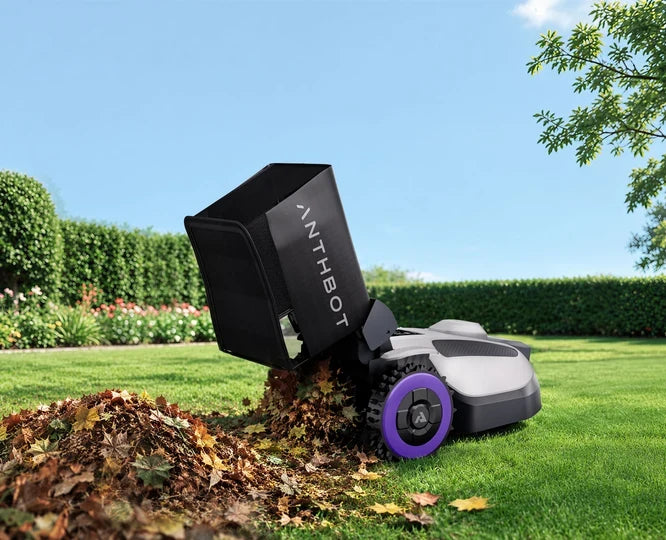
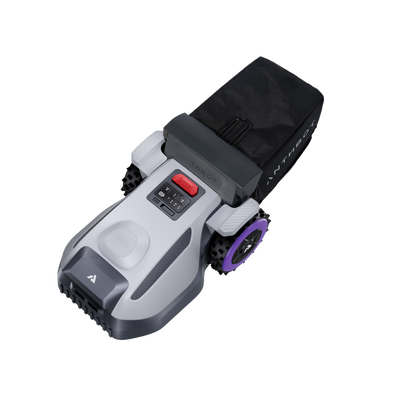
Fallen leaves don't always need to be collected. The right approach depends on how much cover your lawn has and whether the leaves can be processed without building up between the grass blades. ANTHBOT N8 offers Mulch and Collects functions to help manage different lawn-care needs.
When to Use Mulch Mode
Mulching is a practical choice when leaves are scattered in a relatively thin layer. Cutting them into smaller pieces allows them to settle between the grass blades and decompose naturally, reducing the need for manual cleanup.
Before using Mulch mode, check that the leaves are not too thick or wet. If large pieces remain on the surface or the grass becomes heavily covered, remove some leaves first.
When to Use Collects Mode
When autumn leaves accumulate faster than they can be mulched, collecting them helps clear the lawn surface. This is particularly useful in areas beneath trees or where wind repeatedly gathers leaves into piles.
Collected leaves can then be added to a compost pile or disposed of through your local garden-waste collection service.
Which Mode Should You Choose?
- Light leaf cover: Choose Mulch mode when the leaves can be processed into small pieces without leaving a thick layer.
- Heavy leaf cover: Choose Collects mode when leaves need to be removed from the lawn.
- Mixed conditions: Use mulching for lightly covered areas and collect excess leaves where they accumulate.
For the best results, check the lawn after each pass and adjust your approach as leaf cover changes throughout autumn.


What to Do with Collected Leaves
Collected leaves don't have to become waste. Depending on their condition and your garden's needs, you can reuse them in several practical ways.
1. Make Leaf Mold
Pile leaves in a designated area or ventilated container and let them decompose over time. The resulting leaf mold can improve soil structure and help retain moisture in garden beds. Shredding leaves first can speed up decomposition.
2. Add Leaves to Your Compost
Dry leaves are a useful source of carbon, often called “browns” in composting. Mix them with nitrogen-rich materials, such as grass clippings and vegetable scraps, to help maintain a balanced compost pile. Avoid adding large quantities of leaves all at once, as they can mat together and restrict airflow.
3. Use Leaves as Garden Mulch
Shredded leaves can be spread around trees, shrubs, and flower beds to help conserve soil moisture and suppress weeds. Keep the layer loose and avoid piling leaves directly against tree trunks or plant stems, where excessive moisture can encourage rot.
4. Use Local Yard-Waste Collection
If you collect more leaves than your garden can use, check whether your local council or waste service offers leaf collection or green-waste recycling. Follow local requirements for bags, bins, and collection dates.
Tip: Shred leaves before composting or using them as mulch whenever practical. Smaller pieces are less likely to form dense, water-resistant mats and generally break down more quickly than whole leaves.
A Simple Fall Leaf-Care Routine
You don't need to clear every fallen leaf as soon as it lands. A simple routine can help keep your lawn healthy while reducing the time spent on autumn cleanup.
- Check once a week: Inspect your lawn during peak leaf fall, especially beneath trees, along fences, and in corners where leaves accumulate. Check more often after windy weather.
- Mulch light coverage: When leaves are dry and scattered, use a suitable mower to shred them into small pieces that can settle between the grass blades.
- Collect excess leaves: If leaves hide most of the grass or form thick, wet clumps, remove them rather than leaving a dense layer on the lawn.
- Check after rain: Wet leaves can stick together and become harder to process. Once conditions are drier, clear any remaining clumps.
- Prepare for winter: Before the lawn enters dormancy, remove thick leaf piles and clear areas where debris could remain trapped.
The key is consistency. Short, regular maintenance sessions are often easier than tackling several weeks of accumulated leaves at once. Adjust your routine to the number of trees around your lawn and how quickly the leaves fall.
Fallen Leaves on Lawns: FAQs
Should I remove all fallen leaves from my lawn?
No. A thin layer of leaves can be mulched into small pieces and left to decompose. However, thick piles can block sunlight, trap moisture, and smother grass. Remove excess leaves when they form a dense layer on the lawn.
How often should I remove fallen leaves in autumn?
Check your lawn about once a week during peak leaf fall. If you have several large trees nearby or experience frequent windy weather, you may need to manage leaves more often. The goal is to prevent heavy accumulation rather than follow a rigid schedule.
Can I mulch wet fallen leaves?
It's best to wait until leaves are reasonably dry. Wet leaves tend to clump together, making them harder to shred evenly and more likely to form a dense layer on the grass. If the lawn is waterlogged, wait until conditions improve before mowing.
Do mulched leaves act as fertilizer?
Mulched leaves gradually decompose, adding organic matter and returning some nutrients to the soil. However, they are not a complete fertilizer replacement, and the benefits depend on the leaves, soil conditions, and rate of decomposition.
What should I do if there are too many leaves to mulch?
Collect the excess leaves using a rake, leaf blower, or suitable collection equipment. You can compost them, make leaf mold, use shredded leaves as garden mulch, or send them to a local yard-waste recycling service.
Can a robot lawn mower handle fallen leaves?
It depends on the model and its supported functions. Some robot mowers may help process light leaf cover, while others may not be designed to collect leaves or handle thick piles. Check the manufacturer's instructions for leaf-handling capabilities, operating conditions, and limitations before using one for autumn cleanup.




Fág trácht
This site is protected by hCaptcha and the hCaptcha Privacy Policy and Terms of Service apply.