










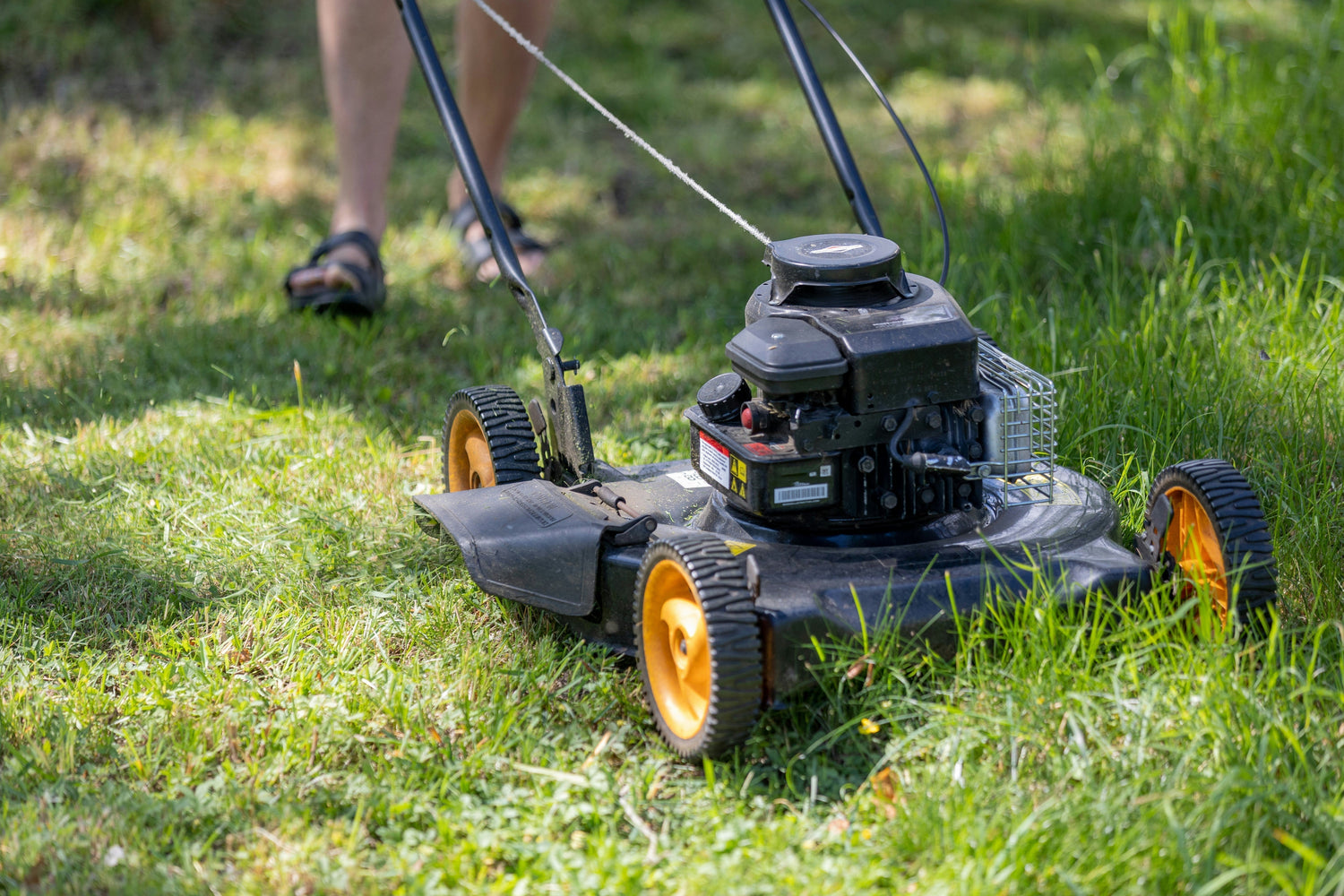
How long does it take to mow a lawn? As a rough guide, a small lawn of around 100 m² usually takes about 5–10 minutes with a push mower, while 500 m² often takes around 30–35 minutes. For 1 acre, mowing time can stretch to well over 2 hours, depending on the type of mower, the lawn layout, and how often you need to stop.
But as many European homeowners know, those neat estimates rarely account for the reality of a damp Tuesday in Manchester or a tightly regulated Sunday in Munich. Below, you will find a quick comparison table, a simple lawn mowing time formula, and practical ways to reduce the time you spend on the job.
Table of Contents
Average Mowing Times at a Glance
Here is a quick reference table for you to get a “ballpark” figure. These are rough mowing times for flat, reasonably dry lawns with average obstacles. In other words, they are best used as a starting point, not a promise. In real gardens, trees, flower beds, narrow passages, slopes and wet grass can add quite a bit more time. The estimates are modelled from standard mower-capacity formulas and practical homeowner assumptions.
Mowing Time Comparison Table
|
Lawn size |
Push Mower |
Self-Propelled Mower |
Ride-On / Lawn Tractor |
|
100 m² |
4–5 mins |
3–4 mins |
Not usually practical |
|
150 m² |
6–7 mins |
4–5 mins |
Not usually practical |
|
250 m² |
11–12 mins |
7–8 mins |
4–5 mins |
|
500 m² |
22–25 mins |
14–16 mins |
7–9 mins |
|
1,000 m² |
44–50 mins |
28–32 mins |
14–17 mins |
|
2,000 m² |
1 hr 25–35 mins |
55–65 mins |
28–35 mins |
Note: Times include basic mowing but exclude the "overhead" of setup, fueling, and cleanup.
Lawn Mowing Time Formula
Want a more precise estimate? You can calculate your mowing time manually with a simple formula.
Estimated mowing time (hours) = Lawn area (m²) ÷ Effective mowing capacity (m²/hour)
To estimate effective mowing capacity, use:
Effective mowing capacity = Deck width (m) × Mowing speed (m/hour) × Efficiency factor × (1 − overlap rate)
In practical terms:
- Deck width is the cutting width of your mower.
- Mowing speed is your average working speed, not the maximum speed printed on the box.
- Efficiency factor reflects real-world conditions such as turns, uneven edges, obstacles, and general stop-start movement.
- Overlap rate accounts for the small amount of width lost when each mowing pass slightly overlaps the previous one.
For example, if your mower has a 0.48 m cutting width, you mow at 4,800 m/hour, use an efficiency factor of 0.75, and allow 10% overlap, the effective mowing capacity would be:
0.48 × 4,800 × 0.75 × 0.90 = 1,555.2 m²/hour
If your lawn is 500 m², the estimated mowing time would be:
500 ÷ 1,555.2 = 0.32 hours
That works out to roughly 19 minutes, before adding setup, emptying the grass box, and cleanup.
As a quick rule of thumb:
Estimated mowing time (minutes) = Lawn area (m²) ÷ Effective mowing capacity (m²/hour) × 60
This formula gives you a more realistic starting point than a one-size-fits-all estimate, especially if your lawn is sloped, awkwardly shaped, or full of obstacles.
Why Mowing Takes Longer Than You Think

Now we have estimated the mowing time for your backyard. The timing seems perfect, right? Well, for someone with real hands-on experience (me, for example), the reality is often different. We have our days planned—BBQ parties, uninterrupted "me-time," and family outings—only to find our plans delayed because mowing took twice as long as imagined.
Why does the reality never match the manual? Here are the 5 factors that influence your actual lawn mowing time.
Lawn Shape and Obstacles
A large open rectangle is quick to mow. A lawn with curved borders, trees, flower beds, play equipment, furniture, or a trampoline is not. Every obstacle forces you to turn more often, slow down, reposition, or come back for missed edges. That is why two lawns with the same square metre figure can take very different amounts of time.
Slopes and Uneven Terrain
Slopes make mowing slower and more tiring. Pushing uphill takes more effort, and even with a self-propelled mower, most people naturally move more cautiously on uneven ground. The same is true of bumpy patches, dips, and edges where the mower needs extra control.
Grass Condition
In the UK and Northern Europe, "dry grass" is a rare luxury. Mowing wet grass is a nightmare: the blades tear rather than cut, and the damp clippings clump together, clogging the mower's discharge chute. You’ll spend more time stopping the engine to clear clumps than actually cutting.
Emptying the Grass Box
This is the ultimate hidden time-sink. A lush 500 sqm lawn can produce three or four full 50-litre bags of clippings. If your compost heap or green bin is at the far end of the property, the "walking and emptying" cycle can consume 25% of your total mowing time.
Local Noise Regulations
In countries like Germany, Switzerland, and Austria, Ruhezeit (rest periods) are legally enforced. You cannot mow between 1 PM and 3 PM, after 8 PM, or at all on Sundays. This creates a "time squeeze" where every homeowner in the neighborhood tries to mow on Saturday morning, leading to rushed work and equipment bottlenecks.
The Real Cost of Mowing: Time vs. Money
We often view mowing as a "free" chore, but the math tells a different story. In Europe, the growing season typically lasts from late March to October—roughly 25 to 30 weeks.
That means the time adds up surprisingly fast. If you spend just 1.5 hours a week mowing, edging, and tidying up, that is close to 40 hours a year spent on lawn care alone. And that raises a fair question:
What could you do with an extra 40 hours this summer?
More time with family, a weekend away, a long lunch outdoors, or simply one less recurring task on your calendar.

How to Reduce Your Mowing Time
If you want to reclaim more of your weekend, a few practical changes can make mowing faster and easier.
Cut Little and Often
If you wait too long between cuts, the job usually takes longer, not less time. Shorter grass is easier for the mower to handle, and you are less likely to need a slower pace or a second pass. As a general rule, avoid removing more than about one-third of the grass height in one go. Regular mowing also helps keep the lawn more even, which makes each session quicker overall.
Mow Only When the Lawn Is Dry
The RHS also advises mowing only when the grass is dry, because wet grass tends to clump, stick underneath the deck, and leave a mess behind, which means more stopping and more cleanup.
Keep the Blade Sharp
When the blade is dull, cutting becomes rougher and less efficient, and the machine may struggle more in thicker patches. In simple terms, a clean cut saves time because the mower works more smoothly and the finish is better on the first pass.
Adjust the Cutting Height to Match Conditions
If the lawn is long, stressed, or growing unevenly, cutting too low can slow the whole job down. A slightly higher setting often makes mowing easier, especially when the grass is longer than usual. It also reduces strain on the mower and helps you get through the lawn more efficiently.
Use the Simplest Mowing Pattern Possible
Try to reduce unnecessary turning. Long, straight passes usually save time, and on square or rectangular lawns, a simple spiral pattern can also work well because it cuts down on sharp turnarounds. The less time you spend correcting your route, the quicker the job becomes.
A Smarter Way to Cut Hands-On Mowing Time
If your goal is not just to mow faster, but to spend far less time mowing yourself, a robot mower changes the equation.
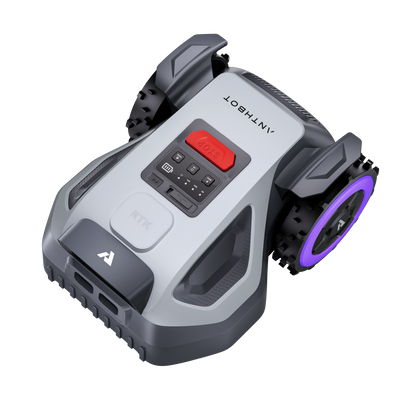
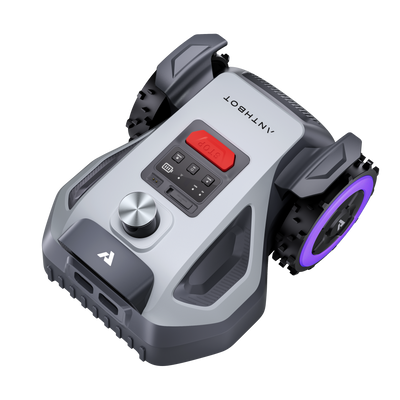
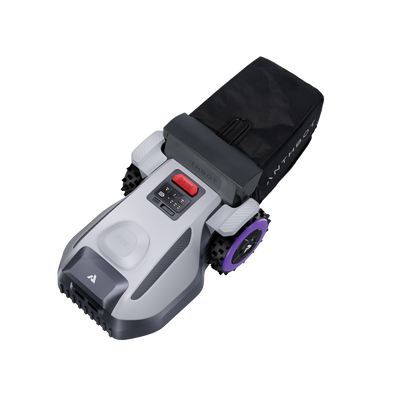
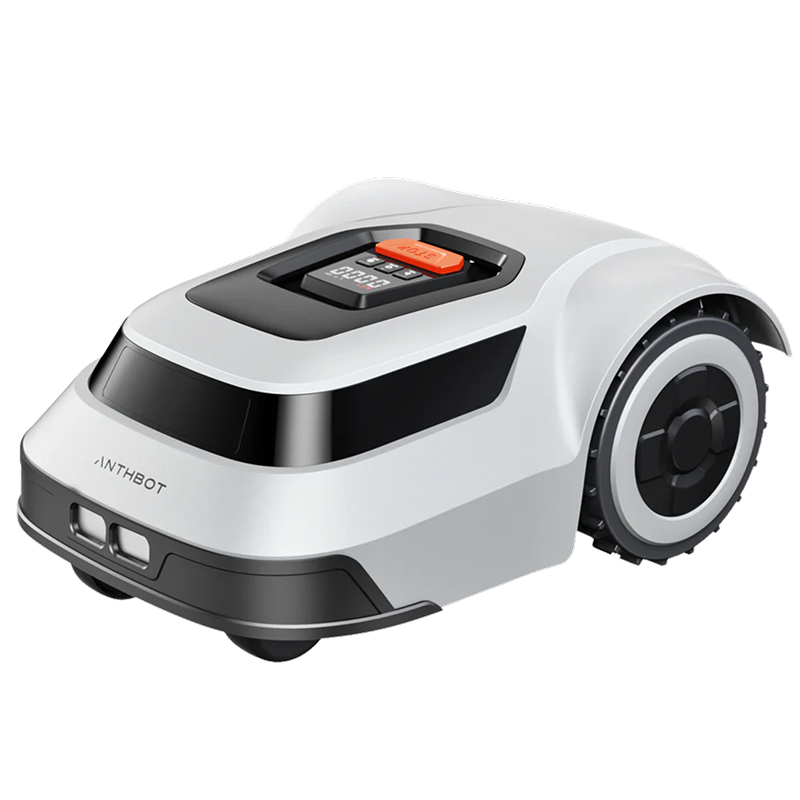
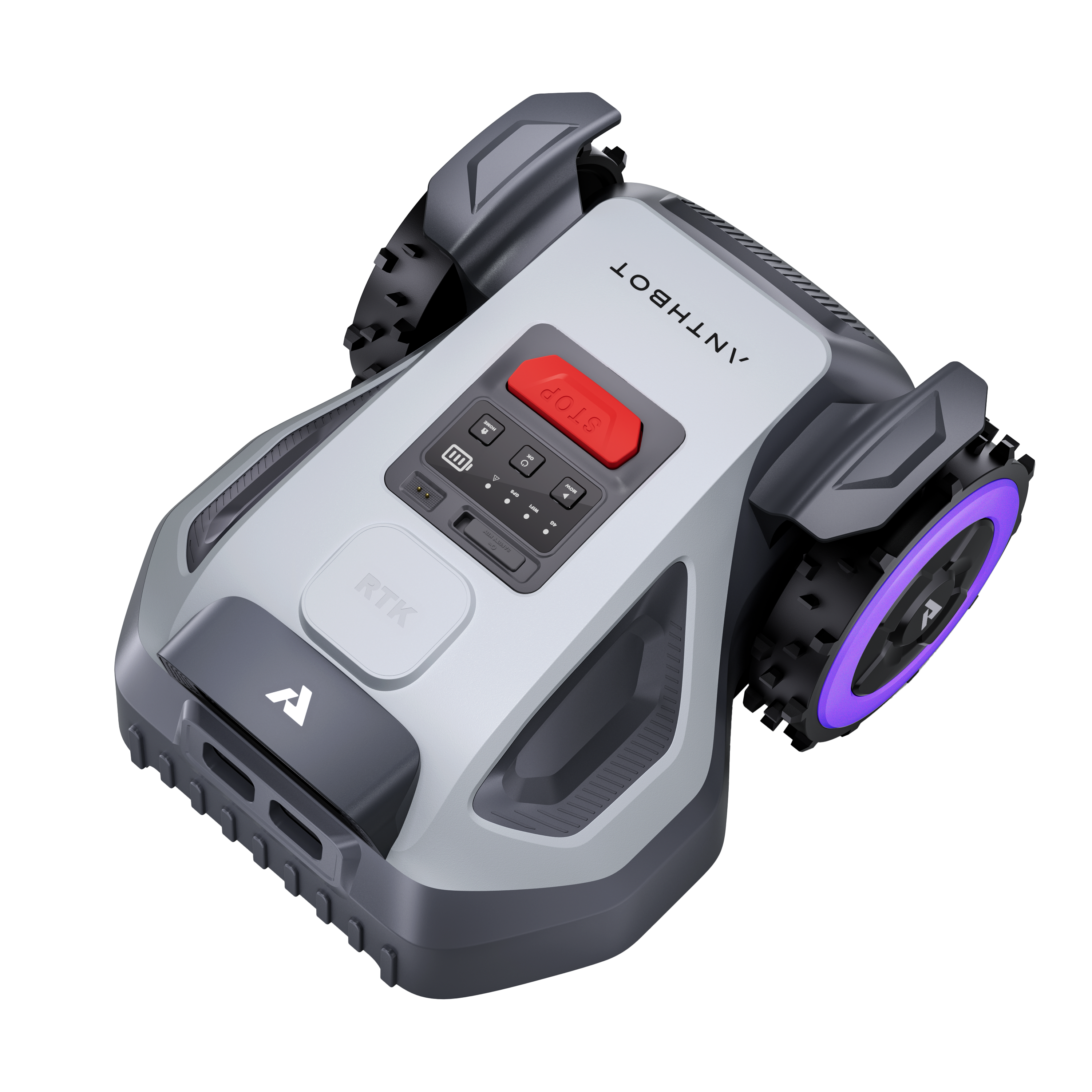
Autonomous mowers, like the ANTHBOT M5, don't just "save" time—they redefine lawn care:
- Smarter Navigation: RTK-based navigation and vision support help the mower handle narrow passages, edges, and more complex lawn layouts with less manual correction.
- Obstacle Avoidance: AI obstacle detection helps the mower work around everyday garden objects such as furniture, toys, and flower beds. That reduces the stop-start routine that often makes manual mowing take longer.
- Slope Handling: ANTHBOT robot mowers are designed to cope with uneven ground and garden slopes more easily than a typical hands-on mowing routine. On more difficult terrain, that means less effort and less time spent guiding a machine across the lawn.
- Silent Operation: With 58 dB operation, they can work at 2 AM or on a Sunday in Germany without a single neighbor complaining.

Conclusion
Efficient lawn mowing is achievable with the right knowledge and tools. By understanding the factors affecting mowing time—from the slope of your land to the "Ruhezeit" in your neighborhood—you can tailor your approach for better results. Or, you can simply leave it to the workhorse. By switching to a 24/7 robot mower, you aren't just buying a tool; you're buying back your summer.
FAQs
How long does it take to mow a 500 m² lawn?
For most homeowners, about 30–35 minutes with a push mower, 20–25 minutes with a self-propelled mower, and around 8–12 minutes with a ride-on mower is a fair estimate. Real time may be longer if the lawn is wet, sloped or full of obstacles.
How long does it take to mow 1 acre(4,047 m²)?
A rough guide is about 4.4 hours with a push mower, 2.8 hours with a self-propelled mower, and about 45–50 minutes with a ride-on mower.
How fast should you mow your lawn?
A steady, controlled walking pace is usually best. The right speed is the one that allows the mower to cut cleanly without missed strips, clumps, or dragging. If the grass is damp, long, or uneven, slower is better.
How often should lawns be mowed in the UK or Europe?
For a neat, conventional lawn, weekly or fortnightly between March and October is a sensible rule. In summer, once a week is common, though drought may slow growth and reduce frequency.
Does a robot mower take longer to finish the whole yard?
Usually, yes in pure machine runtime. But in terms of your time, a robot mower can reduce hands-on mowing time dramatically because it works automatically and keeps growth under control between cuts.




Leave a comment
This site is protected by hCaptcha and the hCaptcha Privacy Policy and Terms of Service apply.